News Broadcasting
Insat-4C satellite launch fails; Sun’s DTH plans hit


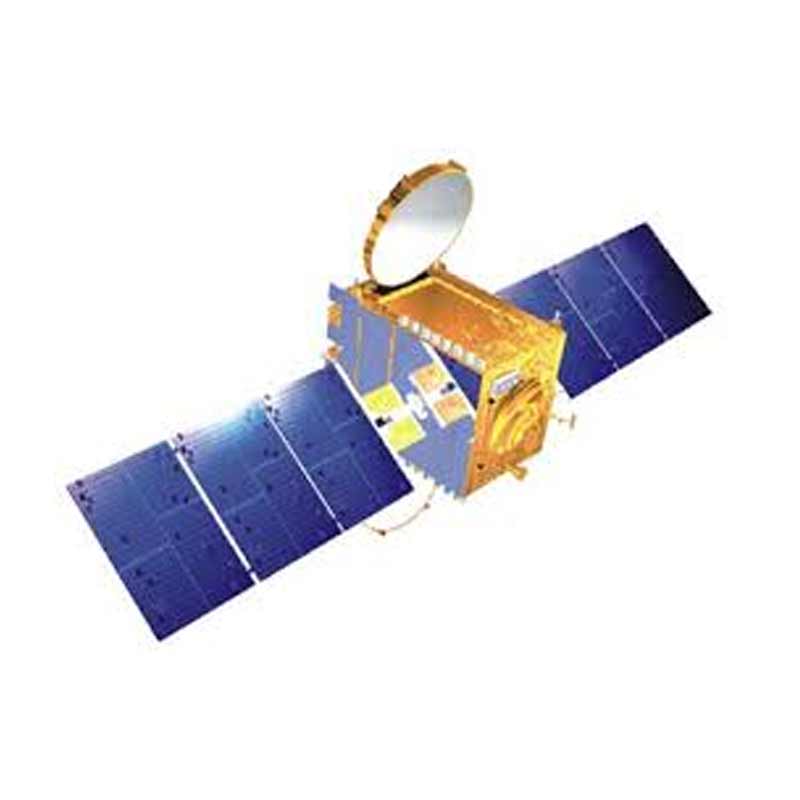
MUMBAI: India’s attempt to enter the elite “space club” has received a setback. The launch of the country’s first commercial communications satellite from home soil has ended in failure. The GSLV-F02, carrying the state-of-the-art communication satellite Insat-4C, crashed into the Bay of Bengal a short while after lift-off at 5:38 pm from its launch pad at the Satish Dhawan Space Centre (SDSC) SHAR, Sriharikota.
The launch of the completely indigenous Insat-4C communications satellite on the Geosynchronous Satellite Launch Vehicle (GSLV) was delayed twice before its final failed attempt due to unspecified technical reasons. The launch was originally scheduled for 4:30 pm this evening.
The three-stage 414-tonne launch vehicle of the Indian Space Research Organisation (Isro), started under-performing right from the start and veered off its path after travelling a few kilometers into the sky.
Isro chairman Madhavan Nair admitted the failure of the satellite. “The mishap happened in the first stage of the separation. We have activated and analysed the data and we will get to the bottom of it,” Nair said, adding, “today’s happening is a setback, especially after we had 11 continuous successful launches.”
Insat-4C, which cost Rs 4 billion, was the second satellite in the Insat-4 series. The first, Insat-4A, was launched in December last year, from the spaceport of Kourou in French Guiana by an Ariane5 vehicle.
It was for the first time that India’s space agency was putting into orbit a two-tonne class satellite. Equipped with 12 high-powered Ku band transponders (like the earlier Insat-4A), the 2,180 kg spacecraft is designed for a mission life of 10 years. Insat-4C was designed with the capability to broadcast 150 TV channels through the DTH platform.
If succesful, this mission would have taken India to being one of the five major satellite launch countries in the world. With this failure, Isro’s strategy of taking satellite contracts from other countries has also received a setback.
As regards the Insat-4 mission, Isro will now have to look ahead to the launch of the third satellite in the series – Insat-4B. The GSLV’s failure will in no way influence that launch however, because Isro will be using the services of Arianespace to launch Insat-4B from Kouru next year.
The failure of this mission is not just about the challenge it throws up to India’s space ambitions though. Immediately hit will also be Kalanithi Maran’s Sun Group, which had booked space on Insat 4C for its DTH venture Sun Direct.
At present, DD Direct Plus managed by the pubcaster Prasar Bharati and the Subhash Chandra owned Dish TV are the two operators offering DTH services in the country.
All the Ku-band transponders on the Insat 4A satellite, meanwhile, have been leased to the Tata-Star consortium, which will soon be launching the Tata Sky DTH service.
Other than Tata Sky and Sun Direct, there is also Anil Ambani’s DTH venture Reliance Bluemagic, which will be rolling out in due course.