MAM
Entertainment quotient, key driver for media business

MUMBAI:The final leg of the em2 seminar brought together ideas on old and new age technologies. The first session addressed print and the radio (which is perceived as a new media), while the other threw light on mobile entertainment.
To Times Group executive president Bhaskar Das, “No business is like show business.” Das pointed out that every successful business needed star brands to attract consumers and there is a thin line between brands and celebrities, which is fast disappearing.
“The entertainment quotient has been infused and extended to the entire platform that the Times Group is offering,” Das pointed out. He called attention to the manner The Economic Times introduced the entertainment quotient of the daily through whacky headlines and through pictorial displays.
Then there is the much talked about Hum Tum innovation wherein The Times Of India had carried out a month-long activity of the Hum Tum cartoon strips. The main star cast Saif Ali Khan had made an appearance in the popular show Jassi Jassi Koi Nahi and debated on the Hum Tum strips.
As radio is perceived a the theatre of the mind, Adlabs Radio COO Tarumn Katial believes that though radio is a conventional media, it has the potential to offer unconventional marketing.
Citing the popular Pepsodent radio jingle that had employed the same intonations as the Hindu “artis” devotees recited, Katial said this could only be evoked properly on radio as a medium.
If radio is believed to be the new media, than mobile entertainment is touted as the next big and the hot thing amongst the broadcasters as well as the mobile operators, especially when mobile devices are growing smarter so as to be able to support content.
Hutchision Essar VP corporate and group marketing Naven Chopra pointed out that mobisodes were yet unexplored as they are largely formatted to fit the tiny screen rather than creating exclusively for mobile users. He said it was also a market that is largely still a price-driven market as the cost influences the majority of purchase decisions. Chopra suggested the best that could be done was to offer bundling while exploiting content. For example, while offering four to five songs for download, a free song could be added or a free wallpaper could be offered.
Qualcomm chief technology advisor Dr Nikhil Jain threw light on an application his company had developed, BREW (Binary Runtime Environment for Wireless) for mobile phones, which can support GSM/GPRS, UMTS, and CDMA. BREW enables a programmer to develop applications without needing to code for system interface or understand wireless application.

Brands
Google nears Nvidia in race for world’s most valuable company
Market cap gap narrows as Google hits $4.65 trillion, Nvidia at $4.86 trillion.
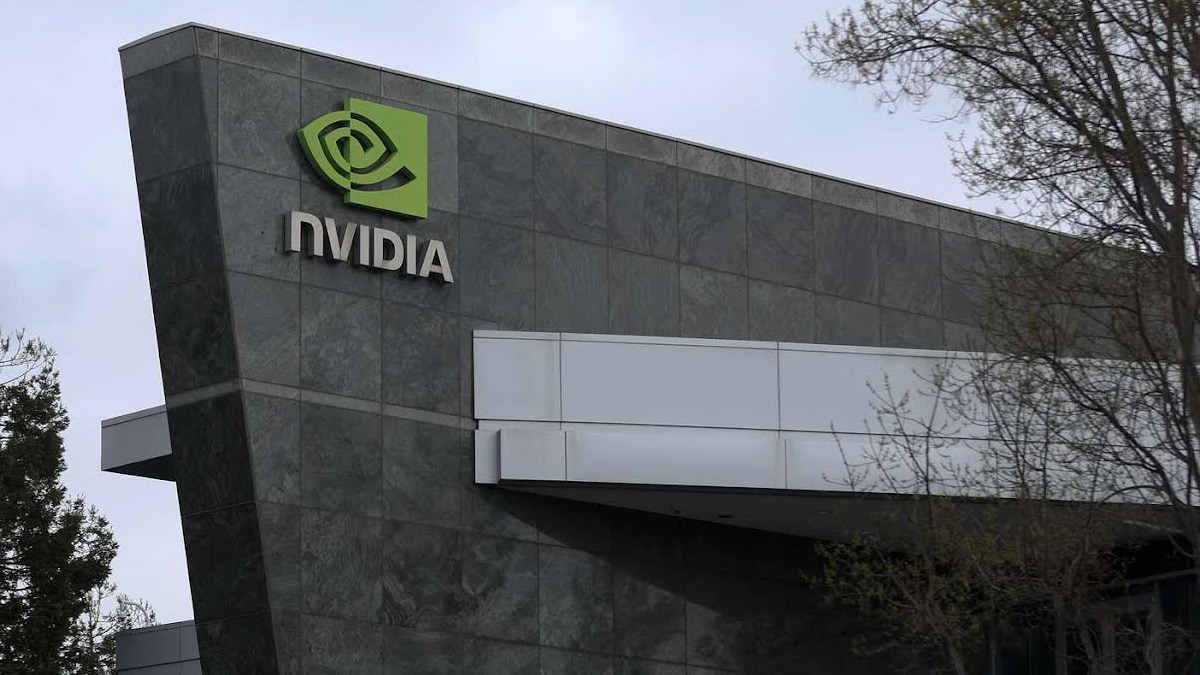
MUMBAI: In the AI gold rush, even the giants are sprinting and Google is suddenly gaining ground. Google is rapidly closing in on Nvidia in the race to become the world’s most valuable publicly listed company, with the gap between the two narrowing sharply amid diverging stock momentum. The tech giant’s market capitalisation has surged to around $4.65 trillion, following a more than 140 per cent rise in its share price over the past year.
That rally has added over $2.6 trillion in value in just 12 months, including nearly $900 billion since January alone. Its stock recently hovered at $381.80, slipping marginally by 0.04 per cent, but still reflecting strong upward momentum.
Nvidia, meanwhile, continues to hold the top spot with a valuation of approximately $4.86 trillion. The chipmaker crossed the $5 trillion milestone in October last year and peaked at $5.27 trillion on 27 April. However, its shares have largely plateaued over the past six months, rising just 0.2 per cent recently to $199.99.

The contrast in trajectories is striking. While Nvidia has seen relatively flat movement, Google has gained over 36 per cent in the same six-month period. Barron’s estimates suggest that if current trends hold, the valuation gap could shrink to as little as $190 million by the time Nvidia reports its first-quarter earnings on 20 May.
Daily momentum paints a similar picture. Nvidia recorded average daily gains of about 0.66 per cent last month, compared to Google’s stronger 1.42 per cent, an edge that could prove decisive in the short term.
Driving Google’s resurgence is its aggressive push into artificial intelligence across its ecosystem, from search and YouTube to cloud computing. The company has already invested $144 billion in capital expenditure over the past two years and plans to deploy a further $490 billion over the next two.
Its cloud division is also gathering pace. Google Cloud reported an order backlog of nearly $220 billion in the latest quarter, with total backlog touching a record $462 billion, around half of which is expected to be realised within two years. The company’s entry into chip sales is also beginning to factor into its growth narrative.
The last time Google briefly topped the S&P 500 by market value was in February 2016, when it edged past Apple for just two days. This time, the stakes and the numbers are far higher.
At the heart of the contest lies a single force: artificial intelligence. As both companies pour billions into infrastructure, chips and platforms, the leaderboard is no longer just about size, it is about who can scale the future faster.