News Broadcasting
NGC unveils ‘Science Safari’ in Kannada


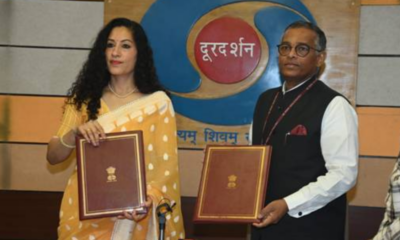
BANGALORE: The ministry of science and technology (MS&T) and National Geographic Channel today unveiled the Kannada version of ‘Science Safari’, a film that showcases Indian science and technology through the unique Nat Geo perspective. The film is a part of the year long campaign announced by the ministry and NGC earlier this year to promote Indian science and technology.
The 48-minute film is directed by Nutan Manmohan and produced by All Time Productions in close association with NGC at a cost of around Rs 20 million. Funded by the MS&T, it showcases a mix of scientific achievements across India and presents various innovations made by well known Indian scientists and some unknown inventors in a travelogue format.
The English version of this film has already premiered on NGC on 26 September and will also be telecast on Doordarshan. The film is also being dubbed into various Indian regional languages to reach out to a wider audience. The Kannada version is the first in the regional language series and will also be telecast on Doordarshan’s Kannada channel.
A 360-degree campaign encompassing both on-air and off-air initiatives to promote the film will be also launched. On air promotion initiatives will include programme promos on NGC and The History Channel pre and post the premiere of the film and telecast of a special compilation of the channel’s best science and technology programming.
The channel will also run informative scrollers, factoids, vignettes and 15 short films throughout the year on Indian science and technology.
An extensive school outreach programme will also be initiated to generate further interest about Indian science and technology through this film.
Meanwhile, Union minister for science and technology Kapil Sibal announced that a dedicated science and technology channel was being considered to start operations over the next four to five years.
Sibal was in Bangalore today to receive the Kannada version of the ‘Science Safari’ film funded by his ministry and made through the NGC perspective. Sibal has plans for a number of similar projects that will showcase Indian science and technology capability.
“India is making great strides in the field of science and technology today, innovation and creativity are the most important assets for our future. Through this programme, we want to create more awareness amongst the people of our country, especially children about our achievements in this field and to encourage the spirit of scientific inquiry,” he said while commenting on the 48 minute Science Safari.
Sibal expressed satisfaction with the work done by NGC on Science Safari, hailing the association as a sort of a public private partnership, while NGC vp marketing Rajesh Seshadhri said that this was the first time that such an association had happened.
Sibal said that after the telecast of the Science Safari, his ministry has received a number of proposals from many channels for producing similar films, and that his ministry would consider the offers. Upon being questioned about these developments, Seshadhri said that his channel was committed to creating content on Indian science and technology irrespective of the government’s participation.