iWorld
Guest Article: ACS wire in telecommunications: Enhancing connectivity and performance

Mumbai: In the dynamic era of telecommunications, where connectivity and performance are paramount, technological advancements continually drive the industry forward. One such innovation making waves in the telecommunications sector is the use of ACS wire. This robust and versatile material has emerged as a game-changer, offering a myriad of benefits that contribute to the enhancement of connectivity and performance across telecommunication networks.
ACS wire combines the robustness of steel with the conductivity of aluminum. It’s essentially a steel core wrapped in an aluminum layer. This combination gives the wire special qualities, blending strength and electrical efficiency. To highlight the significance of ACS wire in telecommunications, recent industry data supports its growing adoption. According to a study by the Telecommunications Industry Association (TIA), the global market for ACS wire is projected to reach a value of USD 3.5 billion by 2026. This surge in adoption highlights the industry’s recognition of ACS wire as a valuable asset in improving connectivity and performance.
How ACS wire revolutionizes telecommunications
1. Strength and Durability
The steel core of ACS wire imparts exceptional strength and durability, making it an ideal choice for use in telecommunications infrastructure. This robust construction ensures that the wire can withstand the challenges posed by environmental factors such as wind, ice, and extreme temperatures. As a result, telecommunication networks utilizing ACS wire experience improved reliability and longevity, leading to a reduction in maintenance costs over time.
2. Enhanced Conductivity
Aluminum is known for its excellent electrical conductivity, and ACS wire leverages this property to enhance signal transmission in telecommunications networks. The aluminum coating on the steel core facilitates efficient flow of electrical currents, reducing signal loss and improving overall network performance. This enhanced conductivity is particularly crucial in long-distance communication where maintaining signal integrity is paramount.
3. Cost-Effective Solution
Incorporating ACS wire in telecommunication networks proves to be a cost-effective solution. The combination of steel and aluminum results in a material that is not only durable but also more affordable than traditional materials. Telecommunication providers can benefit from significant cost savings without compromising on the performance and reliability of their networks.
4. Reduced Weight and Sag
Compared to traditional steel wires, ACS wire offers a notable advantage in terms of weight. The aluminum-clad steel construction is inherently lighter, reducing the overall weight of the telecommunication infrastructure. This characteristic minimizes sag, allowing for longer spans between support structures. As a result, telecommunication providers can achieve more efficient and cost-effective network designs, especially in challenging terrains.
5. Corrosion Resistance
The aluminum coating on ACS wire provides corrosion resistance, a crucial feature for infrastructure exposed to diverse environmental conditions. This resistance ensures that the wire maintains its structural integrity over time, even in corrosive environments. The longevity of ACS wire further contributes to the sustainability and reliability of telecommunication networks.
Global Adoption Trends
The implementation of ACS wire has experienced noteworthy traction in diverse regions, with varying regulatory landscapes and market demands shaping its adoption.
In North America, where stringent standards often govern the telecommunications industry, ACS wire’s compliance with safety regulations has contributed to its widespread use.
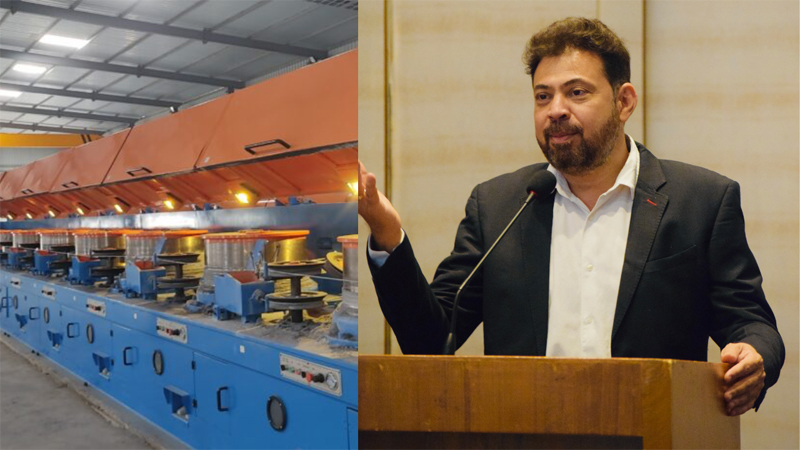
In emerging markets across Asia, the cost-effectiveness of ACS wire aligns with the need for scalable and affordable infrastructure solutions. Specifically in India, Advait Infratech Limited operates a cutting-edge manufacturing facility located near Kadi, dedicated to producing ACS wire. Advait ensures precision through the use of an intelligent video measuring machine, ensuring accuracy up to 2 microns at 130x magnification. Supported by top-notch warehousing capabilities, the company strives for optimal resource utilization with a highly skilled workforce.
Europe, with its focus on sustainability, has embraced ACS wire for its lightweight composition, reducing environmental impact. These regional nuances illustrate how ACS wire adapts to distinct regulatory frameworks and market dynamics, solidifying its status as a globally versatile and in-demand material for enhancing telecommunication networks.
Conclusion
In summary, ACS wire stands as a transformative milestone in the telecommunications sector, seamlessly combining strength, conductivity, and cost-effectiveness. As telecommunication networks continuously evolve to meet the demands of an interconnected world, the strategic adoption of ACS wire becomes increasingly apparent. Its capacity to enhance connectivity, optimize performance, and offer an economically sound solution positions ACS wire as a fundamental element in shaping the bedrock of modern telecommunication infrastructure.
The author of this article is Advait Infratech founder & MD Shalin Sheth.