News Broadcasting
CNN-IBN hit with copyright case; court stays show

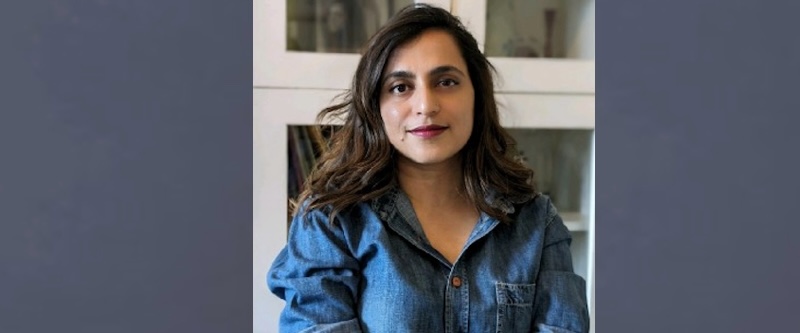
NEW DELHI: The Bombay High court on 7 June granted an stayed in the interim the CNN-IBN reality show Summer Showdown, accused of violating copyright and breaching confidentiality by scriptwriter Urmi Javekar Chiang, who had allegedly sent the channel the original project titled Work in Progress.
This means that the last three episodes, the conclusive part of which was to air today (9 June), could not be aired, as an appeal to vacate the stay filed by the channel yesterday was refused by the court.
The court said that it was not possible to grant the prayer of the channel to refuse a stay, “in view of the detailed reasons recorded in the order, which dictation took more than two and half hours”. Before writing the order, the court heard the marathon arguments for three hours.
The vacation judge held: “Pending the hearing and final disposal of the suit, it is absolutely just, necessary and proper that the plaintiff is entitled to… an injunction of this Hon’ble Court, restraining the defendants… from in any manner whatsoever infringing the copyright of the plaintiff in the original ‘literary work’.”
While the above statement was on the issue if violation of Chiang’s copyright, the court further took cognisance of the allegation of breaching the confidentiality of information passed on by Chiang to the channel. The case is expected to come up for an appeal on Monday (11 June).
The court said that the literary work was the “concept note of the television programme, Work in Progress, and stopped the channel from directing or making or copying or reproducing the same, or publishing or broadcasting or otherwise reproducing the work by making and broadcasting the television programme Summer Showdown without the plaintiff’s consent”.
It said that granting the request of the channel would make the case infructuous, “in as much as the programme… is limited to 10 June”, but the interests of the channel would not be compromised if the stay is ordered, as the channel had stated that the programme is aired for only two to three minutes a day.
CNN-IBN, in their affidavit, argued that Chiang had no serious case and was merely trying to create confusion, and that she had failed to show that what she sought to protect has been copied by the channel.
“No attempt has been made by the Plaintiff to draw out any alleged similarities” between her work and what the channel televised, said the affidavit.
“Making a hero out of a common man by giving him a target of 30 days to solve a problem of their choice, creating drama and tension, involving public by SMS polls, showing the authorities as antagonists is completely different from pitching civic agencies from five cities against each other to solve civic problems without any of the ingredients of the Plaintiff’s concept note,” says the affidavit.
The channel stated that it would be incorrect to call Chiang’s note one on a reality show, and that she alone held the copyright to a reality show involving people solving civic problems.
Besides, CNN-IBN has done programming of this nature, it had been argued by them, and that many other channels have shows of this nature.
The channel argued also that for copyright infringement to be alleged there must be substantial and frame-by-frame imitation of Chiang’s work, but the CNN-IBN show is materially different from what her concept note said.
Chiang’s petition seeks payment of damages worth Rs 500,000, plus costs of court case, and also reserves the right to ask for higher damages and pay the court fees accordingly.
Chiang had filed a petition with the court saying that in or about November 2005, she had an idea of a reality television programme which would follow citizens from different parts of the country as they took the initiative and set out to solve a civic problem of their choice in their locality.
The programme would follow the chosen protagonists through the quagmire of bureaucracy and conflicting interests and destructive attitudes as they tried to solve a civic problem of their choice.
Chiang says in her petition that she had worked out a written project concept note for this reality show and had it registered with the Film Writer’s Association, Mumbai.
Subsequently, Chiang sent it to CNN-IBN’s Rasika Tyagi by email, and the latter responded back on 21 March, 2006 – by Email – that she had taken a look at the project and found it interesting, and asked Chiang to come to Delhi to discuss the project further.
The channel discussed the content in detail but did not agree to the budget she wanted, so Chiang says she got Arun Gaurisaria as the ‘Line Producer’, who re-worked the budget and sent it over to Tyagi.
Chiang said in her petition that she also discussed the concept with Ramchandran Srinivasan, another producer.
Srinivasan sent an email dated 24 July, 2006 to CNN-IBN Editor-in-Chief Rajdeep Sardesai. Srinivasan referred to Chiang’s proposal and stated that he could cut down the budget if he produced it.
Srinivasan, in fact, forwarded the budget as well as the original concept to Sardesai who replied to the email.
On 3 February, 2007, Gaurisaria met Sardesai on a flight and discussed the project, and again emailed the concept note of the proposed television programme to the latter.
As there was no reply, Gaurisaria sent a reminder email dated 15 February to Sardesai.
Chiang says that despite many follow-up emails by Gaurisaria, CNN-IBN had then fallen silent.
On or about 19 April, Chiang’s petition says, she was shocked to see promotions of a programme titled Summer Showdown on the CNN-IBN Television Channel, “which seeks to showcase five families across five cities, trying to find solutions to civic woes that come with summer.
The promo videos suggest that the television programme Summer Showdown follows the chosen protagonists through the quagmire of bureaucracy and conflicting interests and destructive attitudes as they try to solve a civic problem of their choice.
In short, she alleges that it was a straight take-off from her original work, which had already been registered in her name, and said that the only difference was, instead of individuals setting out from four corners of India, as she had first visualised, there were five families, but this was a mere ‘cosmetic change’.
The channel denied charges of breach of confidentiality because it said Chiang had been repeatedly sending the proposal unsolicited by CNN-IBN.