BBC is expanding in the media space in India with not just new channel launches but also in the arena of FM radio and TV production.
Among the recent launches are BBC Entertainment and Cbeebies. BBC World which was for years a free-to-air news channel, has gone pay to open up subscription revenues.
BBC has also taken a minority stake in Mid Day Multimedia’s private FM station Radio One.
And to expand its footprint in India, BBC has recently set up a production centre in Mumbai to tap the rapidly growing TV content market.
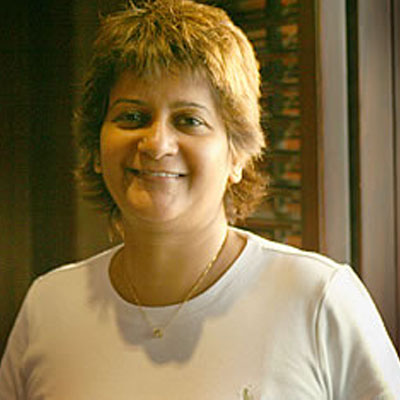
In an interview with Indiantelevision’s Nasrin Sultana, Sunita Rajan, BBC Worldwide VP – advertising sales, Asia and Australasia, talks of BBC’s growth plans for this market.
Excerpts:
|
How is BBC giving the Asian region a push with its content, marketing and ad sales strategy?
We have a strong presence in the Asia Pacific region. As far as the editorial position goes, our news bureaus are spread widely all over. We have Asia centric programming like Asia Business Report, Asia This Week and news features for Asians. We recently launched an Asia specific show – World News Today presented by Nik Gowing. All the shows are produced in London but our target is Asian audiences.
Our India specific show India Business Report was favoured so much that we had to bring it back on air. But we are an international news channel. So our competition is not the local news channels of any country.
|
|
Asia has been a strong revenue driver for BBC. How much does India contribute as a percentage to BBC’s total ad sales kitty?
Over one third of the revenue comes from Asia. We do not break it down market by market. So I won’t be able to tell you about the Indian market alone. We have six beams of ad slots and rates across the globe. So an ad rate can be similar for India as well as in Latin America or South Asia. We kind of dice and slice it all across the globe.
But the good thing is a good amount of ad sales comes from the Asia Pacific region. In recent times, we have seen a huge interest from our Indian clients to reach out to the Asia Pacific markets. At the moment, we are carrying campaigns by Indian clients targeted at the international audience.
|
|
With this trend, how has BBC evolved an ad sales strategy?
After some amount of internal research we found that there is a common trend among our audiences across countries. One commonality is that they are internationalists. Internationalists are those who are concerned about international news and have an international lifestyle. Keeping this in mind, we launched the “Internationalists campaign.” The campaign is nothing but telling “this is what our audience looks like”. What we did was we picked and chose the basic commonality of all the internationalists, which we identified.
|
|
What is the basic idea behind the ‘Internationalists campaign’?
Reaffirming and re-auditing that our audience are affluent. It is to give us a profile of our audience. We are focusing on this – through our content as well as on the advertising front. We are talking about Indians who are ‘internationalist’ in their attitude. We also did the Global Indian survey to find out who are affluent, who work in MNCs, who travel abroad, who use foreign products, and who are interested in the stock market.
|
|
What is BBC’s audience profile in India?
Affluent Indians living in the top 20 cities form the BBC audience profile. They are reflected in the ‘Internationalist’ campaign. The Indian audience or the ‘Internationalist’ is identical to any other Internationalist living in Tokyo, Korea or USA.
|
 |
‘Affluent Indians living in top 20 cities form BBC’s audience profile’
|
|
|
Who are your major advertisers in India?
We have 90 brands advertising coming from India on our channel. They are from various categories – financial institutions, IT and auto. Blue chip companies like Nokia and Samsung are strong advertisers on our channel.
|
|
Since BBC has also launched a GEC, how are you tapping advertisers beyond the traditional news genre?
GEC definitely has a different profile of advertisers. FMCG companies are an important breed of advertisers who back GECs. We are looking at tapping such companies.
|
|
What are the marketing and advertising plans for the kids channel Cbeebies?
Cbeebies is for pre-schoolers. No kids channel in India has such a target group. Cbeebies is very popular in other markets where we have launched. BBC’s Teletubbies is a most liked brand. We are looking for advertisers for our kids channel.
|
|
Cbeebies is still restricted to a DTH footprint. How are you getting into carriage deals with the cable networks?
Right now we are available on the TataSky DTH platform. But we are in talks for distribution deals across cable networks.
|
|
How do you tap advertisers for Radio One where you are an equity partner with Mid-Day Multimedia?
Though BBC has a stake in Radio One, we do not handle the advertising at all.
|
|
BBC recently launched BBC Knowledge in Singapore. When are you bringing it to India?
We launched BBC Knowledge in August on the IPTV platform. The channel showcases some of the best features and documentaries. We have 3000 hours of content in our archives. We are soon to launch BBC Knowledge in other markets too.
|
|
How is the recently launched commercial venture BBC.com faring?
BBC.com is our commercial venture to offer advertising on BBC’s international online service for users outside the UK. The current site has been very successful in attracting international traffic. Currently, it has more than 40 million unique users per month from outside the UK who mainly access the news pages.
|