Hindi
PVR, Prestige tie up for 60 screens

MUMBAI: PVR Cinemas has entered into an agreement with Bangalore-based Prestige Group that will allow it to open and operate 60 screens in South India.
According to the deal, PVR will be operating multiplexes for all of Prestige’s Forum malls. The partnership will be on a profit sharing basis.
“The Forum takes pleasure in announcing that PVR will be operating the cineplexes for all the Forum malls at Bangalore including Whitefield and Shantiniketan. They also include malls coming up at Cochin, Hyderabad, and Mangalore,” said Prestige group chairman and managing director Irfan Razack.
 “Since the inception of The Forum, we have made a conscious effort to provide an exhilarating experience to the customers who enter the mall and thus have a clear strategy to take it forward. The association with PVR is a part of this strategy. While competition is an indelible part of the business environment, partnerships today are paving the way for growth and to mutually complement each others’ businesses”, added Razack.
The Forum mall is Bangalore’s first and most popular malls. The tie-up is a part of Prestige’s growth plan with a strategy to provide the ‘Forum Experience’ across South India.
“Retail today is like a focal point of social gathering at a place for relaxation, entertainment, good food and comfort zones. We want to think big, for us a mall means at least 200,000 square feet. We want to provide people with multiple choices in entertainment, and so our malls in most places will generally have six screens or more,” informed Razack.
As per the current approvals, Prestige has planned 10 malls till 2011 ranging from 600,000 to 1,000,000 square feet. The mall in Cochin will have an area of 1,000,000 square feet, with 700,000 square feet accounting for retail and the balance split over hospitality, office space and screens.
Razack is looking at an average of six screens per mall, or about 60 screens for the ten malls. He is looking at cities like Coimbatore, Belgaum, Hubli, Mysore, Vijayawada, Goa and Pune for setting up malls. Depending upon the studies by the Prestige group and PVR, each mall will have three screens or more.
By 2012-15 depending upon the speed at which the government infrastructure reaches some of these tier II and tier III cities, Razack has plans for another 20 malls across the country, but mainly in South India, and is looking at about 200 screens in all, making Forum one of the largest players in this segment.
For PVR, the multiplex with eleven screens at the Forum mall in Bangalore is the highest grossing multiplex across the country that attracts the highest number of footfalls.
Last year, PVR announced that it plans to launch digital cinema in small towns under the PVR Talkies brand. At present this initiative is limited to just three cities – Aurangabad, Latur and Baroda. According to PVR Limited president and CEO Pramod Arora, this is because a level of maturity is to be attained by cine goers in villages and smaller towns in India to make it feasible to launch multiple screens there.
“We will have about 250 additional screens at an investment of about Rs.3.5 billion over the next three years,” said PVR Limited joint managing director Sanjeev Kumar Bijli. At present, PVR has 95 screens and plans to add another 31 by end March 2008 in Chennai, Mumbai and Chandigarh.
According to Bijli, online revenues nationally account for seven per cent of sales, while in Bangalore the revenues, especially by way of ticketing through ATMs,’ are about 20 per cent of the total ticket sales.
During the last fiscal (April 2006 to March 2007), PVR’s net profit had gone up by 93 per cent to Rs 105 million. According to Arora, PVR’s net profit during the last two quarters of this financial year (April-June 2007 and July- September 2007) has already surpassed this and is in excess of Rs 120 million.

Hindi
GUEST COLUMN: Why film libraries & IPs are the new engines of growth
Unlocking value through catalogue strength and IP synergy
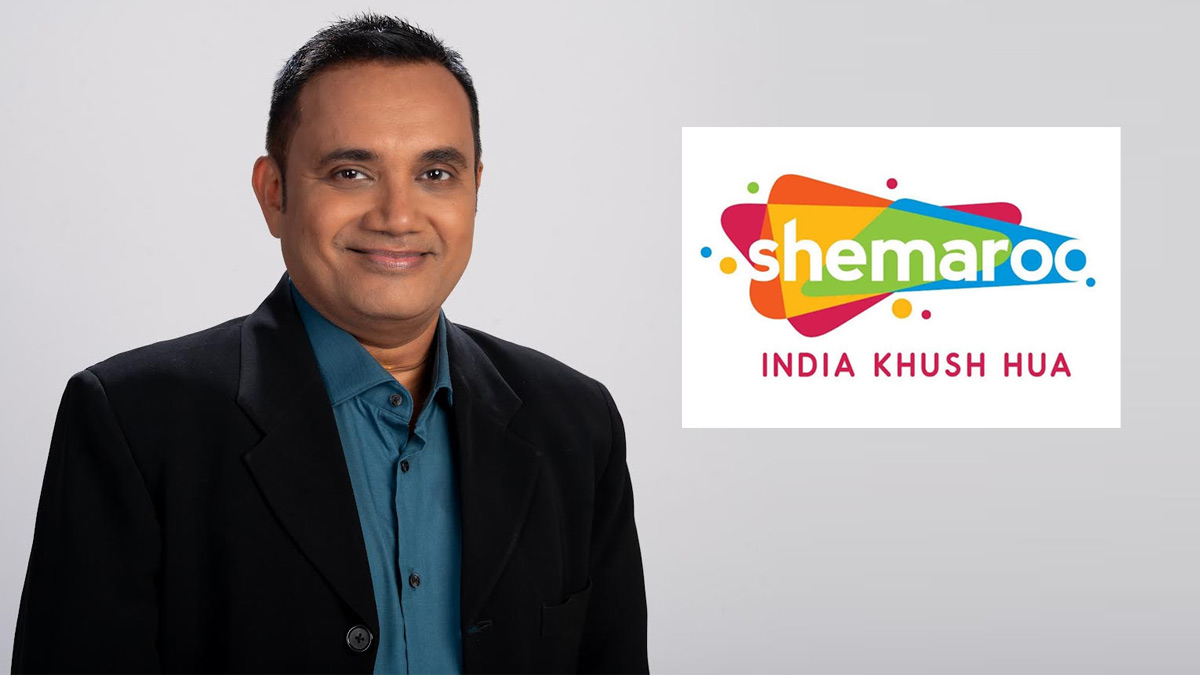
MUMBAI:In a media landscape defined by fragmentation, platform proliferation, and ever-evolving audience behavior, the economics of filmmaking are undergoing a fundamental shift. No longer confined to box office performance, a film’s true value is now measured across an extended lifecycle that spans digital platforms, syndication networks, and global markets. As content consumption becomes increasingly non-linear and algorithm-driven, film libraries and intellectual properties (IPs) are emerging as strategic assets, capable of delivering sustained, long-term returns. For Mohan Gopinath, head – bollywood business at Shemaroo Entertainment Ltd., this transformation signals a decisive move from hit-driven models to portfolio-led value creation. In this piece, Gopinath explores how legacy content, when intelligently repurposed and distributed, can unlock recurring revenue streams, why the interplay between catalogue and original IP is critical, and how media companies can build resilient, future-ready entertainment businesses.
For all these years, we thought that a film is successful if it performs well in theatres. There are opening weekend numbers, box office milestones, and distribution footprints that gave a good picture of how the movie has done commercially and also tell us about its cultural impact. However, there are multiple platforms today, always-on content ecosystem, which has caused a shift. Today, the theatrical performance is not the culmination of a film’s journey but merely the beginning of a much longer and more dynamic lifecycle.
Film libraries today are emerging as high-value, constantly evolving assets that deliver sustained returns well beyond initial release cycles. This becomes a point of great advantage for legacy content owners with diverse catalogues, to shape long-term business outcomes.

According to FICCI-EY, the media and entertainment industry of India achieved a valuation of Rs 2.78 trillion in 2025 which is expected to reach Rs 3.3 trillion by 2028 through a compound annual growth rate of approximately 7 per cent and digital media will bring in more than Rs 1 trillion to become the biggest sector which generates about 36 per cent of overall market revenues.
This shift is the expansion of distribution endpoints. We know how satellite television was once the primary secondary window but today, it coexists with YouTube, OTT platforms, Connected TV, and FAST channels. Each of these platforms caters to distinct audience demographics and consumption behaviors, helping content owners to obtain more value from the same asset across multiple formats.
For instance, films that had great reruns, now find continuous engagement across digital platforms. On YouTube, classic Hindi cinema continues to attract significant viewership, reaching audiences across generations and geographies with remarkable consistency. At Shemaroo Entertainment, this is reflected in our film library shaped over decades as part of a long association with Indian entertainment. From classics such as Amar Akbar Anthony to much-loved entertainers like Jab We Met, Welcome, Dhamaal, Phir Hera Pheri, Dhol, Golmaal, and Bhagam Bhag, many of these titles continue finding new audiences while retaining their place in popular memory. Their enduring appeal reflects how culturally resonant stories can continue creating value over time. Similarly, FAST channels have created curated, always-on environments where catalogue content can continue to thrive through star-led and genre-based programming.
This multi-platform approach has very well transformed films into long-tail IP assets which are capable of generating recurring revenue across advertising, subscription, and syndication models.
The evolution of audience behavior is equally important. Nowadays, it’s more important to find what’s more relative than what’s recent as viewers are more influenced by mood, memories, and algorithmic suggestions than by release schedules. Even if a movie was released decades ago, it can trend alongside a newly released movie, if surfaced in the right context. Thoughtful packaging, whether through festival-based playlists, actor-driven collections, or genre clusters, allows catalogue content to remain dynamic and continuously discoverable. Shemaroo Entertainment has built extensive film libraries over decades and its focus has mostly been on recontextualizing content for the consumption of newer environments. This process doesn’t just include digitization and restoration, but also re-packaging of films as per platforms.
Syndication itself has evolved into a key growth driver. In perspective, when looking at the domestic market, curated content packages continue to find strong demand across broadcast and digital platforms. Meanwhile, in the international market, especially in markets like Middle East, North America and Southeast Asia, the appetite for Indian content is opening up new monetization avenues. Here, the ability to package and position catalogue content effectively becomes as important as the content itself.
Importantly, the need to re-package catalogue content does not diminish the role of new content. In fact, originals and fresh IP are essential to sustaining the long-term value of a film library because they act as discovery engines that bring audiences into the ecosystem, while catalogue content drives depth, retention, and repeat engagement.
This interplay between the “new” and the “known” is what defines a robust content strategy today. While new films generate spikes in consumption, catalogue titles offer familiarity and comfort. These are factors that are increasingly valuable in an era of content abundance and decision fatigue. This is also shaping our strategy, drawing value from both a deep catalogue assets and a growing focus on original IPs to strengthen long-term audience engagement and build more predictable revenue streams.
There is growing recognition that long-term value in entertainment will be shaped not only by how intelligently existing content continues to live, travel and find relevance, but also by how consistently new stories are created to renew that ecosystem. In that sense, film libraries and original IP are not parallel bets, but reinforcing engines of growth. For media companies, the opportunity lies in making these two forces work together, because that is increasingly where more resilient and predictable businesses are being shaped.
Note: The views expressed in this article are solely the author’s and do not necessarily reflect our own.