AD Agencies
‘2009 was our defining year’ : OMD India managing director Jasmin Sohrabji


It was in 2007, when global marketing communications holding company, Omnicom, entered India with its media planning and buying network OMD.
Jasmin Sohrabji, a double post-graduate in Economics and Business Management who had spent 16 years with MediaCom, was taken on board as managing director and the agency went on to make a fortunate start with clients like Ambuja, Parle Agro and J&J in its kitty.

2009 was almost a defining year for OMD as it took up quite a few biggies under its banner, expanded footprints to Delhi and Chennai and set up new offerings in analytics and digital.
And now it’s kicked off 2010 on a high note too. It has bagged businesses like Sony Network, Ferrero and Reliance.
In an interview with Indiantelevision.com’s Anindita Sarkar, OMD India managing director Jasmin Sohrabji speaks about her company’s growth plans at large.
Excerpts:
|
In comparison to the other agencies, OMD is still a new player in the Indian market. Has it been a tough journey so far?
OMD launched in India in early 2007, and the experience has been exciting, challenging and gratifying ever since! We kicked off with a very sound base (Ambuja, Parle Agro and J&J) and have built consistently and successfully since. 2009 was OMD India’s defining year where we established ourselves as a strong, top player at a national level. |
|
|
Being a new entrant, was facing up with the slowdown heat in the Indian market more challenging to gain clients?
We were very fortunate to have our best year in 2009. We had a record number of wins (HP, Henkel, VISA, Danone, Nissan, etc); we set up two new offices (Delhi, Chennai); we launched our Analytics and Digital offer and we closed the year with global awards and recognition. |
|
|
Can you revisit the time when you started off in the Indian market and the transitions that you witnessed through time?
Gosh, I have spent two decades in this industry and witnessed too many changes and transitions! One of the most striking of all has been in the area of availability of research and access to data; technology…both in the medium itself as well as in accessing and interacting with media and consumers; the other noteworthy change has been the shift in the role and definition of what media agencies provided as a service…we moved from a very simple ‘planners and ops executives’ managing client budgets to a much evolved, technologically sophisticated and consumer-centric thinking and creative solutions. What has remained consistent through the decades is ‘never having enough talent’! |
|
|
How has the first half of the year fared for the OMD in terms of revenues and clientele?
Very well. We kicked off 2010 with the Sony Network win, and followed up with Unilever’s digital biz. More recently we won Ferrero and Reliance, among others. We hope to maintain the growth momentum we have been experiencing through the remainder of 2010. |
|
|
Has it been better than last year?
Given the operation is just over three years old, the growth over last year has been extremely high. |
|
|
How is dealing with the Indian clients different from the others globally?
Clients differ depending on their needs and experiences with agencies; they differ in the level of interaction and involvement with their agency partners, and on many such and other parameters. However, I really do not have a strong point of view of difference between Indian and global clients. Among our global clients, we have some who operate largely within the local environment and strategic needs; and there are those who are very much aligned to global strategies and/or processes. In fact, we recently won an award (The Internationalist, UK) for best local execution of an international campaign…so it really does not matter how different the client style is, what’s important is whether the teams at OMD India have a keen appreciation for individual working styles and are able to deliver standout strategies and solutions to the briefs we are given. |
|
|
|
|
How are your other divisions of OMD faring?
Our most successful offer outside traditional is digital. In addition to existing full service clients, we added digital only clients (Unilever, ICICI, HCL, etc). Additionally, we set up Analytics, which has now started gaining momentum. We have two new offerings starting up later this year. |
|
|
CPRP is often the final clincher for a pitch and the sole aim for all to target and deliver. Do you see any new change in this methodology?
Not sure why we are focusing on a change in methodology…we should be looking at value adding to the metric with more engaging qualifiers. If the job of the metric is to compare cost to cost, CPRP does its job. If we are looking to add new dimensions of effectiveness to the cost of contact, then let us evaluate other metric options, not just methodology. |
|
|
While above 50 per cent of investments for brand building is made towards above-the-line activities, advertisers are also making investments in below-the-line activities. How do you perceive this medium?
Below the line activities have always been a relevant part of the recommended mix. The issues around these activities were largely to do with measurement and scalability. What began as ad-hoc and experimental, has now become a critical piece in the communication mix. One is, and will continue to see a lot more action in this space. The biggest advantage of BTL activation is it allows for flexibility and does not have to be templated. The scale, the message, the execution can be customised to the budget, the market and the core TG! |
|
|
Which advertising platform is expected to show the maximum growth?
While digital and radio have the potential to scale up on their currently smaller bases, TV itself will offer newer platforms of addressability and technology through DTH, etc. Radio has never really seen its potential in this market, while digital has already made small dents in traditional media budgets! TV continues to hold out in its traditional avatar…and keeps re-inventing its offer – through content, scale and technology/addressability. |






AD Agencies
AdTrust Summit 2026 to examine trust, AI and Gen Alpha in advertising
Two-day summit in Mumbai to explore ethics, regulation and the future of advertising trust
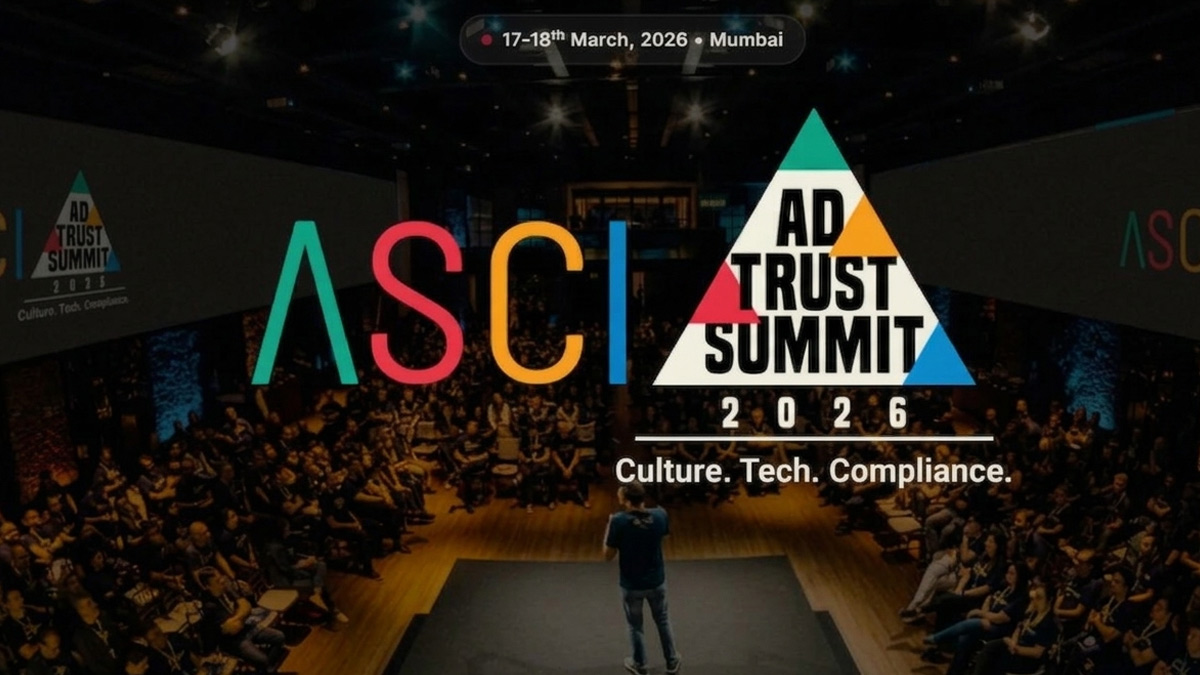
MUMBAI: At a time when advertising is navigating a delicate trust deficit, the Advertising Standards Council of India is preparing to bring the industry to the table. On 17 and 18 March, the body will host the inaugural AdTrust Summit 2026 in Mumbai, a two-day gathering designed to spark conversation around responsibility, regulation and credibility in modern advertising.
The summit, to be held at the Jio World Convention Centre in Bandra Kurla Complex, will bring together leaders from advertising, media, technology and policy to examine how brands can build trust in a marketplace increasingly shaped by algorithms, influencers and artificial intelligence.
In an age of deepfakes, dark patterns and blurred lines between content and commerce, the question is no longer just how brands capture attention, but whether audiences believe what they see. The AdTrust Summit aims to unpack that challenge.
Day one will turn its attention to the youngest digital natives. Titled Decoding Gen Alpha, the session will unveil ‘What the Sigma?’, a study by ASCI and Futurebrands Consulting that explores how children growing up in a hyper-digital environment encounter advertising and commercial messaging.
The report presentation will be delivered by Santosh Desai, founder and director at Think9 Consumer Technologies and a social commentator known for his insights into consumer behaviour. The discussion that follows will attempt to decode how Gen Alpha consumes media, interacts with brands and navigates the growing overlap between entertainment and marketing.
In a move that mirrors the subject itself, two Gen Alpha students will also join the conversation, offering a rare perspective from the generation advertisers are trying to understand.
The second panel of the day will shift the focus from observation to implication, asking what the report’s findings mean for brands, agencies and society. Speakers include Karthik Srinivasan, communications strategy consultant; Preeti Vyas, president at Mythik; and Abigail Dias, associate president planning at Ogilvy. The session will be moderated by Sonali Krishna, editor at ET Brand Equity.
Day two moves from insight to regulation. Under the theme From Compliance to Trust, ASCI will release its Ad Law Compendium, a comprehensive guide to India’s advertising regulations.
The day will open with a keynote by Sudhanshu Vats, chairman at ASCI and managing director at Pidilite Industries, followed by a chief guest address by Sanjay Jaju, secretary at the Ministry of Information and Broadcasting.
Legal experts from Khaitan & Co., including Haigreve Khaitan, senior partner, and Tanu Banerjee, partner, will present an overview of the current advertising law landscape in India and examine whether existing frameworks are equipped to deal with emerging technologies and formats.
Subsequent panels will explore issues increasingly shaping the industry’s ethical compass. Conversations will range from the limits of persuasive design and the rise of dark patterns, to the growing scrutiny brands face from digital creators and consumer watchdogs.
One session will also feature Revant Himatsingka, widely known online as the Food Pharmer, whose critiques of packaged food brands have sparked debate around transparency and corporate accountability.
Later discussions will turn toward media literacy among Gen Alpha, asking how children can be equipped to navigate a digital world where gaming, content and commerce are becoming indistinguishable.
The summit will conclude with a final panel on the future of advertising, bringing together voices from agencies, legal circles and technology platforms to discuss how innovation, intelligence and integrity can coexist.
For an industry built on persuasion, trust has always been its quiet currency. But as audiences grow more sceptical and digital ecosystems more complex, that currency is under pressure.
Events like the AdTrust Summit suggest the advertising world knows it cannot afford to take credibility for granted. The real challenge now is turning conversation into commitment.







