Hindi
IFFI competition should strive for premiere films: Dan Wolman
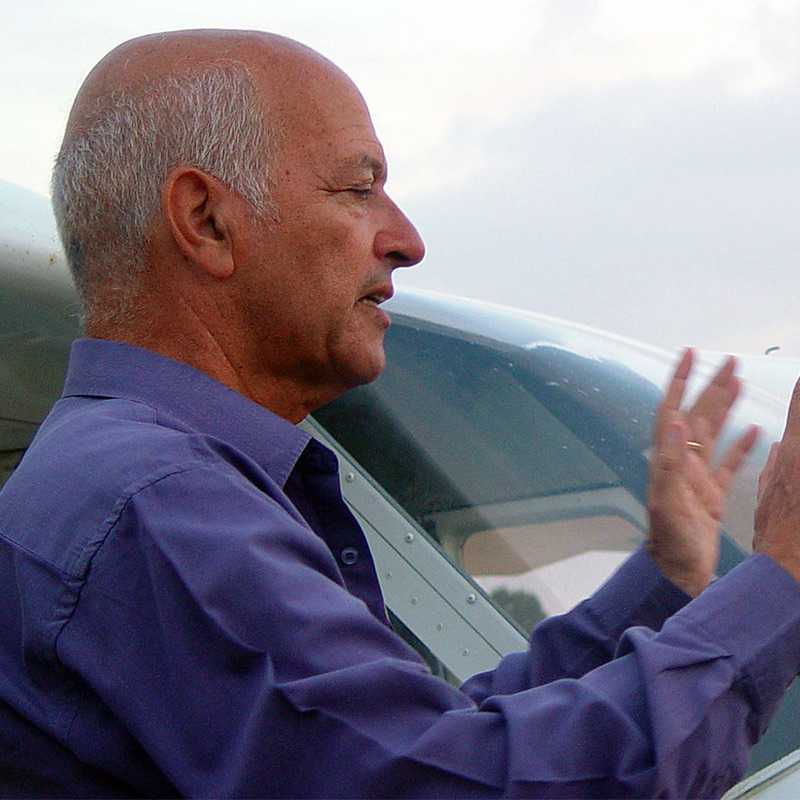
PANAJI: International Jury member Dan Wolman feels the International Film Festival of India (IFFI) should strive at getting only new films that have not been to other festivals for its competition section.
Films which have won awards at other festivals can be screened in the World Cinema section, he said, taking part in the last Open Forum at the current Festival on ‘Success of Film Festivals: Quality of films‘.
He wanted IFFI to take pride for what it had achieved, instead of always trying to compare itself with Cannes or Berlin. He said IFFI is already one of the top festivals of the world, but a lot has to be done to take it to the very top. He said the ambience is good, the selection is very good, and there is no reason why India should not be able to attract the best films from the world over particularly as it has such high prize money.
He felt that delegates from overseas should work as some kind of ambassadors for IFFI when they go back, and the Indian missions could also play a major role in this respect.
He said film culture can grow if cinema studies are introduced at the school or college levels, and wanted the IFFI Secretariat to invite the best in the world for master classes or workshops.
Renowned filmmaker AK Bir who is also a member of the Steering Committee said Festivals are voyages of discovery and one get to see films made in the cultural milieu of their country of origin.
Eminent filmmaker Laxmikant Shetgaonkar regretted that there is little representation of India in foreign film festivals. But he wanted to know if India should replicate Cannes or have its own identity. The aim should be to use the festival to improve the quality of Indian films.
Referring to media reports, he said not getting enough sponsors is no reason for shifting the Festival from Goa.
Referring to some complaints, he said the IFFI this year is in a changing phase having been separated from the Directorate of Film Festivals. Furthermore, the local arrangements are the responsibility of the Entertainment Society of Goa. He agreed that the ESG should take films to other parts of the state.
Both he and U Radhakrishnan who moderated the Open Forum said there should be a separate section for Konkani cinema.

Hindi
Remembering Gyan Sahay, the lens behind film, television and advertising
From a puppet rabbit selling poppadums to Hindi cinema, he framed it all.
MUMBAI: There are careers, and then there are canvases. Gyan Sahay, the veteran cinematographer, director, and producer who passed away on 10 March 2026 in Mumbai, had one of the latter. Over several decades in the Indian film and television industry, he turned lenses, lights, and the occasional puppet rabbit into something approaching art.
A graduate of the Film and Television Institute of India (FTII) in Pune, Sahay built his reputation as a director of photography across a career that stretched from the early 1970s all the way to the digital age. He was the kind of craftsman who understood that a well-composed shot is not merely a technical achievement but a quiet act of storytelling.
For most Indians of a certain age, however, Sahay will forever be the man behind the rabbit. His direction of the iconic long-running television commercial for Lijjat Papad, featuring its now-legendary puppet bunny, gave the country one of its most cheerfully persistent advertising images. It was the sort of work that sneaks into the national subconscious and takes up permanent residence.
His big-screen credits as cinematographer include Anokhi Pehchan (1972), Pagli (1974), Pas de Deux (1981), and Hum Farishte Nahin (1988). In 1999, he stepped behind a different kind of camera altogether, making his directorial debut with Sar Ankhon Par, a drama that featured Vikas Bhalla and Shruti Ulfat, with a cameo by Shah Rukh Khan for good measure.
On television, Sahay was particularly prized for his command of multi-camera production setups, a skill that made him a go-to technician for large-scale shows and reality programmes. In an industry that has never been especially patient with complexity, he was the calm hand on the rig.
In later life, Sahay turned teacher. He participated regularly in masterclasses and Digi-Talks, often hosted by organisations such as Bharatiya Chitra Sadhna, sharing hard-won wisdom on cinematography, the comedy of timing in a shot, and the sweeping changes brought by the shift from celluloid to digital. He was also said to have been involved in a project concerning a biographical film on Infosys co-founder N.R. Narayana Murthy.
Tributes from the film industry poured in following the news of his passing, with colleagues remembering him as a senior cameraman who served as a rare bridge between two entirely different eras of Indian cinema. That is, perhaps, the finest thing one can say of any craftsman: he kept up, and he brought others along with him.