Connect with us

MAM

Nissan to double marketing spend for the year

Published

on

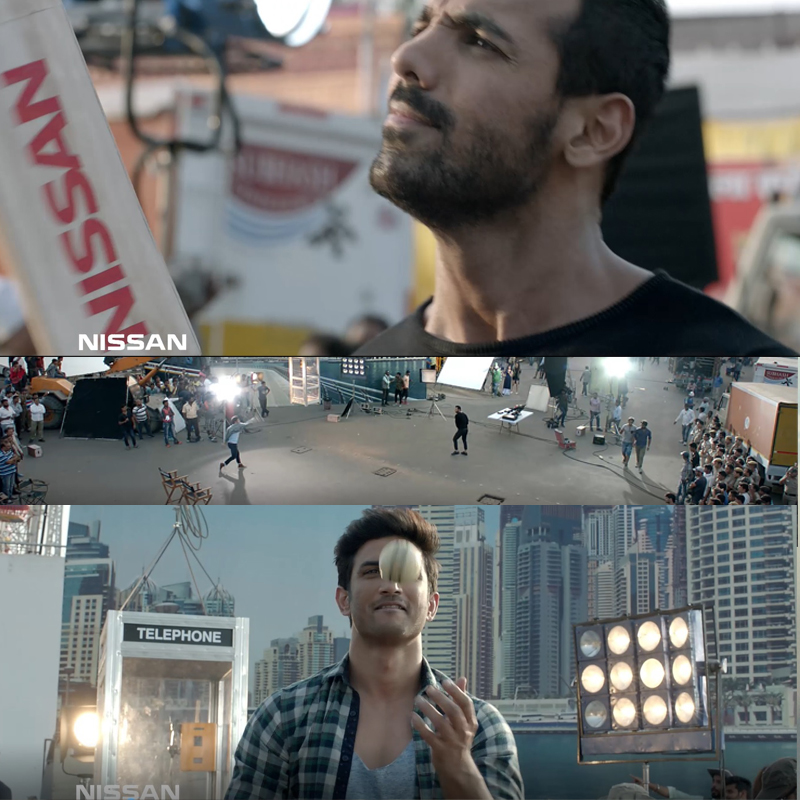
MUMBAI: With the slowdown taking place in the auto sector many companies are looking at ways to cut costs including marketing. However, since Nissan is a new entrant in the market its marketing spend will more than double this year while promotional spend on a per car basis will rise by 30 per cent.

Hover Automotive India is Nissan‘s sales and marketing partner in India. The company‘s CEO Dinesh Jain said that 60 per cent of its spend goes towards above the line activities.

“Out of that 55 per cent goes towards television,” he said. The slowdown, he concedes, has posed challenges which mean increasing operational efficiencies and making sure that the marketing rupee travels further.
 
The company has tied up with National Geographic Channel for the show ‘X-treme Trail‘ which is currently airing every Sunday at 9 pm. The company‘s SUV is featured in the show. Jain adds that it did not want to be associated with a run off the mill show. “We wanted a show that would showcase our product‘s capabilities. While the show was National Geographic Channel‘s idea the extreme part of it was co-created. We made sure that our vehicles were available. We also gave management time and also bore some part of the production cost.

Advertisement

“Brand Nissan is known for its product Innovations around the world. Nissan X-trail with the new 2.0L M9R fuel-efficient diesel engine combined with the most capable ALL MODE 4X4-i system makes it a unique vehicle in its class. In the X-treme Trail program, the Nissan X-trail has surpassed the expectations of all 19 amateur drivers and the two final winners who successfully drove it to one of the most difficult terrains in the world, the Siachen Glacier which also reconfirms the claims that the car is perfectly designed for city as well has off-road driving.”

Click to comment

Leave a Reply

Your email address will not be published. Required fields are marked *

Digital

The creative cull: how AI is coming for the marketers, ad men and researchers

Robots aren’t taking over yet, but the writing may already be on the wall for some of the US’ most glamorous white-collar jobs.

Published

on

CALIFORNIA: The robots are not, it turns out, storming the factory floor. They are sitting quietly at a MacBook in a Soho agency, rewriting your copy, summarising your focus groups and generating your mood boards, and nobody has been sacked. Yet.

A new report from Anthropic, the AI company behind the Claude chatbot, offers the most rigorous look to date at what artificial intelligence is actually doing to jobs, as opposed to what doomsayers and boosters claim it might. The verdict from economists Maxim Massenkoff and Peter McCrory is nuanced but pointed: there is no mass unemployment so far, but some sectors have good reason to be nervous. Marketing, market research and the arts are squarely in the crosshairs.

The researchers introduce a new measure called “observed exposure.” It goes beyond theoretical speculation about what AI could do and instead tracks what it is already doing, drawing on real Claude usage data. The approach is clever. They weight automated uses, where the machine performs the job entirely, more heavily than augmentative ones, where it merely assists. They then map this onto roughly 800 occupations, weighted by how much time workers actually spend on each task. For now the target user base has been the US market, but the findings offer a glimpse of what may be happening in other countries as well.

Advertisement

The results are sobering for the creative and analytical classes. Market research analysts and marketing specialists clock in at 64.8 per cent observed exposure, meaning nearly two-thirds of their daily tasks are already being performed, at least in part, by AI in professional settings. The leading automated task is preparing reports, illustrating data graphically and translating complex findings into written text. In other words, this is the kind of work junior analysts spend most of their days doing.

Arts and media fare little better. The sector shows meaningful theoretical exposure, as large language models can in principle handle the lion’s share of tasks, though observed usage still lags behind capability. The gap is narrowing, however, and the direction of travel is unambiguous.

Here is the sting in the tail. The workers most exposed to AI disruption are not, as popular mythology suggests, low-paid drudges. They are older, better educated, more likely to be women and considerably better paid, earning 47 per cent more per hour on average than their least-exposed counterparts. Graduate degree holders are nearly four times as prevalent in the high-exposure group. The creative professional, the senior analyst and the market researcher with an MBA are precisely the people who should be paying attention.

Advertisement

“We’re not talking about the checkout operator,” the paper implies. “We’re talking about the account planner.”

The most alarming signal in the data concerns not those already in jobs, but those trying to enter them. Among workers aged 22 to 25, hiring into highly exposed occupations has slowed measurably since the release of ChatGPT in late 2022. There has been a 14 per cent drop in the job-finding rate, a figure the authors describe as “just barely statistically significant.” Young people are, in effect, finding the door to exposed professions quietly closing. Whether they are staying in education, taking different jobs or simply giving up is not yet clear.

For a bright graduate eyeing a career in market research or media production, this is not merely an academic data point. It is a flashing amber light.

Advertisement

The paper is careful about what it does not find. Unemployment among highly exposed workers has not risen in any statistically meaningful way since the ChatGPT era began. The apocalypse has not arrived. Even in the Computer and Math category, the most theoretically exposed of all, Claude currently covers just 33 per cent of tasks in practice. The gap between what AI can do and what it actually does at scale in professional workflows remains vast.

Think of it less like a tsunami, the authors suggest, and more like a slowly rising tide. The internet did not destroy journalism overnight. It took 20 years and the collapse of a generation of classified advertising revenue. The China trade shock also took decades to fully register in unemployment statistics, and economists are still debating the numbers.

What does this mean for the luvvies, the admen and the pollsters? The honest answer is: not much yet, but watch this space. AI is already doing the grunt work, including data summaries, draft press releases and boilerplate creative briefs. The question is whether it stops there or continues climbing the value chain.

Advertisement

The authors are building a framework to track exactly that and promise to update it as new data arrives. If the tide does come in, they want to see it coming before the sandcastles are already gone.

For now, the creative industries can breathe, but perhaps not too deeply. The machine is not at the door. It is already at the desk.

Advertisement
Continue Reading

Advertisement News18
Advertisement All three Media
Advertisement Whtasapp
Advertisement Year Enders

Copyright © 2026 Indian Television Dot Com PVT LTD

This will close in 20 seconds