Hindi
Pappu Can’t Dance Saala loses steam after a decent start

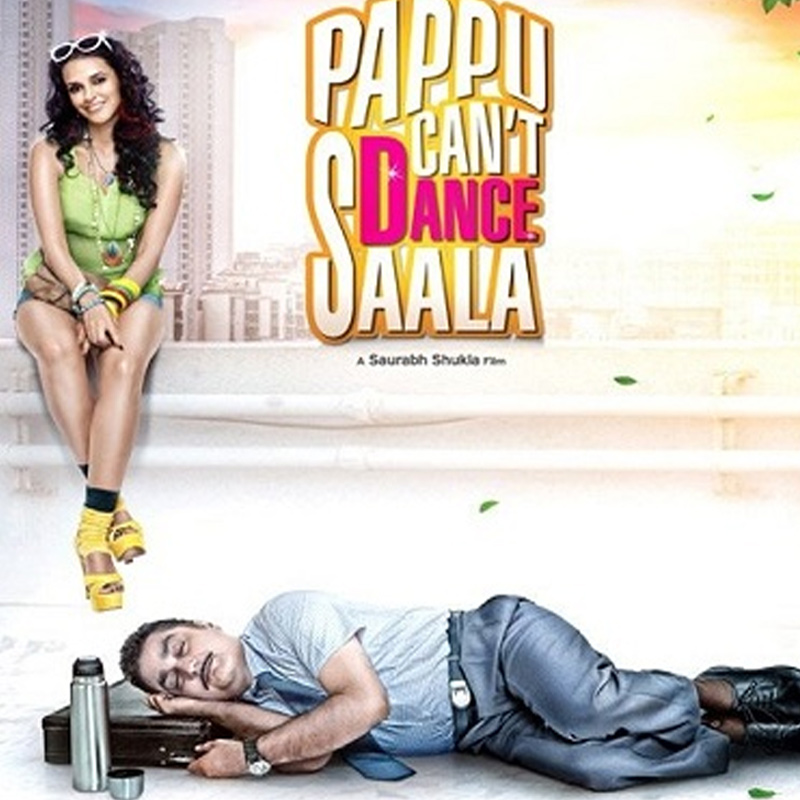
MUMBAI: Pappu Can‘t Dance Saala, as the title suggests, would be a comedy revolving around Vinay Pathak.
 |
Producer: Sameer Nair, Saurabh Shukla. |
The thing with Vinay Pathak is that while he may fit into the character of a middle class simpleton, he just can‘t go beyond that due to which he ends up doing the same kind of roles with same input.
Pappu Can‘t Dance Saala is about how a simple man from Varanasi, Vinay Pathak and a street smart girl, Neha Dhupia, a film chorus dancer end up in the same house. They were neighbours in a government housing building, but following a raid by the vigilance department, Neha Dhupia is evicted from her flat. Suspecting Vinay Pathak of having complained to authorities, she muscles her way into his house, also taking over his bedroom.
The fun begins with the duo‘s petty squabbling and fights; the problem is the fun does not last long enough. As the film progresses, things become repetitive and the interest sags. Script is contrived as per convenience and none of the two main characters possess the ability to carry the film on their own shoulders. There are notmany characters either to share the screen time.
The script loses steam after a decent start and so does direction, which loses hold on the film. While the dialogues are good at places, the other aspects like music, cinematography are passable.
Vinay Pathak and Neha Dhupia do well within their limited range. Naseeruddin Shah is good in a special appearance. Rajat Kapoor, Brijendra Kala, Veena Mallik, Sanjay Mishra etc give fair support.
Pappu Can‘t Dance Saala would find some of its viewers on TV and video but hardly any at the cinema halls.
Jo Hum Chahein is forgettable
 |
Producer: Aman Gill. |
Jo Hum Chahein is a family enterprise of three brothers, Aman Gill (producer), Pawan Gill (director) and Sunny Gill (lead actor), who is being launched with this film.
It is a coming of age story of a young management graduate, Sunny Gill, who reek of overconfidence and always wants to be number one in all the challenges he faces.
In same vein, he wants to top the performance list in his stock broking firm in Mumbai where he has been accepted as an apprentice and also in the same spirit of challenge he pursues a girl, Simran Mundi to add to his list of conquests.
Simran, however, is not an easy catch since she has her idea of love well-defined. As it would happen, her reluctance to succumb to his passes only makes him fall in love with her.
At the same time, in his quest to be at the top of list in his office, he falls prey to his senior colleague‘s ploy, ending up as toy boy for a wealthy widow. What follows is a usual love story, falling in love, the mandatory misunderstanding, the man straying in greed and the eventual positive ending.
I am not calling it a happy ending because by the time the film ends, you are anything but happy; spent and mentally fatigued is more like it! (Comparing the theme as modern day Shri 420 would be sacrilege.)
The film rests mainly on just two characters, the lead pair, both new and not at all prepared to carry this film with no twists and turns.
The script is routine with little drama. Direction is average and the first half has overdose of songs even as the musical score is not much of help. Dialogue lacks punch. Performance wise Sunny Gill is okay with limited range while Simran Mundi is expressionless. Ally Khan did well.
Jo Hum Chahein is forgettable.