Hindi
50 years after, FTII diplomas not recognised for higher studies
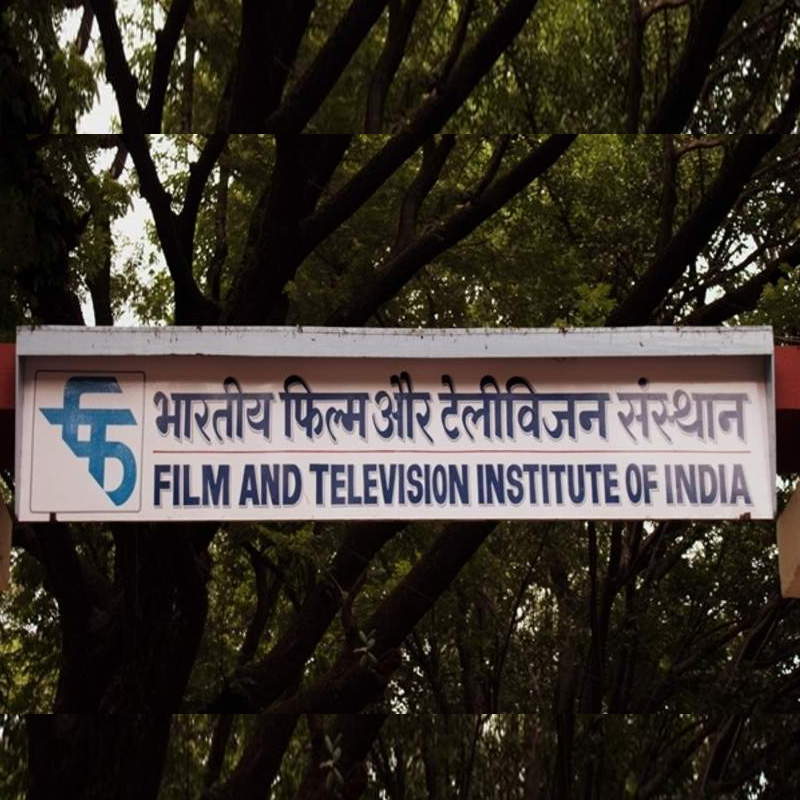
NEW DELHI: Even half a century after it was set up, the Film and Television Institute of India, Pune, has failed to get equivalence status for its post-graduate diploma courses in various disciplines of film and television.
As a result of this, those who pass out of the FTII are unable to take up higher studies and research. Taking note of this, a Parliamentary Committee has asked the Information and Broadcasting Ministry to expedite this matter with the Human Resource Development Ministry and the Association of Indian Universities. Interestingly, even the National School of Drama enjoys this equivalence status.
Meanwhile, the I&B Ministry has prepared a Detailed Project Report with the help of a group of experts to upgrade the Institute and its infrastructure. A programme has already been undertaken to upgrade the infrastructure during the 11th and the 12th Plan period in a phased manner.
A bill is expected to be introduced in Parliament to declare the FTII an “Institute of National Importance” to upgrade the position of FTII at the national and international levels to attract talented faculty, staff and students and to start high level research and innovation schemes related to Film, TV and allied media.
The FTII was set up in 1960 in Pune, as a premier Institute for imparting training in art and technique of Film making. The Institute has been conducting Post Graduate Diploma in Film and Television in various disciplines, namely, Direction, Cinematography, Audiography, editing etc. FTII also runs various short courses for working professionals.
The Standing Committee on Information Technology regretted that “no initiatives have been taken to upgrade the status of FTII, and the Ministry is still exploring the possibilities of getting equivalent status for its diploma courses from the Ministry of HRD”.
The Committee said the upgradation of FTII to global standards should be done with ‘due promptness’ and wanted to be apprised of the progress and the Ministry’s definite plan for this purpose at the earliest.

Hindi
Remembering Gyan Sahay, the lens behind film, television and advertising
From a puppet rabbit selling poppadums to Hindi cinema, he framed it all.
MUMBAI: There are careers, and then there are canvases. Gyan Sahay, the veteran cinematographer, director, and producer who passed away on 10 March 2026 in Mumbai, had one of the latter. Over several decades in the Indian film and television industry, he turned lenses, lights, and the occasional puppet rabbit into something approaching art.
A graduate of the Film and Television Institute of India (FTII) in Pune, Sahay built his reputation as a director of photography across a career that stretched from the early 1970s all the way to the digital age. He was the kind of craftsman who understood that a well-composed shot is not merely a technical achievement but a quiet act of storytelling.
For most Indians of a certain age, however, Sahay will forever be the man behind the rabbit. His direction of the iconic long-running television commercial for Lijjat Papad, featuring its now-legendary puppet bunny, gave the country one of its most cheerfully persistent advertising images. It was the sort of work that sneaks into the national subconscious and takes up permanent residence.
His big-screen credits as cinematographer include Anokhi Pehchan (1972), Pagli (1974), Pas de Deux (1981), and Hum Farishte Nahin (1988). In 1999, he stepped behind a different kind of camera altogether, making his directorial debut with Sar Ankhon Par, a drama that featured Vikas Bhalla and Shruti Ulfat, with a cameo by Shah Rukh Khan for good measure.
On television, Sahay was particularly prized for his command of multi-camera production setups, a skill that made him a go-to technician for large-scale shows and reality programmes. In an industry that has never been especially patient with complexity, he was the calm hand on the rig.
In later life, Sahay turned teacher. He participated regularly in masterclasses and Digi-Talks, often hosted by organisations such as Bharatiya Chitra Sadhna, sharing hard-won wisdom on cinematography, the comedy of timing in a shot, and the sweeping changes brought by the shift from celluloid to digital. He was also said to have been involved in a project concerning a biographical film on Infosys co-founder N.R. Narayana Murthy.
Tributes from the film industry poured in following the news of his passing, with colleagues remembering him as a senior cameraman who served as a rare bridge between two entirely different eras of Indian cinema. That is, perhaps, the finest thing one can say of any craftsman: he kept up, and he brought others along with him.