Hindi
Aushim Khetrapal making film on Baba Ramsaa Peer
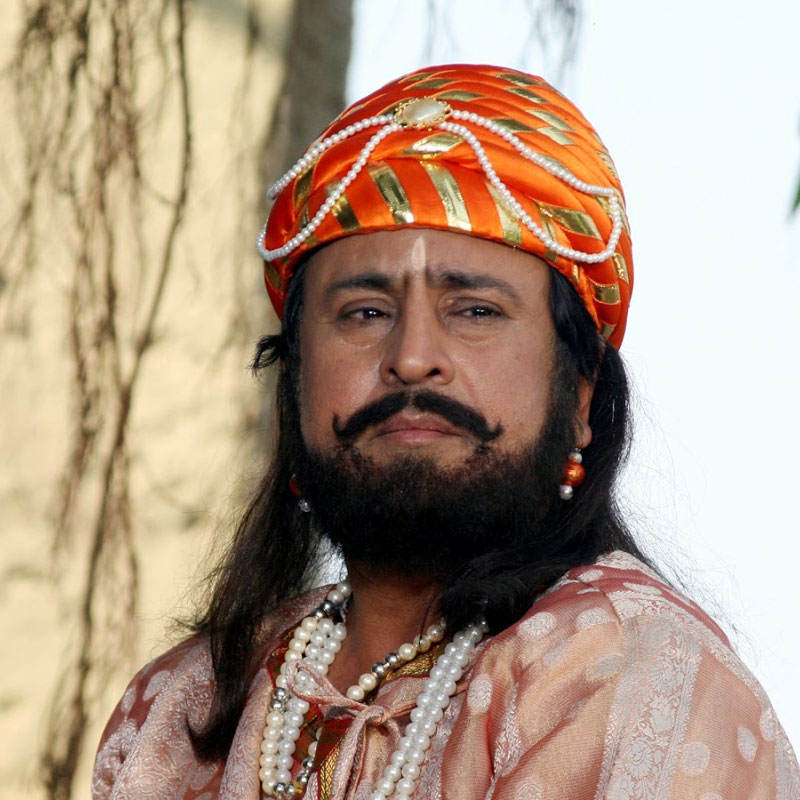
MUMBAI: With the President of India’s national integration award in his pocket and a lot of accolades behind him for his film Shirdi Sai Baba, Aushim Khetarpal is currently filming Baba Ramsaa Peer being produced by Satish Tandon Productions and Orient Tradelink.
The film depicts the life history of the most reverred princely saint from the western coast Baba Ramsaa Peer who was the first to spread the message of Hindu-Muslim unity in the 14th century.
The film captures the magic of the period when Baba Ramsaa Peer dispensed humanity, peace, love and healing.
While the Hindus lovingly called him Baba, the Muslims called him Peer, the name given to him by five Persian peers who had visited India in that era.
The film boasts of a strong star cast with Khetarpal himself playing the key role Baba Ramsaa Peer along with Gracy Singh. It is made in Rajasthani and Hindi , while special attention is given to the costumes and dialect.
The film has been extensively shot in Mumbai, Jodhpur, Jaipur and Roncha village and at the actual Samadhi of Baba Ramsaa.

Hindi
Remembering Gyan Sahay, the lens behind film, television and advertising
From a puppet rabbit selling poppadums to Hindi cinema, he framed it all.
MUMBAI: There are careers, and then there are canvases. Gyan Sahay, the veteran cinematographer, director, and producer who passed away on 10 March 2026 in Mumbai, had one of the latter. Over several decades in the Indian film and television industry, he turned lenses, lights, and the occasional puppet rabbit into something approaching art.
A graduate of the Film and Television Institute of India (FTII) in Pune, Sahay built his reputation as a director of photography across a career that stretched from the early 1970s all the way to the digital age. He was the kind of craftsman who understood that a well-composed shot is not merely a technical achievement but a quiet act of storytelling.
For most Indians of a certain age, however, Sahay will forever be the man behind the rabbit. His direction of the iconic long-running television commercial for Lijjat Papad, featuring its now-legendary puppet bunny, gave the country one of its most cheerfully persistent advertising images. It was the sort of work that sneaks into the national subconscious and takes up permanent residence.
His big-screen credits as cinematographer include Anokhi Pehchan (1972), Pagli (1974), Pas de Deux (1981), and Hum Farishte Nahin (1988). In 1999, he stepped behind a different kind of camera altogether, making his directorial debut with Sar Ankhon Par, a drama that featured Vikas Bhalla and Shruti Ulfat, with a cameo by Shah Rukh Khan for good measure.
On television, Sahay was particularly prized for his command of multi-camera production setups, a skill that made him a go-to technician for large-scale shows and reality programmes. In an industry that has never been especially patient with complexity, he was the calm hand on the rig.
In later life, Sahay turned teacher. He participated regularly in masterclasses and Digi-Talks, often hosted by organisations such as Bharatiya Chitra Sadhna, sharing hard-won wisdom on cinematography, the comedy of timing in a shot, and the sweeping changes brought by the shift from celluloid to digital. He was also said to have been involved in a project concerning a biographical film on Infosys co-founder N.R. Narayana Murthy.
Tributes from the film industry poured in following the news of his passing, with colleagues remembering him as a senior cameraman who served as a rare bridge between two entirely different eras of Indian cinema. That is, perhaps, the finest thing one can say of any craftsman: he kept up, and he brought others along with him.