International
Titanic storms China; grosses $88.2 million overseas
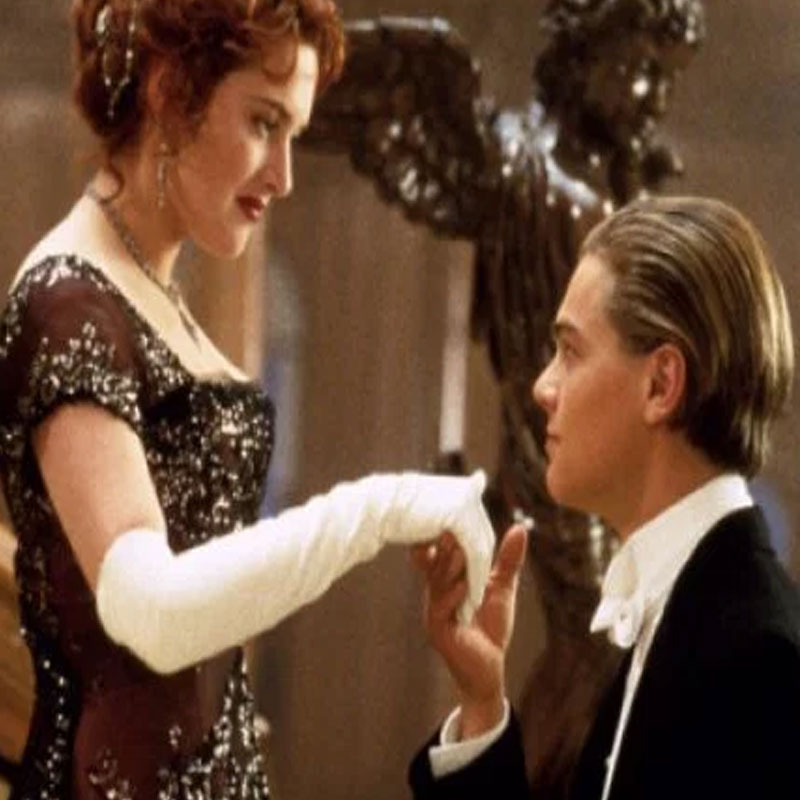
MUMBAI: Going by the grand opening of Titanic 3D in China, the film took on the role of No. 1 box office champ in the foreign theatrical circuit. It grossed $88.2 million from 9,889 venues in 69 overseas territories covering more than 100 countries.
In fact, the film tally of $58 million drawn from 3,500 sites in China accounted for the lion‘s share of the total weekend intake thus giving its distributor 20th Century Fox‘s its biggest opening gross in the market ever.
According to 20th Century Fox , the film‘s six-day China bow was 32 per cent more than the total market gross of the original Titanic in China in 1998 of $44 million.
The epic love story with the background of the Titanic, now in its second round of foreign release also chalked up notable numbers in Russia ($2.75 million from 972 sites).
A No. 2 second weekend in the UK drew $2.9 million from 508 locations, while Italy contributed $2.7 million from 389 sites and France drew $2.6 million from 362 spots. Germany came in with $2.2 million from 497 locations.
The foreign gross total for Titanic 3D stands at $146.4 million over two rounds, which, when combined with the original‘s overseas run, puts the offshore total tally at $1.4 billion. Worldwide, Titanic has pushed past the $2 billion mark.
Opening at just about half the total of Titanic 3D was Universal‘s Battleship based on a Hasbro naval combat game about sea warfare with an alien armada. Debut weekend take from 26 offshore markets came to $58 million collected from 4,950 situations. The film ranks No. 2 on the weekend.
Also opening on the foreign circuit on the weekend was Lionsgate‘s The Cabin In The Woods. Playing at some 800 situations in four markets, the horror film grossed an estimated $3.4 million with a No. 3 bow in the UK providing $2.5 million from 412 screens.
Third on the weekend was Warner Bros.‘ Wrath of the Titans, the foreign circuit‘s box office champ for the prior two weekends. This time the 3D action fantasy co-starring Sam Worthington, Liam Neeson and Ralph Fiennes grossed $16 million from some 9,000 screens in 63 markets.

International
Why knowing more languages protects actors from the threat of AI
LOS ANGELES: Acting has never been an easy profession, but in recent years, it has acquired a new existential anxiety. Artificial intelligence can now mimic faces, clone voices and, in theory at least, speak any language it is fed. The fear that actors may soon be replaced by algorithms no longer belongs exclusively to science fiction. And yet, despite the rise of digital inauthenticity, some performers remain stubbornly resistant to replacement. The reason is not celebrity, nor even talent. It is language.
On paper, this should not be a problem. AI can translate. It can imitate accents. It can string together grammatically correct sentences in dozens of languages. But acting, inconveniently, is not about grammatical correctness. It is about meaning, and meaning is where AI still falters.
Machine translation offers a cautionary tale. Google Translate, now powered by neural AI, has improved markedly since its debut in 2006. It can manage menus, emails and airport signage with impressive efficiency. What it struggles with, however, are the moments that matter most: idioms, metaphors, irony, and cultural shorthand. Ask it to translate a joke, a threat disguised as politeness, or a line heavy with emotional subtext, and it begins to unravel. Acting lives precisely in those gaps.
This matters because film language is rarely literal. Scripts, particularly in independent cinema, rely on figurative speech and symbolism to convey what characters cannot say outright. Pedro Almodóvar’s Volver is a useful example. The film’s recurring use of red operates on multiple levels: grief, desire, repression, liberation, and memory. These meanings are inseparable from the Spanish cultural context and emotional cadence. A translation may convey the words, but not the weight they carry. An AI-generated performance might replicate the sound, but not the sense.
This is where multilingual actors gain their edge. Performers such as Penélope Cruz and SofÃa Vergara do not simply switch between languages; they move between cultural logics. Their fluency allows them to inhabit characters without flattening them for international consumption. Language, for them, is not an accessory but a structuring force.
Beyond European cinema, this becomes even more pronounced. Languages such as Hindi, Arabic and Mandarin are spoken by hundreds of millions of people and underpin vast cinematic traditions. As global audiences grow more interconnected, the demand for authenticity increases rather than diminishes. Viewers can tell when a performance has been filtered through approximation. Subtle errors, misplaced emphasis, and an unnatural rhythm break the illusion.
There is also a practical dimension. Multilingualism expands opportunity. SofÃa Vergara has spoken openly about how learning English enabled her to work beyond Colombia and access Hollywood roles. But this movement is not a one-way export of talent into English-speaking cinema. Multilingual actors carry stories, styles and sensibilities back with them, enriching multiple industries at once.
Cinema has always thrived on such hybridity. Denzel Washington’s performances, for instance, draw on the cultural realities of growing up African American in the United States, while also reflecting stylistic influences from classic Hollywood and Westerns. His work demonstrates how identity and influence intersect on screen. Multilingual actors extend this intersection further, embodying multiple cultural frameworks simultaneously.
At times, linguistic authenticity is not merely artistic but ethical. Films that confront historical trauma, such as Schindler’s List, rely on language to anchor their moral seriousness. When Jewish actors perform in German, the choice is not incidental. Language becomes a site of memory and confrontation. It is difficult to imagine an automated voice carrying that responsibility without hollowing it out.
This is why claims that AI heralds the death of language miss the point. Language is not just a delivery system for information. It is a repository of history, humour, power and pain. Fluency is not only about knowing what to say, but when to hesitate, when to understate, and when to let silence do the work. These are not technical problems waiting to be solved; they are human instincts shaped by lived experience.
AI may one day improve its grasp of metaphor and nuance. It may even learn to sound convincing. But acting is not about sounding convincing; it is about being convincing. Until algorithms can acquire memory, cultural inheritance and emotional intuition, multilingual actors will remain irreplaceable. AI may learn to speak. But it cannot yet learn to mean.
In an industry increasingly tempted by shortcuts, language remains stubbornly resistant to automation. And for actors who can move between worlds, linguistic, cultural, and emotional, that resistance is not a weakness, but a quiet, enduring advantage.