Hindi
Mumbai fest announces this year’s highlights


MUMBAI: The Mumbai Film Festival has announced its programming highlights of its 14th edition that will run from 18 to 25 October.
The highlights include Palme d‘Or winner of the year Amour by Michael Haneke, Cosmopolis by David Cronenberg, The Angels‘ Share by Ken Loach, Beasts of the Southern Wild by Benh Zeitlin, A Throw of Dice by Franz Osten, The Leopard by Luchino Visconti, Once Upon a Time in America by Sergio Leone, On the Road by Walter Salles, Rust and Bone by Jacques Audiard and Blancanieves (Snow White) by Pablo Berger. The complete lineup will be announced on Monday, 24th September, 2012.
This year, a new competitive section has been introduced by the name of India Gold 2012 to commemorate the 100 years of Indian cinema. With a total prize of Rs 15 lakh plus Golden and Silver Gateway trophies, this section will henceforth be a part of the festival each year.

The venue of the festival too has been changed to National Centre for Performing Arts and INOX in South Mumbai.
Details on the titles announced so far:
Armour by Michael Haneke is a story of Georges and Anne, two cultivated, old and retired music teachers. Their daughter Eva, also a musician, lives abroad with her family. The couple‘s bond of love is severely tested when one day Anne has an attack. The film features Jean-Louis Trintignant, Emmanuelle Riva and Isabelle Hupper. Armour won the Palme d‘Or at Cannes Film Festival 2012.
Cosmopolis is directed by David Cronenberg. Riding across Manhattan in a stretch limo in order to get a haircut, a 28-year-old billionaire asset manager‘s day devolves into an odyssey with a cast of characters that start to tear his world apart.The film premiered in competition for the Palme d‘Or at the 2012 Cannes Film Festival. The film stars Robert Pattinson, Paul Giamatti, Samantha Morton, Sarah Gadon, Mathier Amalric and Juliette Binoche.
The Angels‘ Share by Ken Loach is a story of a young father who narrowly avoids a prison sentence. He is determined to turn over a new leaf and when he and his friends from the same community payback group visit a whisky distillery, a route to a new life becomes apparent. The film stars Paul Brannigan, John Henshaw, William Ruane, Gary Maitland, Jasmin Riggins, and Siobhan Reilly. The film competed for the Palme d‘Or at the 2012 Cannes Film Festival and the director Loach won the Jury Prize.
Beasts of the Southern Wild by Benh Zeitlin is the story of a six-year-old Hushpuppy who must learn the ways of courage and love. She is faced with both her hot-tempered father‘s fading health and melting ice-caps that flood her ramshackle bayou community and unleash ancient aurochs. The movie stars Quvenzhané Wallis and Dwight Henry.
The film won the Caméra d‘Or award at the 2012 Cannes Film Festival under the Un Certain Regard section. It also won the Grand Jury Prize: Dramatic at the 2012 Sundance Film Festival and the Grand Jury Prize at the Deauville American Film Festival. The film went on to earn the Los Angeles Film Festival‘s Audience Award for Best Narrative Feature and the Seattle International Film Festival‘s Golden Space Needle Award for Best Director.
A Throw of Dice is directed by Franz Osten. The silent film is based on an episode from the Indian epic; The Mahabharata. The movie is about two kings vying for the love of a hermit‘s daughter, the beautiful Sunita. The two kings, Ranjit and Sohan share a passion for gambling and decide to play a game of craps to determine who will marry Sunita. The film stars Seeta Devi, Himansu Rai, Charu Roy and Modhu Bose.
A Throw of Dice has been in the British Film Institute (BFI)‘s archives since 1945. In 2006, the film was digitally restored in honour of the 60th anniversary of Indian independence, and re-released at the Luminato Festival, Toronto, Canada, on 13 June 2008, with a new orchestral score by British Indian composer, Nitin Sawhney.
The Leopard directed by Luchino Visconti narrates the tale of the Prince of Salina, a noble aristocrat of impeccable integrity, who tries to preserve his family and class amid the tumultuous social upheavals of 1860?s Sicily.The film stars Burt Lancaster, Alain Delon and Claudia Cardinale. The film won the Palme d‘Or at the Cannes Film Festival in 1963, and was also nominated for an Oscar for the Best Costume Design, Color in 1964.
Once Upon a Time in America is the story of a former Prohibition-era Jewish gangster who returns to Brooklyn after over 30 years, where he once again must confront the ghosts and regrets of his old life.The film stars Robert De Niro, James Woods and Elizabeth McGovern. Directed by Sergio Leone, the film won the BAFTA Film Awards for the Best Costume Design and Best Score in 1985, and was nominated for the BAFTA Film Award for the Best Cinematography, Best Direction and Best Supporting Actress in the same year.
On the Road by Walter Salles narrates the story of Sal Paradise, a young writer whose life is shaken and ultimately redefined by the arrival of Dean Moriarty, a free-spirited, fearless, fast talking Westerner, and his girl, Marylou. The film was nominated for the Palme d‘Or at Cannes Film Festival 2012 and for the Official Competition Award at the Sidney Film Festival 2012.
Rust and Bone is directed by Jacques Audiard. Put in charge of his young son, Ali leaves Belgium for Antibes to live with his sister and her husband as a family. Ali‘s bond with Stephanie, a killer whale trainer, grows deeper after Stephanie suffers a horrible accident. The film was nominated for the Palme d‘Or at the Cannes Film Festival 2012 and won the Golden Swann for Best Film at the Cabourg Romantic Film Festival 2012.
Blancanieves (Snow White) is directed by Pablo Berger. Released in 2012, the film is a Gothic melodrama by the popular take by the Grimm Brothers.



Hindi
GUEST COLUMN: Why film libraries & IPs are the new engines of growth
Unlocking value through catalogue strength and IP synergy
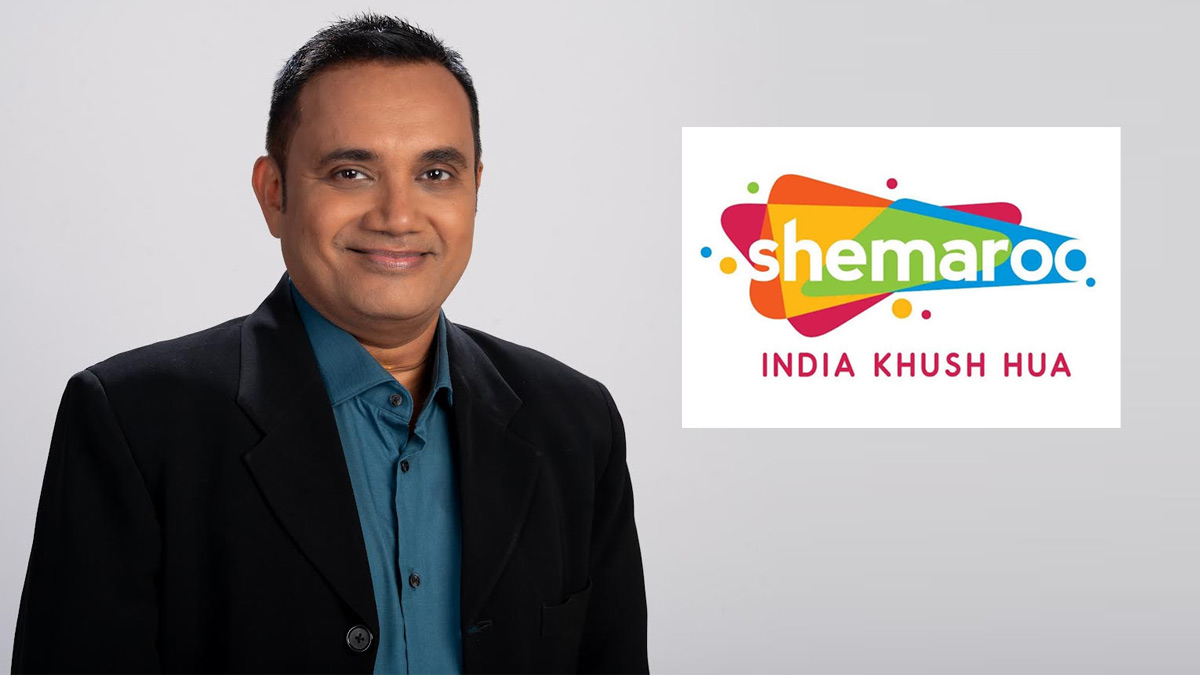
MUMBAI:In a media landscape defined by fragmentation, platform proliferation, and ever-evolving audience behavior, the economics of filmmaking are undergoing a fundamental shift. No longer confined to box office performance, a film’s true value is now measured across an extended lifecycle that spans digital platforms, syndication networks, and global markets. As content consumption becomes increasingly non-linear and algorithm-driven, film libraries and intellectual properties (IPs) are emerging as strategic assets, capable of delivering sustained, long-term returns. For Mohan Gopinath, head – bollywood business at Shemaroo Entertainment Ltd., this transformation signals a decisive move from hit-driven models to portfolio-led value creation. In this piece, Gopinath explores how legacy content, when intelligently repurposed and distributed, can unlock recurring revenue streams, why the interplay between catalogue and original IP is critical, and how media companies can build resilient, future-ready entertainment businesses.
For all these years, we thought that a film is successful if it performs well in theatres. There are opening weekend numbers, box office milestones, and distribution footprints that gave a good picture of how the movie has done commercially and also tell us about its cultural impact. However, there are multiple platforms today, always-on content ecosystem, which has caused a shift. Today, the theatrical performance is not the culmination of a film’s journey but merely the beginning of a much longer and more dynamic lifecycle.
Film libraries today are emerging as high-value, constantly evolving assets that deliver sustained returns well beyond initial release cycles. This becomes a point of great advantage for legacy content owners with diverse catalogues, to shape long-term business outcomes.
According to FICCI-EY, the media and entertainment industry of India achieved a valuation of Rs 2.78 trillion in 2025 which is expected to reach Rs 3.3 trillion by 2028 through a compound annual growth rate of approximately 7 per cent and digital media will bring in more than Rs 1 trillion to become the biggest sector which generates about 36 per cent of overall market revenues.
This shift is the expansion of distribution endpoints. We know how satellite television was once the primary secondary window but today, it coexists with YouTube, OTT platforms, Connected TV, and FAST channels. Each of these platforms caters to distinct audience demographics and consumption behaviors, helping content owners to obtain more value from the same asset across multiple formats.
For instance, films that had great reruns, now find continuous engagement across digital platforms. On YouTube, classic Hindi cinema continues to attract significant viewership, reaching audiences across generations and geographies with remarkable consistency. At Shemaroo Entertainment, this is reflected in our film library shaped over decades as part of a long association with Indian entertainment. From classics such as Amar Akbar Anthony to much-loved entertainers like Jab We Met, Welcome, Dhamaal, Phir Hera Pheri, Dhol, Golmaal, and Bhagam Bhag, many of these titles continue finding new audiences while retaining their place in popular memory. Their enduring appeal reflects how culturally resonant stories can continue creating value over time. Similarly, FAST channels have created curated, always-on environments where catalogue content can continue to thrive through star-led and genre-based programming.
This multi-platform approach has very well transformed films into long-tail IP assets which are capable of generating recurring revenue across advertising, subscription, and syndication models.
The evolution of audience behavior is equally important. Nowadays, it’s more important to find what’s more relative than what’s recent as viewers are more influenced by mood, memories, and algorithmic suggestions than by release schedules. Even if a movie was released decades ago, it can trend alongside a newly released movie, if surfaced in the right context. Thoughtful packaging, whether through festival-based playlists, actor-driven collections, or genre clusters, allows catalogue content to remain dynamic and continuously discoverable. Shemaroo Entertainment has built extensive film libraries over decades and its focus has mostly been on recontextualizing content for the consumption of newer environments. This process doesn’t just include digitization and restoration, but also re-packaging of films as per platforms.
Syndication itself has evolved into a key growth driver. In perspective, when looking at the domestic market, curated content packages continue to find strong demand across broadcast and digital platforms. Meanwhile, in the international market, especially in markets like Middle East, North America and Southeast Asia, the appetite for Indian content is opening up new monetization avenues. Here, the ability to package and position catalogue content effectively becomes as important as the content itself.
Importantly, the need to re-package catalogue content does not diminish the role of new content. In fact, originals and fresh IP are essential to sustaining the long-term value of a film library because they act as discovery engines that bring audiences into the ecosystem, while catalogue content drives depth, retention, and repeat engagement.
This interplay between the “new” and the “known” is what defines a robust content strategy today. While new films generate spikes in consumption, catalogue titles offer familiarity and comfort. These are factors that are increasingly valuable in an era of content abundance and decision fatigue. This is also shaping our strategy, drawing value from both a deep catalogue assets and a growing focus on original IPs to strengthen long-term audience engagement and build more predictable revenue streams.
There is growing recognition that long-term value in entertainment will be shaped not only by how intelligently existing content continues to live, travel and find relevance, but also by how consistently new stories are created to renew that ecosystem. In that sense, film libraries and original IP are not parallel bets, but reinforcing engines of growth. For media companies, the opportunity lies in making these two forces work together, because that is increasingly where more resilient and predictable businesses are being shaped.
Note: The views expressed in this article are solely the author’s and do not necessarily reflect our own.