Hindi
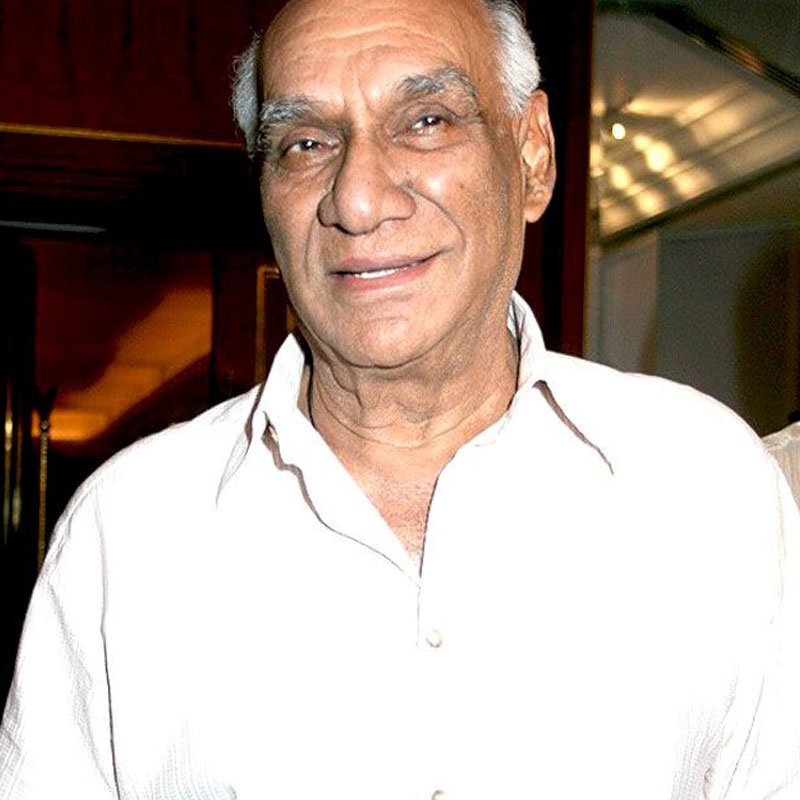
Iconic film maker Yash Chopra passes away
MUMBAI: On 21 October, one of the most respected and iconic film makers from Bollywood, Yash Chopra, breathed his last, leaving behind a legacy of some of the best made films in Indian cinema. Chopra was being treated for dengue at Lilavati Hospital where he was admitted on 13 October after complaining of weakness and difficulty in breathing.
According to media reports, Chopra was not responding to treatment well and given his age, battling a disease like dengue was always an uphill task. He celebrated his 80th birthday on 27 September when he announced that the upcoming Shah Rukh Khan romantic drama Jab Tak Hai Jaan will be his last movie as a director. Chopra is survived by wife Pamela Chopra and sons Aditya and Uday Chopra.
The illustrious film maker was born in pre-independence Lahore in 1932 and is the younger brother to noted film maker B R Chopra. He came to Mumbai with Rs 200 on him and began his career by assisting I S Johar. He debuted as a director with Dhool ke Phool, a social drama starring Mala Sinha and Rajendra Kumar and dealt with the trials of a single unwed mother. He went on to make 22 films as a director across genres like social dramas, romance, action and suspense thrillers.
Waqt, Silsila, Kabhi Kabhi, Daag, Deewar, Trishul, Chandni, Lamhe, Darr and Veer Zaara are among his most remembered and successful directorial ventures. Chopra has also been credited for moulding the screen images of Amitabh Bachchan as the ‘angry young man‘ (with Deewar) and Shah Rukh Khan as the quintessential romantic leading man (Dil Toh Paagal Hai and Veer Zaara).
Chopra is the force behind one of the biggest production houses in the country – Yash Raj Films (YRF) which he started in 1971. Till then his movies were produced by elder brother B R Chopra and movie mogul of that time Gulshan Rai. Rajesh Khanna starrer Daag was the first movie produced under the banner. YRF is perhaps the most successful privately held studio in the country and has also been instrumental in changing the overseas distribution business in India.
The production house has produced some of the highest grossing movies of their times like Chak De India! (Rs 1.04 billion worldwide in 2007), Ek Tha Tiger (Rs 3.07 billion in 2012), Rab Ne Bana Di Jodi (Rs 1.58 billion worldwide in 2008) and Dhoom and its sequel Dhoom 2 (in 2004 and 2006 respectively; combined worldwide collection of Rs 2.23 billion).

Hindi
Remembering Gyan Sahay, the lens behind film, television and advertising
From a puppet rabbit selling poppadums to Hindi cinema, he framed it all.
MUMBAI: There are careers, and then there are canvases. Gyan Sahay, the veteran cinematographer, director, and producer who passed away on 10 March 2026 in Mumbai, had one of the latter. Over several decades in the Indian film and television industry, he turned lenses, lights, and the occasional puppet rabbit into something approaching art.
A graduate of the Film and Television Institute of India (FTII) in Pune, Sahay built his reputation as a director of photography across a career that stretched from the early 1970s all the way to the digital age. He was the kind of craftsman who understood that a well-composed shot is not merely a technical achievement but a quiet act of storytelling.
For most Indians of a certain age, however, Sahay will forever be the man behind the rabbit. His direction of the iconic long-running television commercial for Lijjat Papad, featuring its now-legendary puppet bunny, gave the country one of its most cheerfully persistent advertising images. It was the sort of work that sneaks into the national subconscious and takes up permanent residence.
His big-screen credits as cinematographer include Anokhi Pehchan (1972), Pagli (1974), Pas de Deux (1981), and Hum Farishte Nahin (1988). In 1999, he stepped behind a different kind of camera altogether, making his directorial debut with Sar Ankhon Par, a drama that featured Vikas Bhalla and Shruti Ulfat, with a cameo by Shah Rukh Khan for good measure.
On television, Sahay was particularly prized for his command of multi-camera production setups, a skill that made him a go-to technician for large-scale shows and reality programmes. In an industry that has never been especially patient with complexity, he was the calm hand on the rig.
In later life, Sahay turned teacher. He participated regularly in masterclasses and Digi-Talks, often hosted by organisations such as Bharatiya Chitra Sadhna, sharing hard-won wisdom on cinematography, the comedy of timing in a shot, and the sweeping changes brought by the shift from celluloid to digital. He was also said to have been involved in a project concerning a biographical film on Infosys co-founder N.R. Narayana Murthy.
Tributes from the film industry poured in following the news of his passing, with colleagues remembering him as a senior cameraman who served as a rare bridge between two entirely different eras of Indian cinema. That is, perhaps, the finest thing one can say of any craftsman: he kept up, and he brought others along with him.