English Entertainment
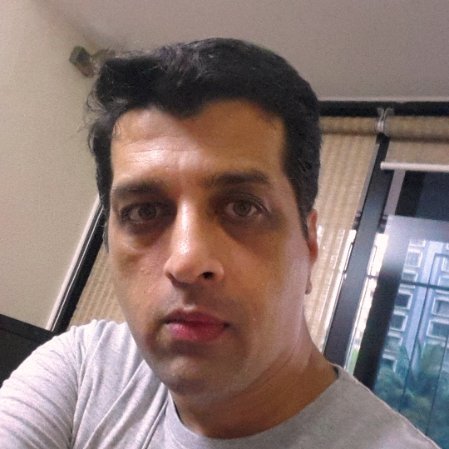
‘Effective digitisation to facilitate faster break even’ : Big CBS business head Anand Chakravarthy

|
Big CBS, the joint-venture between Anil Ambani-promoted Reliance Broadcast Network Limited (RBNL) and CBS Studios International, is betting big on cable television digitisation to grow its clutch of entertainment channels.
Encouraged by the successful implementation of the first phase of digitisation, the network has just launched a Hindi feed of its male focused English general entertainment channel (GEC), Big CBS Prime. Apart from Big CBS Prime, the network also operates Big CBS Spark and Big CBS Love. Last year, Big CBS Spark switched from an English GEC to a music channel.
In an interview with Indiantelevision.com‘s Ashwin Pinto, Big CBS business head Anand Chakravarthy said that effective digitisation would facilitate the network‘s faster break even plans. Big CBS is now pinning hopes on the second phase of digitisation to increase the reach of its channels and grow its revenues.
Excerpts: |
|
|
Q. Is Big CBS on track to break even this year? It is hard to talk in terms of when break even is expected. Effective digitisation will facilitate faster break even. A lot will depend on tackling issues like audience measurement system and the second phase of digitisation getting implemented without delay. This will be a big opportunity to grow our revenues. |
|
|
Q. So what you are suggesting is that apart from digitisation, there is need for an alternative audience measurement system that would help Big CBS in capturing better revenues? The solution is to either have an alternative system or have another product within the current system. A strong elite panel could be created. The industry should support it. |
|
|
Q. And how would digitisation aid Big CBS as cable TV networks would still extract carriage fees? Carriage costs would reduce significantly. Facing competition from direct-to-home (DTH) service providers, the cable operators would protect their turf by offering a great channel package at the lowest possible cost. They need channels like ours because we pull in the high ARPU (average revenue per user) customers. |
|
|
Q. So has the English general entertainment genre made significant gains in the metros where digitisation has been implemented? DAS (Digital Addressable System) was one of the biggest things to have happened last year. About 70 per cent of this genre’s viewership comes from the three cities of Delhi, Mumbai and Kolkata. As a result, there was a dramatic increase in our channel distribution. What has happened is that the genre penetration has grown by 100 per cent in the three biggest markets for English entertainment. Post DAS, we saw a 45 per cent growth for the genre. |
|
|
|
|
Q. Has distribution been a challenge as you doing it yourself? No! When we launched, we were available across six metros. We took a decision in April to go to digital platforms, which was when we expected DAS to happen. But it got postponed and so we were not available in all homes.
We have, however, not ruled out joining another platform. We have seven channels in our bouquet and all of them are distinctly positioned. We don’t know what future opportunities hold in terms of an alliance. The second phase of DAS would allow us to grow distribution beyond the major metros. This is important as advertisers too are looking to grow their reach across the country. |
|
|
Q. Why did Big CBS Prime launch a Hindi feed? It will help Big CBS Network play in the Hindi-speaking market (HSM), which has higher advertising potential. This will give consumers the chance to switch between Hindi and English. |
|
|
Q. Why Big CBS Spark shifted from a general entertainment to a music channel last year? If you look at youth as a genre, we are seeing two kinds of waves. One is that Hindi music channels are becoming youth GECs. When we launched Spark, we launched it as a channel targeting youth. We had youth focussed shows as well as music.
Over a year we saw an opportunity to take on English music and also an emerging opportunity in indie music with indigenous bands playing English songs. You can see that there is an explosion of live concerts happening across the country. We decided to have Spark combine international and indie music. |
|
|
Q. How has the response been so far? With Spark, we have been a little slow in terms of pushing it on the distribution front. Our aim is to first establish Big CBS Prime and Love. |
|
|
Q. Besides Spark, the other two channels are TG focussed with one aimed at men and the other at women. How is this segmentation working in a genre that is very niche? We launched these channels recognising that in India this segmentation does not exist. At the end of the day, advertisers are increasingly looking at relevant ROI.
This means that advertisers want to address a specific audience with minimal spillover. That pressure will only go on increasing. With Prime and Love as we build them into stronger platforms, advertisers will see the value of using them on the basis of their own TG and environment. Across the world what we have seen is more media and micro segmentation. |
|
|
Q. But is the genre large enough to allow for segmentation? I do not think that it is about the genre but the ad environment. Let us look at brands across categories. L’Oreal has moved into a range of male products. This was not their mainstay, but these products are increasingly becoming important for them.
Marico was earlier Parachute and Sunflower. Now they have an entire range of male products through the Paras acquisition. The auto two wheeler and four wheeler segment has exploded. Then look at the e-commerce market, which targets male audience as they do a lot of their buying online. This advertising segment was not there four years ago. As the market evolves, the need for specific channels will only increase. |
|
|
Q. The challenge in this genre is to grow loyalty. What has the strategy been to achieve this for Big CBS Prime and Love in 2012? There were two things that we focussed on. One is to build sampling of the channels during the DAS period as we went into more homes. The second was to build stickiness. So ‘X-Factor’, ‘America’s Got Talent’ and ‘American Idol’ was simulcast across the three channels. The shows were playing from August-December when digitisation was happening. The aim was that when new viewers see any channel, they see something familiar and they watch.
Now we are building our primetime band. On big CBS Love, we have ‘Melrose Place‘, ‘Excused‘ and ‘Sex And the City‘. And on weekends, there is ‘American Idol‘. What you see are shows that are more female skewed.
On Big CBS Prime you have shows like ‘America’s Got Talent‘, ‘Rules of Engagement‘, ‘48 Hours‘ and ‘Chaos‘. This is content that is more male skewed. We are building destinations on the channel. There is a daily stripped strategy that we follow from Monday – Thursday with specials happening on the weekend. |
|
|
Q. But then you cannot have latest and fresh shows under a stripped strategy? What you will have is the latest season airing a few weeks after the US. ‘Rules of Engagement, for example, is the latest season that we are showing; and we build a bank of at least 12 episodes. |
|
|
Q. Is there segmentation happening in terms of TG as well where some channels attract the 15-34-year-olds while others chase the age group between 25-44? What TG does the Big CBS channels attract the most? Our core TG is 15-34-year-olds. Segmentation by age will happen, but our belief is that segmentation by sex will take place first. That is because content preferences by men and women are different. Content preferences by youth and older people are also different. |
|
|
Q. How do you tackle this? Our preference was to segment by sex. Within that, we have some shows that skew towards younger audiences in the age group between 15-24 years. So they are placed in time bands when that TG is watching. For example, ‘90210’ on Big CBS Love is placed in a time band when the younger audience is available.
‘Melrose Place’, on the other hand, is a drama. That is placed in a time band when the audience watching is 20+. You cannot ignore any age group. |
|
|
Q. What shows have emerged as the drivers for Big CBS Prime as compared to rival channels? We have shows across different genres. We have a comedy, ‘Rules Of Engagement’. AXN, on the other hand, has no comedy. Then we have exclusive shows like ‘America’s Got Talent’. We just launched ‘48 Hours‘, which is based on real life crimes around the world.
On Prime, we have the advantage of not only being driven by action; it could also be crime, action, shockumentary. AXN is more action oriented. That gives us a distinct look and feel which is different from them. We also do not have clip shows; we have regular programmes to bring audiences back. The advantage we have is our access to CBS content. |
|
|
Q. How much of content comes from CBS and how much comes from outside? Around 80 per cent of our content comes from CBS. The rest is acquired. |
|
|
Q. Earlier you mentioned that you have done simulcasting of a show across channels. Doesn‘t this dilute their brand identity as the same thing is seen across the channels? The reason we did this was because of the DAS period. Now that DAS has happened, simulcast is something that we are no longer doing. We are now focussing on building Spark and Love’s distinct positioning. |
|
|
Q. Is more experimentation happening in primetime for the Big CBS channels and the genre? I would not call it experimentation. I would say that the good thing about DAS is that it forces broadcasters to focus more on content. Everybody is trying to bring in really good quality shows. As a result, the genre will gain. We have fortified our primetime. The challenge is that there are only so many good quality shows available to buy. This is where the advantage of our JV comes in. |
|
|
Q. Currently which are the genres that work well for English GECs? For male audiences, it is action, crime and comedy. Action reality also works – like ‘Survivor’. In the case of women, it is drama like ‘Melrose Place’ which are more soap oriented. Reality also works, but of different kind like dating and singing shows. To some extent crime also works. |
|
|
Q. What is the focus going to be this year for the two channels? We will build the big shows from the CBS portfolio. There are some big launches coming up, including new seasons of current shows. Local shows will be built upon – like ‘India’s Sexiest Bachelor’ and ‘India’s Glam Diva’. The third big area will be to create a large local marquee property like ‘India’s Next Top Model’. The aim is to have the latest content and add to that with local shows that give advertisers relevant opportunities. |
|
|
Q. What role do sports and movies play? Sports air on Prime. We have martial arts and wrestling. Movies are shown on the weekend in this channel. For Love, we are planning to bring television movies.
Movies become a great destination for sampling the channels as they pull in a larger audience. They also offer good sponsorship opportunities. The aim of having sports properties is to broad base the channel as they bring in both younger and older audiences. |
|
|
Q. What are the synergies that exist between Big CBS and the other divisions of RBNL and how are these being leveraged? From a marketing perspective, Big FM plays a key role. This helps us market the channels in second tier towns.
A lot of our shows are also made by Big Production. It allows for cost saving and more rationalisation of expenses. |
|
|
Q. By when do you see subscription revenues kicking in substantially for this genre? It is a matter of time, now that digitisation is happening. Certainly for smaller channels it is harder, but we have a decent bouquet. We have more leverage than someone selling a single channel. |
|
|
Q. How much did the genre make in terms of ad revenue last year and what growth is expected this year? The genre made Rs 1 billion last year. This year DAS has rolled out and the second phase is happening, but there is also a certain amount of slowdown in the economy. I expect a 10 – 12 per cent ad revenue growth. If you have distinct and relevant content, you will do well.
We are only seeing the top of the iceberg in terms of international content being shown here. There is a world of content waiting to come in. We can grow the genre rather than fight with each other. Also, despite the slowdown there are new opportunities. E-commerce has come in. Luxury has also grown significantly as has organised retail advertising. You look at traditional advertisers and new ones which is how you grow ad sales in a slow market. |
|
|
Q. What share in the ad pie are you looking at? We have a 26-27 per cent market share in terms of audience. Given that, our ad share should also be similar. Product integration into shows is something that we work on. Samsung Galaxy, for example, was integrated into India’s Prime Icon. |
|
|
Q. But perception also plays a role in niche channels getting ad monies. How is Big CBS faring in this? Perception is something that we have to work on as we are fighting three other players who have been around for a long time. Changing perception will not happen overnight. But with DAS getting implemented, there is an opportunity for us to reach there quicker. |