MAM
L’Oréal Paris launches Glycolic Bright Dark Circle Eye Serum

Mumbai: In the pursuit of expanding their presence into the under eye care category, L’Oréal Paris has proudly unveiled its latest innovation for the Indian market – the Glycolic Bright Dark Circle Eye Serum, a breakthrough solution targeting under eye hyperpigmentation, and puffiness effortlessly.
As the eye serum category continues to grow, L’Oréal Paris, known for its constant innovations, is once again making new strides with this product, specifically designed for Indian skincare preferences.
It is scientifically designed to erase dark circles by an impressive 49 per cent in just two weeks, delivering visible improvements with each passing day. With dark circles, hyperpigmentation, and puffiness being prevalent issues, especially for today’s dynamic women, this breakthrough serum is meticulously crafted to offer transformative results, setting a new standard in under-eye care.
Crafted with a potent blend of three per cent Glycolic Acid, Vitamin CG, and Niacinamide, L’Oréal Paris Glycolic Bright Dark Circle Eye Serum is tailored for proven efficacy on Indian skin. Equipped with a unique Triple Bead Applicator, it features a patented technology that provides an instant cooling effect while ensuring swift product absorption, effectively depuffing under eyes.
Speaking about the launch of this product, L’Oréal Paris general manager Dario Zizzi said, “At L’Oréal Paris, we understand that addressing dark circles is a top skincare concern for consumers today. Recognizing the gap in the market, we are proud to introduce a scientifically formulated solution that stands out. Our dermatologically validated claim not only emphasizes effectiveness but is specifically proven on Indian skin. We believe in providing consumers with trusted, science-backed products that cater to their unique needs, setting a new standard in skincare innovation.”
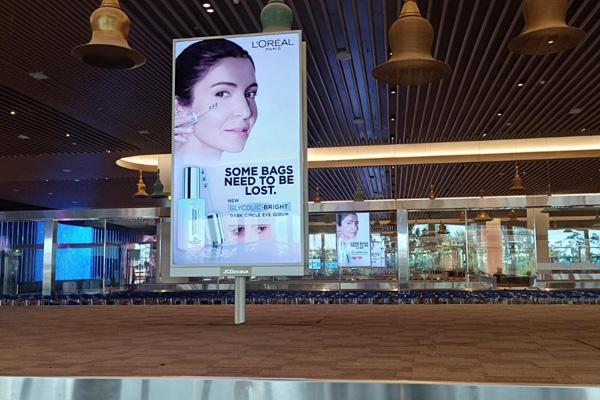
In a strategic and impactful move, L’Oréal Paris has unveiled a dynamic out-of-home (OOH) campaign, strategically positioned at key locations such as airports, business parks, and metro trains in major cities including Delhi, Mumbai, and Bengaluru. The campaign features contextual creatives and playful copy that aims to drive awareness and engagement around the importance of under-eye care, leveraging the relatable charm of everyday situations.
The creatives feature popular actor Anushka Sharma, who has been the face for the skin care portfolio. Additionally, the brand has also expanded its reach by executing its inaugural cinema placement strategy, targeting late-night screenings. This innovative approach allows the brand to captivate audiences during these prime viewing hours, effectively connecting with the target demographic seeking impactful skincare solutions. Leveraging strategic collaborations with cinema halls, Connected TV and OTT platforms, the brand ensures comprehensive visibility across multiple touchpoints, enhancing its engagement with discerning consumers.
The Glycolic Bright Dark Circle Eye Serum, priced at Rs 699, is ophthalmologically tested, suitable for all skin types, and clinically proven to treat visible dark circles. With this innovation, L’Oréal Paris continues its legacy of providing impactful and proven skincare solutions, elevating the skincare experience for consumers nationwide.