Hindi
Kamal R Khan in trouble with UP Courts for remarks against actor Dhanush
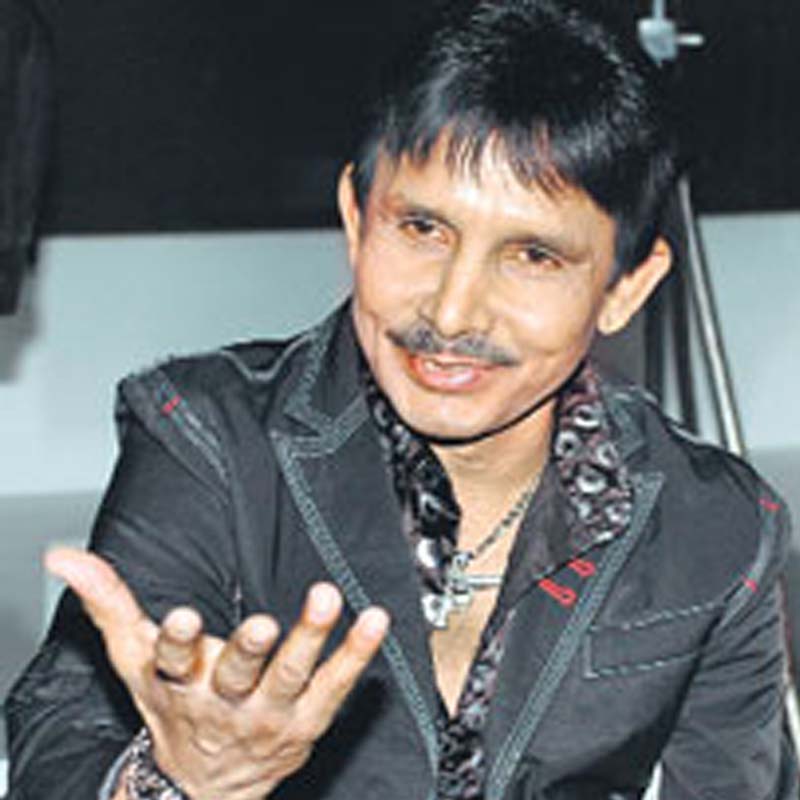
NEW DELHI: Producer-actor-director Kamal R Khan, who earlier invited controversies with his film ‘Desh Drohi‘ and his presence in Bigg Boss 3, is once again in trouble.
An Uttar Pradesh cadre Indian Police Service officer Amitabh Thakur has filed a petition before Lucknow Chief Judician Magistrate Pramod Kumar for registration of a first information report against Khan for having made extremely objectionable criminal comments in a review of the film ‘Raanjhana‘.
According to the complaint, Khan made the comments against two Schedule Castes in a video on YouTube,
The matter, filed after the police refused to register an FIR, has been fixed for 12 July.
In the 09.40 minute video review uploaded on YouTube on 20 June, Khan said: “Sir, I don‘t know whether you are from UP or not, but I am. In the whole of UP, you will find cobblers and sweepers who look like Dhanush but you will not find such single rotten Brahman as him in entire UP.” He also made some other extremely improper personal comments against the actor Dhanush.
Thakur had previously given an FIR to Gomtinagar police station, Lucknow and SSP, Lucknow saying that Khan‘s comments are clearly casteist in nature and constitute an offence under section 3(1)(x) of the SC, ST (Prevention of Atrocities) Act 1989.
In his very first film ‘Desh Drohi‘, Khan indirectly referred to the Shiv Sena through his dialogue “Jitni nafrat humhare liye tumhare dil main hain , usse zyada pyar tumhare liye humare seene main hain. Kabhi UP Bihar aake dekhna, mehman ko bhagwan samajhte hain hum”.
This resulted in the film being banned in Mumbai for two months.

Hindi
Remembering Gyan Sahay, the lens behind film, television and advertising
From a puppet rabbit selling poppadums to Hindi cinema, he framed it all.
MUMBAI: There are careers, and then there are canvases. Gyan Sahay, the veteran cinematographer, director, and producer who passed away on 10 March 2026 in Mumbai, had one of the latter. Over several decades in the Indian film and television industry, he turned lenses, lights, and the occasional puppet rabbit into something approaching art.
A graduate of the Film and Television Institute of India (FTII) in Pune, Sahay built his reputation as a director of photography across a career that stretched from the early 1970s all the way to the digital age. He was the kind of craftsman who understood that a well-composed shot is not merely a technical achievement but a quiet act of storytelling.
For most Indians of a certain age, however, Sahay will forever be the man behind the rabbit. His direction of the iconic long-running television commercial for Lijjat Papad, featuring its now-legendary puppet bunny, gave the country one of its most cheerfully persistent advertising images. It was the sort of work that sneaks into the national subconscious and takes up permanent residence.
His big-screen credits as cinematographer include Anokhi Pehchan (1972), Pagli (1974), Pas de Deux (1981), and Hum Farishte Nahin (1988). In 1999, he stepped behind a different kind of camera altogether, making his directorial debut with Sar Ankhon Par, a drama that featured Vikas Bhalla and Shruti Ulfat, with a cameo by Shah Rukh Khan for good measure.
On television, Sahay was particularly prized for his command of multi-camera production setups, a skill that made him a go-to technician for large-scale shows and reality programmes. In an industry that has never been especially patient with complexity, he was the calm hand on the rig.
In later life, Sahay turned teacher. He participated regularly in masterclasses and Digi-Talks, often hosted by organisations such as Bharatiya Chitra Sadhna, sharing hard-won wisdom on cinematography, the comedy of timing in a shot, and the sweeping changes brought by the shift from celluloid to digital. He was also said to have been involved in a project concerning a biographical film on Infosys co-founder N.R. Narayana Murthy.
Tributes from the film industry poured in following the news of his passing, with colleagues remembering him as a senior cameraman who served as a rare bridge between two entirely different eras of Indian cinema. That is, perhaps, the finest thing one can say of any craftsman: he kept up, and he brought others along with him.