Hindi
Lunch Box: A beautiful food for thought

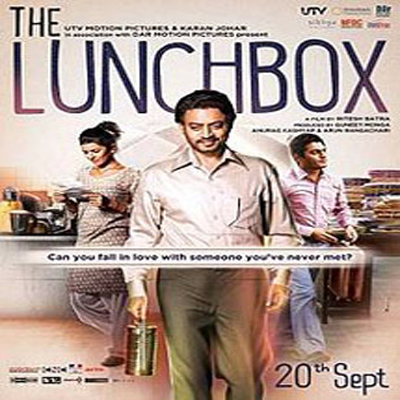
The famous ‘Dabbawalas’ of Mumbai were accorded Six Sigma performance rating by the prestigious American business publication Forbes Global. That means that only one in a 16 million deliveries goes wrong. There have been films made on romance due to a wrong number called, following blank calls, on chats and emails. Lunch Box derives its story from that one-in-16-million mistake that a ‘Dabbawala’ makes: a mistaken delivery of a tiffin.
Producer: Guneet Monga, Anurag Kashyap, Arun Rungachari.
Director: Ritesh Batra.
Cast: Irrfan Khan, Nimrat Kaur, Nawazuddin Siddiqui, Bharati Achrekar.
Irrfan Khan is a widowed Catholic man living in a Mumbai suburb. He leads the morose life of a government servant commuting on the crowded local trains to the office and back home with cigarettes being his only companions. He has been working for 35 years with a perfect record and has decided to take premature retirement and settle down in the city of Nasik. He is serving his notice period and has been asked to train a new recruit, Nawazuddin Siddiqui, before he leaves. That is when a ‘dabbawala’ delivers to him a ‘dabba’ which does not only look richer than his in packaging but also contains tasty, aromatic homemade food which is a feast, compared to the insipid food provided by his caterer every day. Irrfan makes it a point to meet his caterer on the way home to thank him and tell him to keep up this quality of cooking.
Nimrat Kaur is a housewife and a mother of small girl. She loves to add to her expertise in cooking with a little help from an aunty a floor above her, Bharati Achrekar, who loves to share her ideas. It has been a few years since her marriage and she tries to live up the adage, ‘the way to a man’s heart is through his stomach’. She cooks a new menu everyday expecting praise from her husband every evening. This time, her tiffin has reached Irrfan. He sends a chit saying that the food was very good but there was too much salt, to which she replies the next day by putting too much chilli.
The exchange of notes becomes a regular feature. Irrfan’s life becomes a little more exciting as he looks forward to lunch everyday, as much for a note from her as for the food. As for Nimrat, she has just realised her husband is having an affair and is hardly ever at home and this distraction helps buffer the shock. Irrfan, who is a loner who never interacts with anybody either in office or where he lives, has come to life. He even starts entertaining Nawazuddin, tries to teach him the work and, eventually, also lets him join for and share his lunch. In fact, Nawazuddin, who is an orphan, becomes his only confidante while he becomes his guardian at his Nikah.
Irrfan and Nimrat’s notes grow from one-liners to full pages and soon two pages. Soon they think there has been enough of ‘letterbaazi’ and decide to meet instead.
Lunch Box is built on small budget and thin theme but it is the sidetracks that fill it out. Not only does it depict a middleclass Mumbai lifestyle and its lifeline, the local trains, but also the disorganised government offices and their lifeless, robotic staff. But most of all it brings to life on screen the much celebrated 5,000-strong ‘dabbawalas’ workforce which one notices only when foreign guests like Prince Charles or Richard Branson visit them or when foreign TV channels cover them. The journey of the ‘dabba’ from collection in the morning until return in the evening becomes a part of the story. Until the justified culmination is to be reached, the film is a light watch with a subtle but unmissable humour, which is all the more effective because of Irrfan’s pokerfaced mouthing of the lines. Nawazuddin is a perfect foil to Irrfan and he is even developing a bit of suave personality with success. Nimrat is natural. The ‘dabbawalas’, the celebrities that they have become are never conscious of the camera. Bharati Achrekar only lands her voice as aunty without showing her persona but is effective.
Phata Poster Nikhla Hero: A comedy of errors
Producers: Ramesh Taurani.
Director: Rajkumar Santoshi.
Cast: Shahid Kapoor, Ileana DCruz, Padmini Kolhapure, Saurabh Shukla, Darshan Jariwala, Zakir Hussain, Sanjay Mishra, Rana Jung Bahadur, Salman Khan (Cemeo), Nargis Fakhri (Item number).
New filmmakers with no big stars or budgets at their disposal are coming up with novel themes and many are succeeding. Yet makers with established names and bigger budgets don’t take such risks: their insecurity and lack of creative confidence doesn’t allow them to try something off the beaten path. Hence Rajkumar Santoshi decides to look to the past to find a ‘fresh’ entertainer. Unfortunately, he picks a mundane B-grade story and tries to give it a Manmohan Desai approach by adding a mother’s emotions, a runaway father and a villain’s den full of fools and so on to come up with a not so entertaining farce.
Shahid Kapur is being brought up to be an honest policeman by his mother, Padmini Kolhapure. But Shahid has different plans for himself: he aspires to be a film hero and, like the Khans, wants to establish his own brand, the Vishwas Rao label which is his screen name. Every time Padmini sends him for police academy tests, he makes sure he fails. This time, he goes for a test to Mumbai and ends up at a strugglers’ hotel (many of which existed in Mumbai suburbs in 1960s and ’70s) where many others like him are lodged. The veteran is Sanjay Mishra, who did not amount to anything himself. He takes Shahid to film director, Tinu Anand, who is looking to cast a negative character. Shahid impresses him by putting on an act, the kind seen in just about all films of wannabe actors. He is cast immediately and is required to wear a police inspector’s dress.
Every time Shahid is in police dress, Ileana D’Cruz happens to need police help and manages to bump into him. She is a journalist and a self-styled social worker who runs to the police station with so many complaints that the cops have named her Complaint Kajal. By the second such escapade, romance blossoms. Somehow, word reaches Padmini that her son has become a policeman and she decides to visit him in Mumbai to see her son in uniform. Now the only way for Shahid is to keep wearing the uniform till Padmini is with him.
The villain, Saurabh Shukla, operates from a night club which gives Shahid scope to show his already famous dancing prowess. Somehow or the other, Shahid is present in uniform wherever there is trouble taking place and saves the situation. Neither the ACP, Darshan Jariwala, nor the corrupt cop, Zakir Hussain, in cahoots with Saurabh, has any clue who this inspector is, who is solving crimes singlehandedly!
It is time for mother’s sentiment to come in play; Padmini comes to know her son is not a real policeman and just a bit actor. Obviously, she is devastated as she had a reason behind her ambition of making him into a cop, an honest one at that. She faints and is taken to hospital from where she lands straight into villain’s hands. Not yet, but finally the film ends.
The film does not follow a taut script but rather pieces together gags and incidents and hence lacks flow. The director gives the film a bit of Manmohan Desai and a bit of Kundan Shah (Jaane Bhi Do Yaaro), both with ordinary results. The film has some good tunes and Shahid adds to the USP of those dancing kinds. Photography is fair. Editing is not up to mark. Action is well composed. The film is a Shahid vehicle all the way. Ilena is pretty and does a good job. Jariwala along with Saurabh, Mishra and Hussain raise laughs. Padmini makes an apt mother to Shahid.
Phata Poster Nikhla Hero has not been received well and lacks on entertainment too.