MAM
Cheil Worldwide SW Asia to illuminate Halonix


MUMBAI: Cheil Worldwide SW Asia has been awarded the complete creative communications mandate for Halonix Technolgies’ consumer lighting business in a multi-agency pitch.
A known name in the lighting sector, Halonix has emerged as one of the largest manufacturers of compact fluorescent lamp (CFL), LED and Halogen lamps, suitable for commercial as well as residential establishments. This aggressive consumer lighting marketing strategy is aimed at achieving a lead position for brand Halonix in the consumer lighting segment.
Confirming the win, Cheil Worldwide SW Asia COO Hari Krishnan said, “These are exciting times at Cheil India. Given our strong, digital, retail, visual merchandising and shopper marketing arms, the move is to integrate so that the sum of our parts is greater than the whole. Building the brand Halonix will provide us with yet another opportunity to showcase our ‘Unavoidably Integrated‘ promise.”

Commenting on Cheil’s appointment as Halonix’s communication partner, Halonix Technologies COO Rakesh Zutshi said, “Cheil’s understanding and strategy for Halonix consumer lighting clearly echoed the next level rationale required for consumer engagement and we are looking forward to illuminating times in our partnership with Cheil.”
CrystalEyes founder and executive director Amar Wadhwa (who manage marketing for Halonix Technologies) said, “Cheil’s integrated expertise and understanding that a consumer lighting brand will be built not just through advertising but through the deployment of the idea through a plethora of relevant touchpoints is what won them the business.”




AD Agencies
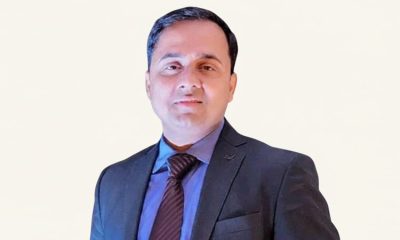
Abhay Duggal joins JioStar as director of Hindi GEC ad sales
The streaming giant brings in a seasoned revenue hand as the battle for Hindi television advertising heats up

MUMBAI: Abhay Duggal has a new desk, and JioStar has a new weapon. The media and entertainment veteran has joined JioStar as director of entertainment ad sales for Hindi general entertainment channels, adding 17 years of hard-won revenue experience to one of India’s most powerful broadcasting operations.
Duggal is no stranger to big portfolios or bruising markets. Before joining JioStar, he spent a brief stint at Republic World as deputy general manager and north regional head for ad sales. Before that, he put in three years at Enterr10 Television, where he ran the north region for Dangal TV and Dangal 2, two of India’s leading free-to-air Hindi channels. The north alone accounted for more than 50 per cent of total channel revenue on his watch, a number that tends to get attention in any sales meeting.
His longest stint was at Zee Entertainment Enterprises, where he spent over six years rising to associate director of sales. There he commanded the Hindi movies cluster across seven channels, owned more than half of north India’s revenue across flagship properties including Zee TV and &TV, and closed marquee sponsorships across the Indian Premier League, Zee Rishtey Awards and Dance India Dance. He also handled monetisation for the English movies and entertainment cluster and the global news channel WION, a portfolio that would stretch most sales teams twice his size.
Earlier in his career Duggal closed what was then a Rs 3 crore single deal at Reliance Broadcast Network, one of the largest in Indian radio at the time, before that he helped launch and monetise JAINHITS, India’s first HITS-based cable and satellite platform.
His edge, by his own account, lies in marrying data and instinct: translating audience trends, inventory signals and client demands into long-term partnerships built on cost-per-rating-point discipline rather than short-term deal chasing. In a media landscape being reshaped by streaming, fragmented attention and AI-driven advertising, that kind of rigour is increasingly rare and increasingly valuable.
JioStar, which blends the scale of Reliance’s Jio platform with the content firepower of Star, is doubling down on its advertising business at precisely the moment the Hindi GEC market is getting more competitive. Bringing in someone who has spent nearly two decades doing exactly this, across some of India’s most watched channels, is a pointed statement of intent. Duggal has spent his career turning audiences into revenue. JioStar is clearly betting he can do it again, and bigger.