Hardware
Decks cleared for JAINHITS to get TV signals of MSM Discovery, ESPN and SUN channels

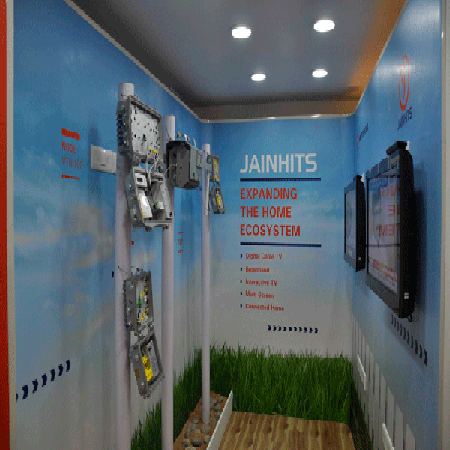
NEW DELHI: In less than two months since Media Pro Enterprises India was given directions to supply the channels it distributes to JAINHITS, the country’s only headend-in-the-sky (HITS) platform, the Telecom Disputes Settlement and Appellate Tribunal (TDSAT) today directed Sun, Sony (MSMD) and ESPN to provide their television channel signals to the platform by this evening.
The three channel aggregators between them provide more than fifty prominent channels, but had been delaying giving their channels to Noida Software Technology Park Ltd (NSTPL) – which manages JAINHITS – which had approached the authorised content aggregator for these channels owned by Sony, Sun and ESPN.
 |
TDSAT Chairman Justice Aftab Alam and member Kuldip Singh were not impressed by the argument that all operators had created fresh Reference Interconnect Offer for HITS which was yet to get the clearance of the Telecom Regulatory Authority of India (TRAI). They asked the counsel for respondents whether this did not amount to breach of violation of section 3.2 of the Digital Access System (DAS) regulations of the cable interconnect agreement.
With this, JAINHITS will now be able to transmit over 250 channels to consumers all over the country. The 12 September order relating to Media Pro had brought a total of around 75 channels into the JAINHITS fold.
The only satellite-based platform for the distribution of digital TV channels, NSTPL is currently the only distribution platform of TV channels that is providing advanced HITS services to consumers through local cable operators.
NSTPL founder and chairman of Jain TV Group Dr. J.K. Jain said, “The mission of JAINHITS is to build and operate digital highways in collaboration with cable network owners. We thank TDSAT for the ruling as this is an important announcement not only for the 60,000 cable operators across the country but also to the consumers. Without proper digitisation, government is losing huge revenue.”
Senior counsel for NSTPL Vivek Chib told indiantelevision.com that this order would not only be in the larger interest of the government’s digitisation policy, but would ultimately benefit the end-user with greater choice and better quality.
NSTPL had filed the petition under sections 14 and 14A of the TRAI Act 1997 seeking directions to enter into the Interconnect Agreement on mutually agreed terms or in case the two sides are unable to come to any mutually agreed terms, as per the respondent’s Reference Interconnect Offer (RIO) and to provide to it the content/TV channels under the latter’s control.
NSTPL obtained from the Information and Broadcasting Ministry in 2003 the licence to establish, install, operate and maintain “headends in the sky” system to provide digital cable services in India. Apparently, the licence was granted even before provisions were made for accommodation of the HITS operator in the regulatory framework. Suitable provisions were made in the regulations to accommodate the HITS operators.
NSTPL claimed that it had even got its system checked by the Broadcast Engineering Consultants (India) Ltd.