International
Films form important component of Festival of India in Peru

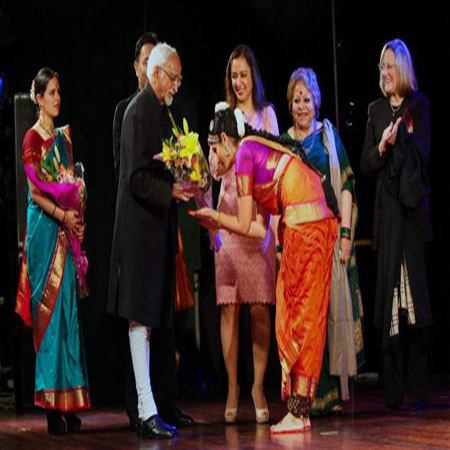
NEW DELHI: Indian films are making a global presence it seems. At the Festival of India in Peru that was recently inaugurated by vice president Hamid Ansari, few new Indian films and old classics including Raja Harishchandra (silent), Taare Zameen Par (Hindi), Ghare Bhaire (Bengali), Ardh Satya (Hindi), Bobby (Hindi), A Wednesday (Hindi) and Kabhi Haan Kabhi Naa (Hindi) are being screened. The Indian Film Festival is being coordinated by the Information and Broadcasting Ministry.
An India-Peru Literature Festival and an Indian Classical Dance Festival is also being held as part of the fest.
 |
Ansari’s visit is the highest ranking bilateral visit since year 1998 from India to Peru. The Festival would manifest many elements of long, rich and diverse Indian cultural heritage and would be the largest Indian cultural festival ever held in Latin America and the Caribbean. This reflects the special place that Peru enjoys among Indians.
The inaugural function was attended by the Peruvian First Vice President Marisol Espinoza and a number of senior dignitaries from the Indian and Peruvian side.

Indian Culture Secretary Ravindra Singh who is in Peru to mark the occasion said the Festival is expected to bring the Indian and Peruvian people closer to each other and will enhance people to people contact.
Highly reputed Indian writers like Arun Kamal, H S Shivaprakash, K Satchidanandan, Purshottam Agarwal, Shyama Prasad Ganguly, and Ms Karabi Deka Hazarika participated in the symposium on India-Latin America: Literary Exchanges and Influences and Contemporary Literary Trends and their Challenges in a Multilingual Society in addition to a session on poetry reading.
Several noted Peruvian Writers including Jose Leon Herrera, Pablo Carreno Cabrejos, Jose Ignacio Lopez Gaston, Marcel Velaquez Castro, and leading poets Carlos German Belli, Mario Montalbetti, and Marcos Martos would be participating in the Literature Festival. The Literature Festival is being coordinated by the Sahitya Academy.
The Indian Dance Festival in Peru is titled ‘Nrityarupa’, the mosaic of Indian dance which encapsulates the experience of Indian dance as it has evolved in various parts of the India. It offers a glimpse of the great mosaic of cultures that constitutes the Indian Nation, and demonstrates in a creative, kinetic form their dynamics in relation to each other. Six dance forms representing the diversity of India’s culture have been chosen for this presentation to audiences in Latin America: Bharatanatyam of Tamil Nadu, Kathank which is pre-eminently the dance of northern India; Odissi from Odisha in eastern India; Manipuri from north-eastern State of India; Kathakali of Kerala at Southern tip of the Indian peninsula; and Chhau which covers a wide swathe of territory in eastern States of the Union.
One seamless presentation of these dances has been visualized by leading to a jubiliant finish. The Indian Dance Festival is being coordinated by the Sangeet Natak Academy.
The Festival of India in Peru is being coordinated by the Culture Ministry in association with the Sahitya Academy, the Sangeet Natak Academy and the I&B Ministry.



International
Utopai Studios unveils 4K three-minute video generation for PAI platform
New Story Agent and editing tools aim to streamline AI-led filmmaking workflows
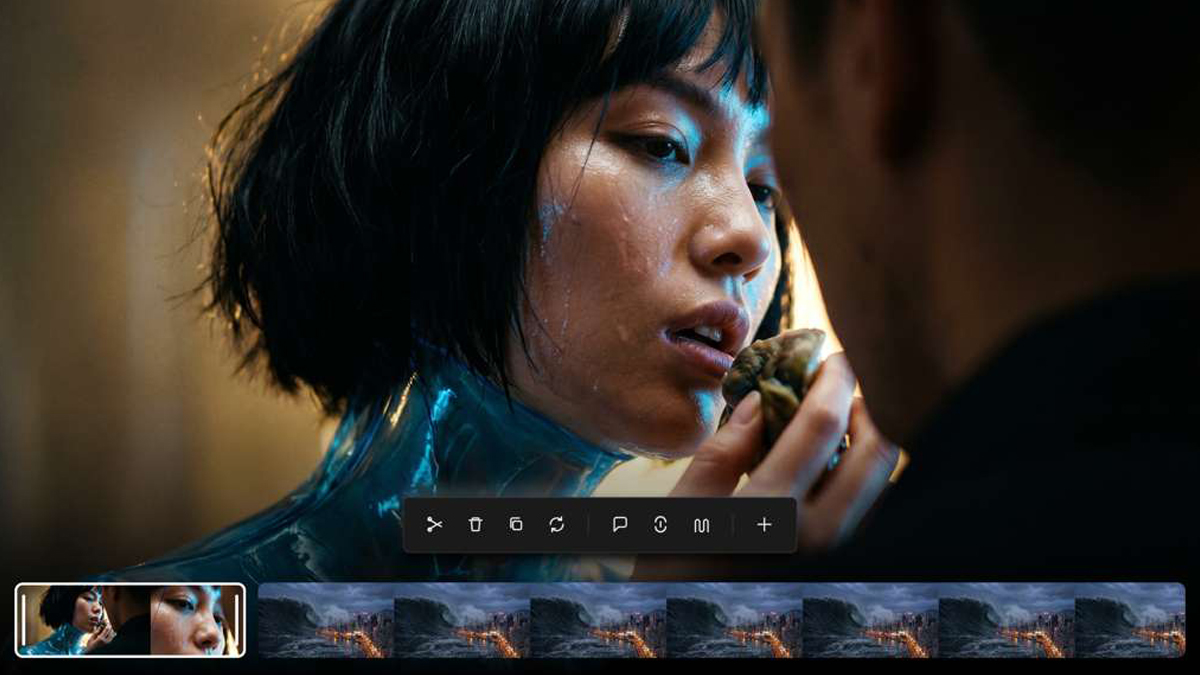
MUMBAI: Utopai Studios has announced a major upgrade to its PAI storytelling AI platform, introducing what it claims is an industry-first capability to generate three-minute videos in 4K resolution, alongside enhancements to its Story Agent feature.
The update, rolling out from April 15, expands the platform’s capabilities across the filmmaking process, from early concept development to post-production. The company said the new features are designed to help filmmakers maintain continuity across characters, scenes and visual styles, a key challenge in AI-driven storytelling.
At the heart of the release is a next-generation model that enables more structured narrative development, allowing creators to move more seamlessly from idea to execution. With tools such as multi-shot sequencing and multi-turn editing, the platform aims to give both studios and independent creators greater control over complex storytelling workflows.
Commenting on the launch, Utopai Studios co-founder and CTO Jie Yang said, “The next phase of AI in media will not be defined by isolated tools, but by systems that can carry story, continuity and collaboration across the full creative process.” He added that the update is a step towards enabling more practical, end-to-end narrative development at a professional level.
Echoing this, Utopai Studios co-founder and chief scientific officer Zijian He said, “Generative video is opening the door to a new production model, where creative ambition is less constrained by traditional cost and complexity.” He noted that the platform combines multimodal models with iterative editing to give creators more speed, control and consistency.
The company said PAI is already being used in professional film and television productions, particularly in Hollywood, for tasks such as pre-visualisation, scene design and post-production refinements. The latest update adds features including improved voice options, character consistency, unlimited editing and more flexible asset management.
Utopai also emphasised that its models are not trained on copyrighted material, positioning the platform as a cleaner alternative for creators and rights holders navigating the evolving AI landscape.
As AI continues to reshape content creation, Utopai’s latest push signals a shift from standalone tools to integrated systems, aiming to make high-quality filmmaking faster, more flexible and increasingly accessible.