Hollywood
International filmmakers pick B/W films


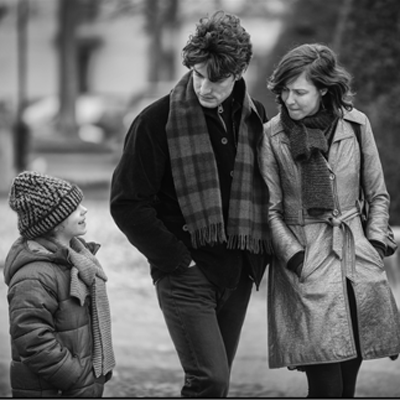
KOLKATA: Black-and-white movies are a rarity today, but there are some international filmmakers who have opted to make their feature film debuts with black-and-white cinema that exquisitely weaves in light and shadow effects to create magic from monochrome.
Brazil’s Eduardo Nunes and Poland’s Rafael Stemplewski’s maiden productions had their Indian premiere recently as part of the ‘Shades of Black and White’ segment of the just-concluded 19th Kolkata International Film Festival. Both had to field the curiosity of audiences about the restricted palette.
“Some said why not colour as it was a fairy tale. Others appreciated it. I had to make my first film and the decision was not whether it would be great to do something different in black-and-white…I just did it as I felt it would be better that way,” Stemplewski said in Kolkata.
His film ‘Dendrologium’ (2013), co-directed with Amin Azam, explores the character on his journey around the world trying to discover the myth about the secret of the Sweet Fruit.
On the other hand Nunes’s ‘Southwest’ (2011) revolves around the life of protagonist Clarice, which lasts for a single day. “Why not black and white…it is just a medium of expression,” Nunes said.
The pull-factor towards monochrome for Stemplewski was an “artistic decision” and had nothing to do with giving it an aged look. “It created a certain kind of atmosphere and we didn’t want to disrupt this atmosphere. We always wanted to create a unique climate and black-and-white just fitted the story,” said Nunes.
Moreover, Nunes felt the lack of colour creates a “distance from reality” for the audiences, thereby pulling them closer to the film’s content.
Usually black-and-white is attempted by ambitious young filmmakers or veterans with enough industry pull, said a Kolkata based movie critic. “Modern black-and-white movies stand out for their classical photography and their willful connection to an earlier period of filmmaking,” he said.
While reputed Polish filmmaker Joanna Kos-Krauze, who made ‘Papusza’ with husband and co-director Krzysztof Krauze, agreed. But, she also noted that for them, the lack of colour also heightened the sense of the film as a “historical fresco.”
“Our film is a like a visual poem and so the blacks, whites and grays gave that impression of a different era,” Kos-Krauze said.
‘Papusza’ (2013) is a biographical piece on Romany poet Bronislawa Wajs (1908-1987), known as Papusza. She is hailed as Poland’s first gypsy poet. Kos-Krauze and her husband have chronicled Wajs’ life through century-old photographs and other images, thereby giving it a “period look”.
“We used the latest (digital) technology…red epics…we used photographs almost a century old and the rest we added during post-production. There were no close-ups… that was the hardest decision.”
“It did not have good distribution because some people did not want to sell a black and white film. It’s a hard decision making a black-and-white film,” she said.
According to some media reports for actress Katia O’ Wallis, who has starred in the critically acclaimed black-and-white production ‘Big Hit’ directed by noted Greek filmmaker Karolos Zonaras, the “journey was enriching”.
“The concentration is more on the acting in such movies,” said O’ Wallis, who is of French origin and has starred in several Greek films.
Also Alexander Payne’s ‘Nebraska’ which released recently followed notable films this year that have opted for monochrome over color, including Noah Baumbach’s New York tale ‘Frances Ha’ and Joss Whedon’s Shakespeare-on-the-cheap “Much Ado About Nothing.”





