Hardware
Cable TV prediction: US to phase out STBs by 2015
MUMBAI: The year 2013 was a big year for the Indian cable TV industry. The country that was till now running on analogue signals opened up to digitization, even if it was in few regions. While we can celebrate this achievement as we enter into 2014 and also gear up for the phase III and phase IV of digitisation, there is some food for thought coming from the US cable industry for the Indian cable TV industry.
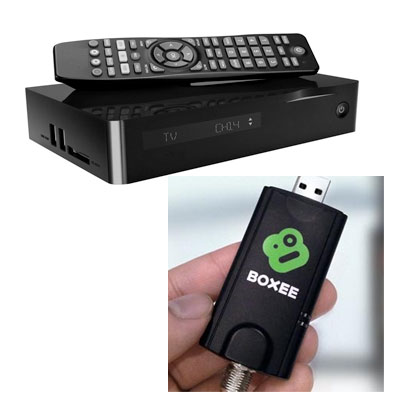
According to the CEO of TV Predictions, Inc Phillip Swann, the Americans will see phasing out of cable TV set top boxes (STBs) by 2015 and witness an upsurge in USB dongle or CableCard like products that can be connected to a TV and signals can be received from the operator’s facility. And all this to reduce the expenses incurred due to huge sums paid to the box manufacturers.
The predictions suggest that consumers would anytime prefer the simplicity and convenience of cable dongle over the set top boxes. That apart, the cable TV operators will also appreciate the savings.
When the Google Chromecast Net TV device was launched, it was surely a step ahead in the cable TV industry. The dongle is one of the best-selling electronic products at Amazon.com currently.
Some of the dongles available in the market currently are Boxee’s Live TV dongle and TBS USB DVB-C TV Stick amongst others.
The predictions make it pretty obvious that the Americans are moving at a faster pace in the sector. Another point to ponder over here is that while in India the cable TV operators are still struggling to seed the STBs, another country is in the process of its phase out and switch to a compact technology.
It’s not that in India, technology hasn’t improved. The direct-to-home (DTH) operators by introducing new and better facilities like recording as per preference, authority to choose channels with their high-definition (HD) boxes has already become a threat to the Indian cable TV operators who have just started seeding the standard definition STB with no added feature.
With the world shrinking, it would not take the consumers much time to get exposed to the advancement happening in the TV/Cable industry the world over. The Indian consumers would soon wish for a compatible technology like the dongle. The New Year seems to be an alarm for the cable operators to start preparing for the huge shift.

Hardware
India clears Rs 1.6 lakh crore semiconductor projects under Semicon India
Ten projects cleared as production begins and design ecosystem gathers pace
NEW DELHI: India’s push to become a global electronics powerhouse is gaining momentum, with the Semicon India Programme driving the creation of a full-fledged semiconductor ecosystem from design to manufacturing.
Launched in 2022, the programme aims to build capabilities across the entire value chain, including chip design, fabrication, assembly, testing and packaging. In just four years, the government has approved 10 semiconductor projects with a combined investment commitment of around Rs 1.6 lakh crore.
Two of these facilities have already begun commercial production, including units led by Micron Technology Inc. and Kaynes Technology India Limited. Two more plants are expected to go live later this year, signalling that India’s chip ambitions are moving from blueprint to factory floor.
The broader electronics manufacturing story has also seen sharp growth over the past decade. Production has jumped from roughly Rs 1.9 lakh crore in 2014-15 to about Rs 12 lakh crore in 2024-25, while exports have surged nearly eightfold. Mobile phone manufacturing, once heavily import-dependent, now meets almost all domestic demand and has become a major export driver.
Alongside manufacturing, the government is investing heavily in design capabilities. Through access to advanced chip design tools provided free to 315 universities, students and researchers have clocked over 200 lakh hours of usage. This effort has already resulted in 211 chip tape-outs from 75 institutions.
Support for startups is also picking up pace. Twenty-four chip design projects have been approved, targeting sectors such as surveillance, energy, communications and IoT. Of these, 14 companies have collectively raised over Rs 650 crore in venture funding, while several designs have progressed to fabrication, including at advanced nodes.
To strengthen supply chains, India has also signed semiconductor cooperation agreements with countries including the United States, Japan, the European Union, Singapore and the Netherlands. These partnerships aim to reduce global dependencies while boosting domestic capabilities.
The employment impact is equally significant. The electronics sector now supports an estimated 25 lakh jobs, with mobile manufacturing alone accounting for nearly half. As more semiconductor units come online under the India Semiconductor Mission, indirect job creation across supply chains is expected to rise further.
Sharing these updates in Parliament, Ministry of Electronics and Information Technology minister of state Jitin Prasada underscored the government’s focus on building a resilient, end-to-end semiconductor ecosystem.
With factories taking shape, designs moving to silicon and investments flowing in, India’s semiconductor story is steadily shifting gears from ambition to execution.