Connect with us

Hollywood

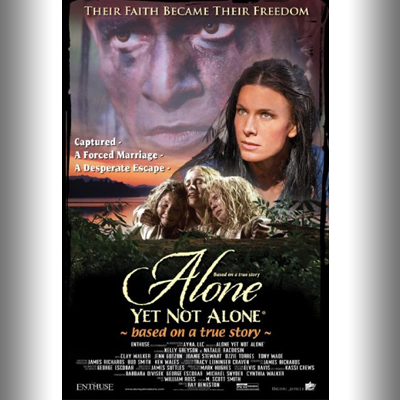
Oscar Academy rescinds original song nomination for Alone Yet Not Alone

Published

on

MUMBAI: On Tuesday night, the Academy’s Board of Governors voted to rescind the Original Song nomination for Alone Yet Not Alone, music by Bruce Broughton and lyric by Dennis Spiegel. The decision was prompted by the discovery that Broughton, a former Governor and current Music Branch executive committee member, had emailed members of the branch to make them aware of his submission during the nominations voting period.


“No matter how well-intentioned the communication, using one’s position as a former governor and current executive committee member to personally promote one’s own Oscar submission creates the appearance of an unfair advantage,” said Cheryl Boone Isaacs, Academy President.

Advertisement


The Board determined that Broughton’s actions were inconsistent with the Academy’s promotional regulations, which provide, among other terms, that “it is the Academy’s goal to ensure that the Awards competition is conducted in a fair and ethical manner. If any campaign activity is determined by the Board of Governors to work in opposition to that goal, whether or not anticipated by these regulations, the Board of Governors may take any corrective actions or assess any penalties that in its discretion it deems necessary to protect the reputation and integrity of the awards process.”


Advertisement

An additional nominee in the Original Song category will not be named. The remaining nominees in the category are:


“Happy” from Despicable Me 2– Music and Lyric by Pharrell Williams

Advertisement

“Let It Go” from Frozen – Music and Lyric by c and Robert Lopez

“The Moon Song” from Her – Music by Karen O; Lyric by Karen O and Spike Jonze

“Ordinary Love” from Mandela: Long Walk to Freedom – Music by Paul Hewson, Dave Evans, Adam Clayton and Larry Mullen; Lyric by Paul Hewson

Advertisement


The members from each of the Academy’s branches vote to determine the nominees in their respective categories – actors nominate actors, film editors nominate film editors, musicians and composers nominate song and score.


Advertisement

During the nominations process, all 240 voting members of the Music Branch received a Reminder List of works submitted in the Original Song category and a DVD copy of the song clips with film and song title only (additional information including composer and lyricist is not provided).  Members were asked to watch the clips and then vote in the order of their preference for not more than five nominees in the category. A maximum of two songs may be nominated from any one film.


Academy Awards for outstanding film achievements of 2013 will be presented on Oscar Sunday, 2 March, 2014, at the Dolby Theatre at Hollywood & Highland Center and televised live on the ABC Television Network.  The Oscars, produced by Craig Zadan and Neil Meron, also will be televised live in India.

Advertisement
Click to comment

Leave a Reply

Your email address will not be published. Required fields are marked *

Hollywood

Utopai Studios partners Huace to deploy PAI for long form content

Deal includes revenue sharing as Huace adopts AI engine across global ops

Published

on

MUMBAI: Lights, camera… algorithm, the script just got a silicon co-writer. In a move that signals how storytelling itself is being re-engineered, U.S.-based Utopai Studios has partnered China’s Huace Film & TV Co. Ltd. to bring artificial general intelligence into the heart of long-form content creation.

At the centre of the deal is PAI, Utopai’s cinematic storytelling system, which Huace will deploy as a core engine across its production pipeline from development and creative iteration to global localisation. The partnership includes a large-scale annual usage commitment from Huace, alongside a usage-based revenue-sharing model, underscoring both ambition and commercial confidence on both sides.

For Huace, one of China’s largest film and television companies, the bet is not on automation alone but on scale with control. With distribution spanning over 200 countries and a presence across more than 20 international platforms, including Netflix and YouTube, the company brings a vast content ecosystem where even marginal efficiency gains can translate into significant output shifts. Its extensive TV IP library further positions it as fertile ground for AI-assisted storytelling workflows.

Advertisement

The choice of PAI follows what Huace described as a rigorous evaluation of existing AI tools, many of which remain limited to fragmented use cases such as video generation or editing. What tipped the scales, according to the company, was PAI’s ability to handle long-form narrative complexity maintaining continuity, structure, and creative coherence across entire story arcs rather than isolated clips.

Utopai, for its part, is using the partnership to anchor its international expansion strategy, pitching PAI as an enterprise-ready system built for customisation, privacy, and regulatory adaptability across markets. That positioning becomes particularly relevant as global media companies increasingly scrutinise how AI integrates into proprietary workflows.

The timing is notable. Earlier this month, Utopai upgraded PAI to support three-minute 4K video generation and advanced multi-shot sequencing features designed to tackle one of AI storytelling’s biggest hurdles: consistency across scenes.

Advertisement

What emerges is not just another tech collaboration, but a glimpse into how the grammar of filmmaking could evolve. Because if stories were once crafted frame by frame, the next chapter might just be coded scene by scene.

Continue Reading

Advertisement News18
Advertisement
Advertisement
Advertisement
Advertisement Whtasapp
Advertisement Year Enders

Indian Television Dot Com Pvt Ltd

Signup for news and special offers!

Copyright © 2026 Indian Television Dot Com PVT LTD

This will close in 10 seconds