News Broadcasting
Telecast blacked out even as Telangana formation gets Lok Sabha clearance

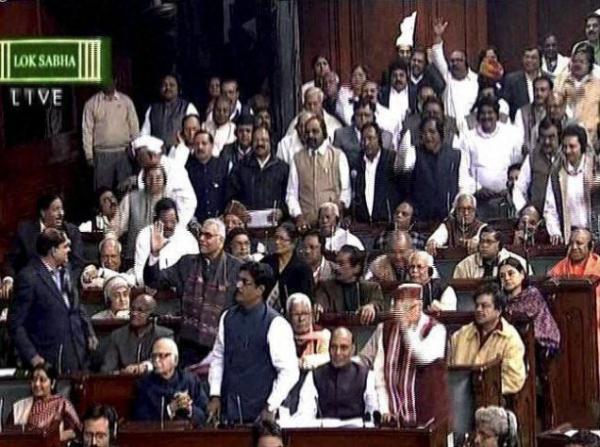
NEW DELHI: And suddenly the screens went dark at 3:03 pm. Yesterday’s black out of the telecast of the Lok Sabha proceedings on the passage of the Andhra Paradesh Reorganisation Bill 2014 has opened a hornet’s nest politically. The allegation is that democratic norms have been dustbinned and the Congress (I)-led UPA government’s move is reminiscent of the Emergency days of 1975 when the nation’s media was put on a leash and muzzled.
There was no clarity at the time of writing on who took the decision to black out the telecast of vote by voice of the controversial bill – which envisages the creation of the 29th Indian state of Telangana – from the erstwhile Andhra Pradesh. Early reports were that the speaker of the Lok Sabha Meira Kumar ordered the switching off of the cameras and the transmission. But the speaker was silent on this issue. What muddied the waters further was a statement later in the evening by the Lok Sabha secretary general S. Bal Shekar that the switchoff happened on account of a technical glitch and that an investigation had been ordered.
Lok Sabha TV put out a message that the telecast would resume, which did not come to pass. TV news channels – which normally carry LS TV signals – instead chose to carry the proceedings in parliament on their tickers.
Almost every political party lambasted the disruption of the telecast. Leader of the Opposition Sushma Swaraj called it a tactical glitch, even as TMC leader Mamta Banerjee said it smelled of hanky-panky. Telangana opponents called it the death of democracy.
But Telangana leaders said that the blackout was necessitated to prevent the unruly protests which have marred the proceedings over the past few days, and they did not want them to be retelecast worldwide as they were when pepper spray rained on members of parliament and knives were flashed on 13 February. Additionally, they stated that the Andhra Pradesh media are known to be sensationalist and that the footage could have been misused by the close to 20-odd Telugu news channels, which could have led to law and order problems there.