International
Sony will sell TV and film content via Comcast’s Xfinity


MUMBAI: Comcast, the largest cable company and home internet service provider in the United States on 11 March announced that it has signed an agreement with Sony Pictures Home Entertainment (SPHE) to sell the studio’s titles through the Xfinity On Demand – the digital store for Xfinity, the company’s rebranded trademark for triple play services in Comcast’s largest markets including the company’s digital cable, cable Internet access and cable telephone services and radio.
In the coming weeks, Xfinity TV customers will be able to purchase Sony Pictures movies and TV shows to own and access any time, any where, on any device, often before the DVD release.

The Sony Pictures library is a terrific addition to Comcast’s rapidly expanding offering of hit films and TV shows available for purchase. Comcast Cable Senior Vice President of Content Acquisition Michael Schreiber said in a press statement, “The response to the digital store has been encouraging and tells us our customers love the flexibility and ease of purchasing content directly from Xfinity On Demand to watch when and where they want it.”
“Sony Pictures is pleased that this agreement brings significant titles to Comcast customers,” said SPHE President Man Jit Singh. “We deeply value our relationship with Comcast and look forward to working closely with them to meet the needs of all audiences.”
Among the first titles available for purchase will be the multi-Academy Award nominated American Hustle which will be available to own digitally on March 11.
Other Sony Pictures movie and TV titles that will be available for purchase in the coming weeks include the critically-acclaimed TV series Breaking Bad, as well as popular movies such as Captain Phillips, Cloudy with a Chance of Meatballs 2, The Amazing Spiderman and 21 Jump Street.
Comcast customers have the ability to purchase movies and television shows – often weeks before they are available to rent or purchase on Blu-ray and DVD – and store them seamlessly in the cloud. Their content can be enjoyed anywhere, anytime, on their TV, PC or mobile devices. Purchased titles are added to customers’ On Demand menus which are easily accessible on the TV, online or via the Xfinity On Demand Purchases app.
The Comcast catalog now includes content from FOX, Lionsgate, NBCUniversal, Sony Pictures and Warner Bros.







International
Utopai Studios unveils 4K three-minute video generation for PAI platform
New Story Agent and editing tools aim to streamline AI-led filmmaking workflows
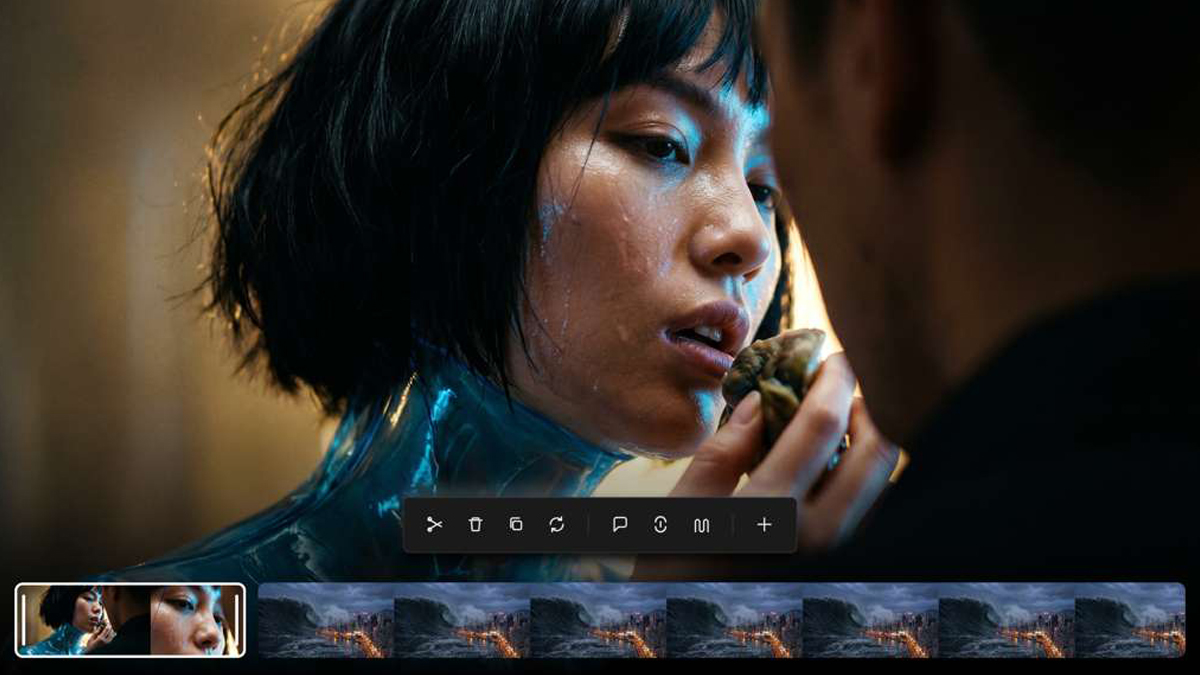
MUMBAI: Utopai Studios has announced a major upgrade to its PAI storytelling AI platform, introducing what it claims is an industry-first capability to generate three-minute videos in 4K resolution, alongside enhancements to its Story Agent feature.
The update, rolling out from April 15, expands the platform’s capabilities across the filmmaking process, from early concept development to post-production. The company said the new features are designed to help filmmakers maintain continuity across characters, scenes and visual styles, a key challenge in AI-driven storytelling.
At the heart of the release is a next-generation model that enables more structured narrative development, allowing creators to move more seamlessly from idea to execution. With tools such as multi-shot sequencing and multi-turn editing, the platform aims to give both studios and independent creators greater control over complex storytelling workflows.
Commenting on the launch, Utopai Studios co-founder and CTO Jie Yang said, “The next phase of AI in media will not be defined by isolated tools, but by systems that can carry story, continuity and collaboration across the full creative process.” He added that the update is a step towards enabling more practical, end-to-end narrative development at a professional level.
Echoing this, Utopai Studios co-founder and chief scientific officer Zijian He said, “Generative video is opening the door to a new production model, where creative ambition is less constrained by traditional cost and complexity.” He noted that the platform combines multimodal models with iterative editing to give creators more speed, control and consistency.
The company said PAI is already being used in professional film and television productions, particularly in Hollywood, for tasks such as pre-visualisation, scene design and post-production refinements. The latest update adds features including improved voice options, character consistency, unlimited editing and more flexible asset management.
Utopai also emphasised that its models are not trained on copyrighted material, positioning the platform as a cleaner alternative for creators and rights holders navigating the evolving AI landscape.
As AI continues to reshape content creation, Utopai’s latest push signals a shift from standalone tools to integrated systems, aiming to make high-quality filmmaking faster, more flexible and increasingly accessible.