MAM
Khushwant Singh: The man with good-intentioned malice towards all, signs off

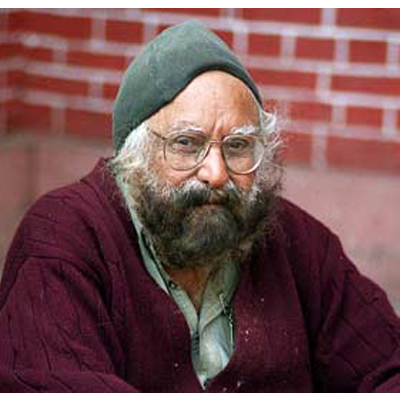
NEW DELHI: ‘With Malice towards one and all’ was a rare title for a weekly column. He had seen India grow from being a country ruled by the British to a freedom tainted by corrupt politicians and technocrats. Only he could have had the courage to speak out so bluntly.
Renowned author and columnist Khushwant Singh, who is remembered not only for his weekly knife-edged columns but also his ability to laugh at himself, passed away Thursday morning, aged 99.
He was married to Kawal Malik. He is survived by his son Rahul Singh and daughter Mala. Actress Amrita is the daughter of his brother Daljit Singh and Rukhsana Sultana.
He stayed in “Sujan Singh Park” near Khan Market, New Delhi’s first apartment complex built by his father in 1945 and named after his grandfather.
He founded the Planning Commission journal Yojana, and also served as the editor of the Illustrated Weekly of India, the National Herald, and the Hindustan Times.
Apart from his columns and poems, he is remembered for one of the best novels based on the partition of the country –Train to Pakistan – which was converted into a very moving and poignant film years later.
Not surprisingly, he titled his autobiography as “Truth, Love, and a Little Malice” and this was published in 2002.
Singh was awarded the Padma Bhushan in 1974, an award he returned in 1984 to voice his protest against the siege of the Golden Temple in Amritsar. Later in 2007, he received the Padma Vibhushan, the second highest civilian honour in the country.
He also served as a member of the Rajya Sabha from 1980 to 1986 and
Even though he could be very pungent and acidic in his criticism, he never gave up humour in his writings. His comparisons of social and behavioral characteristics of Westerners and Indians are laced with acid wit.
Singh was born on 2 February 1915 in Hadali in District Khushab in the then undivided Punjab, which is now known as Sargodha district and is in Pakistan. His father Sir Sobha Singh was a prominent builder and is credited with the design of the present-day Connaught Place and many parts of Lutyens’ Delhi. His uncle Sardar Ujjal Singh (1895–1983) was Governor of Punjab and Tamil Nadu.
He was educated at Modern School, New Delhi, Government College, Lahore, St. Stephen’s College in Delhi and King’s College London, before reading for the Bar at the Inner Temple.
During his tenure, The Illustrated Weekly (now extinct) became India’s pre-eminent newsweekly with its circulation rising from 65,000 to 4,00,000 copies. Known for his penchant criticisms, he was asked to leave the journal on 25 July 1978, a week before his retirement, after working for nine years in the weekly. This led to a major drop in readership of the weekly.
His works ranged from political commentary and contemporary satire to outstanding translations of Sikh religious texts and Urdu poetry. Despite the name, his column “With Malice Towards One and All” regularly contained secular exhortations and messages of peace. In addition, he is one of the last remaining writers to have personally known most of the stalwart writers and poets of Urdu and Punjabi and profiled his recently deceased contemporaries in his column.
He had often been accused of favoring the ruling Congress and was known to be close to the then Prime Minister Indira Gandhi. His faith in the Indian political system had been shaken by events such as the anti-Sikh riots that followed Indira Gandhi’s assassination. But he has remained resolutely positive on the promise of Indian democracy and worked via Citizen’s Justice Committee floated by H. S. Phoolka who was a senior advocate of Delhi High Court.
His many books include The Mark of Vishnu and Other Stories (1950), The History of Sikhs (1953 with a revised edition in the early sixties and a second edition in the late sixties),Train to Pakistan (1956), The Voice of God and Other Stories (1957), I Shall Not Hear the Nightingale (1959), The Sikhs Today (1959), The Fall of the Kingdom of the Punjab (1962), Ranjit Singh: The Maharajah of the Punjab (1963), Ghadar 1915: India’s first armed revolution (1966), A Bride for the Sahib and Other Stories (1967), Black Jasmine ( 1971), Tragedy of Punjab (1984) Women and Men in My Life (1995), Uncertain Liaisons; Sex, Strife and Togetherness in Urban India (1995), Why I Supported the Emergency: Essays and Profiles ( 2009) and Delhi: A Novel (1990). In addition, he had several anthologies of short stories, and wrote the television documentary Third World – Free Press for a British channel in 1982.
Apart from the Rockfeller Grant, he had received the Honest Man of the Year award from Sulabh International, the Punjab Rattan award from the Punjab Government, and the Sahitya academy fellowship of the Sahitya Akademi.
Often a butt of jokes for his attitude towards women and sex, Khushwant did not lose his sense of humour even after he had stopped actively writing or socialising. He will remain an icon for the modern Indian writers who often emulate his style to gain popularity.