eNews
SERIESMAKERS reveals all ten projects of the second edition

Mumbai: The creative initiative SERIESMAKERS, led by the prestigious TV festival Series Mania and supported by European content powerhouse Beta Group, has concluded its second edition with overwhelming success.
A-list filmmakers from all corners of the world applied to participate in the second year of this tailor-made program for feature film directors who venture into the world of series.
For the second edition of SERIESMAKERS, the following ten projects have been selected (in alphabetical order):
BREACH by director Mijke de Jong, and writers Giancarlo Sanchez and Jan Eilander (4×50’, The Netherlands) When the unapproachable helmswoman Tisa (35) is tasked with ferrying a crowded boat of wealthy Dutch refugees to Dover, she is confronted with deep-seated traumas from her own past as a refugee, and her authority as captain is challenged by the Europeans who suddenly find themselves in a dependent position. The toxic mix of conflicting interests and mortal fear leads to war on board. Can Tisa and the passengers overcome their demons and complete the journey safely? Mijke de Jong’s LAYLA. M (2016) won several prizes at international film festivals and was the Dutch entry for the Oscars in 2018.
DOCTOR’S OATH by director Mikko Myllylahti and producers Aleksi Hyvärinen and Taneli Mustonen (4×52’, Finland) Based on a true story, DOCTOR’S OATH is a highly realistic and suspenseful story of a side-tracked female dermatologist who became the face of Finland’s unlikely decision to choose an extremely soft approach towards the AIDS epidemic.
Mikko Myllylahti’s THE WOODCUTTER STORY (2022) won the Gan Foundation Award for Distribution and was nominated for the Critics’ Week Grand Prize at the Cannes Film Festival.
ELEPHANT with director-writer Hajni Kis and by creator-writer Dávid Csicskár (7×40’, Hungary) Anna (46) is the perfect mother of three, a fantastic wife and a highly skilled political spokesperson. She has a “little” flaw though – she needs to drink to do it all. Anna is a functioning alcoholic who gets through the day with concealed shots. One night, she causes a car accident that nearly kills her family, by drunk driving. She realizes she must quit drinking immediately. But keeping her life, family, and career on track without alcohol turns out to be unexpectedly difficult. Since her family relies on her in every way possible, Anna’s sobriety triggers chaos in the house. Can she save herself while watching everything fall apart around her or will she sacrifice herself for the sake of her perfect family? Hajni Kis’s WILD ROOTS (2021) was nominated at Karlovy Vary International Film Festival.
FREEDOM ACADEMY by director Kaouther Ben Hania and producer Nadim Cheikhrouha (8×45’, France) In the competitive world of television, a cunning producer and his optimistic wife battle for control of a daring reality TV show set in a high-security prison, hoping to capture the intense competition among incarcerated radicals all while the jury grapples with their divergent opinions on prisoners’ rehabilitation.
Kaouther Ben Hania’s Cannes Film Festival competition entry FOUR DAUGHTERS (2023) is currently nominated for an Oscar® for Best Documentary Feature Film. With THE MAN WHO SOLD HIS SKIN (2020), Ben Hania was nominated for an Oscar® for Best International Feature Film.
GEORGE BLAKE by director Kevin Macdonald and producer Femke Wolting (6×52’, United Kingdom/The Netherlands) What makes a person turn against everything they ever stood for? The untold true story of one of the most prolific double agents of not just the Cold War, but British history, George Blake. Kevin Macdonald’s THE LAST KING OF SCOTLAND (2007) won an Oscar® in the category Best Performance by an Actor in a Leading Role and multiple BAFTA’s, among others. His documentary ONE DAY IN SEPTEMBER (1999) won an Oscar® for Best Documentary Feature.
PLAY by director Yorgos Zois and producer Stelios Cotionis (8×52’, Greece) A lonely cinephile joins a mysterious group of strangers who reenact movie scenes in real life. Yorgos Zois’s second feature film ARCADIA (2024) world premiered at 2024 Berlin International Film Festival’s section Encounters. His feature INTERRUPTION (2015) was nominated at Venice Film Festival, among others, and won the Best Newcomer director from the Greek Film Academy.
SLEEPING SWANS by director Barbara Albert, writer Ulrike Tony Vahl and producer Martina Haubrich (8×52’, Germany) In a coastal town in Eastern Germany, idyll turns into a sinister nightmare when children inexplicably fall into a mysterious condition. Renowned expert Ellen Lennardsson is called in to decipher the secret. In a desperate race against time, she fights against inexplicable forces and the insurmountable resistance of the community. As the number of affected children rises unstoppably, Ellen uncovers a sinister conspiracy encompassing not only the supernatural, but also the darker side of human nature. Barbara Albert’s NORDRAND (1999) was nominated for the Golden Lion at Venice Film Festival. FREE RADICAL (2003) was nominated for the Golden Leopard at Locarno International Film Festival and MADEMOISELLE PARADIS (2017) was nominated at Toronto International Film Festival, among others.
THE SQUATTER by director Erik Matti and producer Ronald Monteverde (8×52’, The Philippines) A dead body in a rural town. A fraudulent London charity. An East-meets-West crime story. With their hopes and futures at stake, a secretive Filipino maid and a tenacious Ukrainian detective have to unravel the mysteries of a crime just as the crime itself unravels who they truly are. Erik Matti’s ON THE JOB 2: THE MISSING 8 (2021) was nominated for Best Film at Venice Film Festival and won in the category Best Actor at Venice Film Festival.
THE WILLOW SONG by writer-director Guy Myhill and writers Tony Phillips and Sophie Vaughan (8×50’, United Kingdom) A young Black American GI leaves the segregated Jim Crow South for 1940’s Britain to join the war against fascism. He grows politically, falls in love across the race line and learns firsthand that his biggest battle is not against Nazi Germany, but the pervasive brutality and bigotry of the United States Army. Guy Myhill’s credits include THE GOOB (2014). It was nominated at the Venice Film Festival and won the British Independent Film Award, among others.
WILLZ by director-writer Amir Manor and director-writer Guy Raz (10×40’, Israel) Following his friend’s unexpected layoff, an impulsive and highly persistent courier unites the rival courier tribes in the Willz food delivery syndicate to improve their working conditions. When the couriers realize they could never beat Willz by playing by the rules, they join forces, banking on their transparency and the tools at their disposal – to rob a bank. As their plan takes shape, it will become clear that the robbery comes with a cherry on top – exposing Willz’s greedy and unscrupulous ways. Amir Manor’s EPILOGUE (2012) was nominated at the Venice Film Festival (Venice Days) in the category Best Film, among others.
The eligible director/producer or director/writer teams from all over the world have been closely mentored and guided by experienced and awarded creatives while working on their series and developing a full pitch deck.
The prolific four mentors of the second edition are award-winning German producer Janine Jackowski (TONI ERDMANN, SKYLINES), Israeli writer and script doctor Ronit Weiss-Berkowitz (THE GIRL FROM OSLO, A TOUCH AWAY), the international development producer from France/Denmark Isabelle Lindberg Pechou (TROM, LAST LIGHT), and Brazilian producer, director, and showrunner Felipe Braga (SINTONIA, LOV3).
The speakers included showrunners, writers, and producers such as NARCOS creator Chris Brancato (GODFATHER OF HARLEM, PUSHING DAISIES), multiple award winner Frank Doelger (GAME OF THRONES, THE SWARM), showrunner Bryan Elsley (SKINS), Hagai Levi (THE AFFAIR, OUR BOYS, SCENES FROM A MARRIAGE, IN TREATMENT), Ron Leshem (EUPHORIA, NO MAN’S LAND), and Stefan Arndt (THE WHITE RIBBON, RUN LOLA RUN, BABYLON BERLIN, GOODBYE LENIN).
The three winning teams will be announced on March 20 in Lille during Series Mania Forum (March 19 – 21). Two teams will each be awarded a €50,000 Beta Development Award and will be working closely with Beta’s Content and Co-Production Division to develop a pilot script and a full package. An additional award of €20,000, courtesy of the Kirch Foundation in collaboration with HFF (University of Television and Film Munich), will be given to a third project.
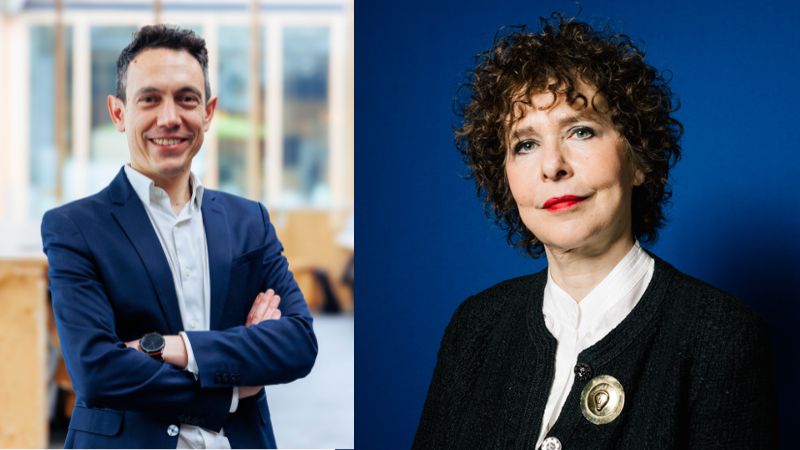
The creative initiative SERIESMAKERS is headed by Laurence Herszberg, General Director of Series Mania, and Koby Gal Raday, Chief Content Officer of Beta Group.