Hollywood
Final book in Divergent trilogy to be split into two films
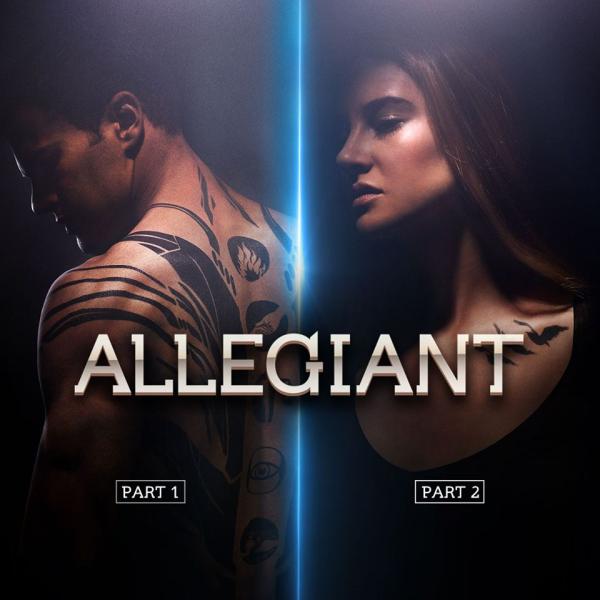
MUMBAI: Lionsgate, one of the leading global entertainment company, will produce and release Allegiant, starring Shailene Woodley and Theo James and based on the third book in Veronica Roth’s best-selling Divergent trilogy, as two separate films.
It was announced on 11 April by Lionsgate Motion Picture Group co-chairmen Rob Friedman and Patrick Wachsberger. The Company will release a total of four Divergent films on its Summit Entertainment label, with the next film, Insurgent, which begins production next month, slated for an American release on 20 March, 2015 and Allegiant – Parts 1 & 2 scheduled for release on 18 March, 2016, and 24 March, 2017, respectively.
The three books ranked one-two-three on the USA Today best-seller list for 2013.
“Veronica Roth brings her captivating story to a masterful conclusion in Allegiant, a rich, action-packed book with material that is ideally suited to two strong and fulfilling movies,” said Friedman and Wachsberger in a statement. “The storytelling arc and world of the characters lend themselves perfectly to two films, a storytelling strategy that has worked very well for us on the two Twilight: Breaking Dawn films and about which we’re tremendously enthusiastic for the two upcoming Mockingjay films of The Hunger Games franchise.”
The first film in the series, Divergent, revolves around the story which takes place in a dystopian post-apocalyptic version of Chicago, where people are divided into distinct factions based on human virtues. Beatrice Prior is warned that she is Divergent and thus will never fit into any one of the factions and soon learns that a sinister plot is brewing in her seemingly perfect society.
After the cataclysmic events in Insurgent, Tris and Four enter a dangerous new world in Allegiant: Parts 1 & 2 that they no longer recognise. As new truths are revealed about the past and future, Tris must face impossible choices about courage, allegiance and love to protect the people closest to her.
Divergent stars Academy Award nominee Shailene Woodley (The Secret Life of the American Teenager), Theo James (Downton Abbey), Academy Award winner Kate Winslet (Revolutionary Road), Ashley Judd (Missing), Jai Courtney (Spartacus), Ray Stevenson (Dexter), Zoe Kravitz (X-Men: First Class), Miles Teller (The Fantastic Four), Maggie Q (Nikita), Tony Goldwyn (Scandal), Ansel Elgort (The Fault in Our Stars) and Mekhi Phifer (Lie to Me).
Divergent hit Indian theatres on 11 April.

Hollywood
Hollywood’s ultimate streaming war ends with a whimper—and a whopper of a deal
Netflix folds, Paramount wins, and Warner Bros finds itself a new dance partner
NEW YOR & LOS ANGELES: Netflix has blinked. The streaming colossus walked away Thursday from its months-long pursuit of Warner Bros Discovery, handing Paramount Skydance a glittering Hollywood prize and setting up what could be the biggest media merger in years.
The denouement came swiftly. Warner Bros declared Paramount’s sweetened offer of $31 per share “superior” to Netflix’s $27.75 bid, and politely asked the streaming giant to raise its hand. Netflix politely told them where to go.
“At the price required to match Paramount Skydance’s latest offer, the deal is no longer financially attractive,” said co-chief executives Ted Sarandos and Greg Peters, with the studied coolness of men pretending they hadn’t just been outbid by a tech billionaire’s son. “This was always a ‘nice to have’ at the right price, not a ‘must have’ at any price.”
Translation: Larry Ellison scared them off.
The Oracle founder and one of the world’s richest men has been the invisible hand behind Paramount’s relentless pursuit of Warner Bros, bankrolling his son David Ellison’s ambitions with a commitment of $45.7bn in equity—up from $43.6bn previously—plus $57.5bn in debt financing from Bank of America Merrill Lynch, Citi and Apollo. Netflix, for all its swagger, had no appetite for a bidding war with a man who seemingly has no ceiling.
“There’s no point playing chicken with someone who won’t turn the wheel,” said a Netflix adviser, displaying a frankness one rarely hears on Wall Street.
If regulators wave it through, the deal reshapes Hollywood dramatically. Paramount would hoover up Warner Bros’ HBO Max streaming customers into its portfolio, absorb CNN, the Food Network and a clutch of sports rights, and stack them alongside its existing stable of Nickelodeon, CBS and Comedy Central. Two studios, two streaming platforms, two newsrooms—one colossal headache for antitrust watchdogs.
And headaches there will be. California’s attorney-general Rob Bonta has already signalled he’s watching closely, Democratic senators including Elizabeth Warren and Bernie Sanders have smelled political favouritism given the Ellisons’ ties to President Donald Trump, and European regulators may yet fancy a say. Paramount has hedged accordingly, raising its break-up fee to $7bn and agreeing to cover the $2.8bn Warner Bros would owe Netflix for ditching their earlier deal.
Warner Bros chief executive David Zaslav, sounding like a man who’d just won the lottery, declared the deal would create “tremendous value” and said he “can’t wait to get started.” David Ellison called it a triumph of “superior value, certainty and speed.”
For Hollywood’s army of writers, directors and crew—already battered by years of production cuts—the champagne will taste rather flat. Mergers of this magnitude invariably come with a chainsaw attached.