Hollywood
‘Songs of the Blue Hills’ invited to film fests in Italy, Ladakh, Kerala

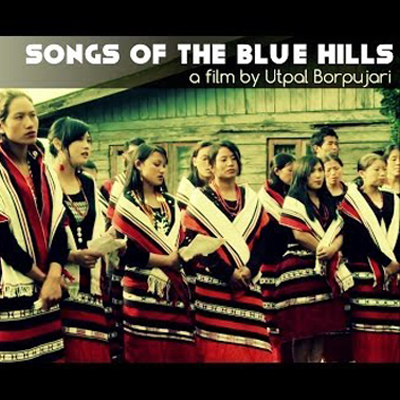
NEW DELHI: Some mesmerising Naga music will reverberate in a castle on a rocky island off the coast of Italy and the heights of the Himalayas around the same time this month end, as filmmaker-critic Utpal Borpujari’s documentary ‘Songs of the Blue Hills’ has been invited to three more international film festivals.
The film has been selected for the ‘Documentari fuori concorso’ section of the 12th Ischia Film Festival held under the patronage of the Italian President in the medieval Aragonese Castle located on the Mediterranean Sea, the seventh International Documentary and Short Film Festival of Kerala (IDSFFK), and the Ladakh International Film Festival after having already earned high appreciation in six international film festivals.
Produced by the Centre for Cultural Resources and Training (CCRT), an organisation under the Culture Ministry, the film features an eclectic range of Naga musicians who are practising the folk music of various Naga tribes in their pure and contemporary forms.
The 96-minute film earlier got invited to the Doc Outlook International Market of the Visions du Reel Film Festival (Nyon, Switzerland), Gothenburg Independent Film Festival (Sweden), New York Indian Film Festival (NYIFF), Eyes & Lenses Ethnographic Film Festival (Warsaw, Poland), the World Music & Independent Film Festival (Washington) and Signs 2014 Documentary Film Festival, Kochi.
“Every year, the festival presents a selection of films from all over the world, emphasising the cultural identity or the landscape’s features of a certain territory through the audiovisual narration,” says a spokesperson of the Ischia Film Festival which was designed in 2002 by Michelangelo Messina for ‘The Association Art Movie e Music.’
The Festival is an important part of a wider project called ‘Cinema and territory’ that aims at protecting cultural and landscape peculiarities of territories in order to promote them through the audiovisual medium.
‘Songs of the Blue Hills’ features some fascinating music as well as dialogue with musicians like veteran Ao folk singers Sademmeren Longkumer and A. Bendangyanger Tsuwar Jamir, Chakhesang folk veteran Zachunu Keyho, classical pianist Nise Meruno, and groups like the Tetseo Sisters, the Nagaland Singing Ambassadors, the Chancel Choir, Ru’a, Üsou’s Instrumental, Abiogenesis, Nagagenous, Baptist Youth Choir Poilwa Village and Purple Fusion.
In addition, experts such as Dr A Lanunugsang, Lipokmar Tzudir, Gugs Chishi, Theja Meru, Vivee Peseye, Som Kamei, Zubeno Mozhui and Dr Abraham Lotha have shared their views on the changing face of Naga music in recent times.
Shot extensively across Nagaland, the film’s crew comprised Biswajeet Changmai (cinematography), Debajit Gayan (sound), Umesh Kumar (Editor), Atanu Phukan (research & coordination), and Aiyushman Dutta (research & art direction).






