iWorld
Piracy & l’affaire JadooTV

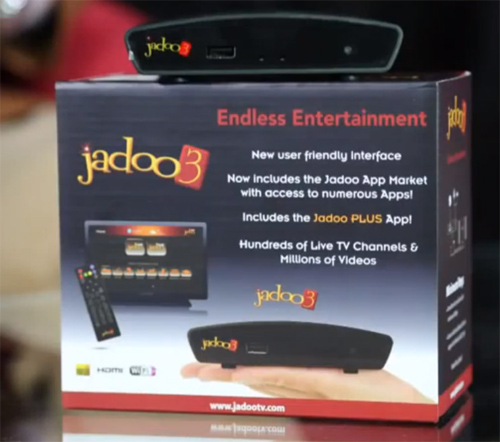
MUMBAI: The empire is striking back. In the US, broadcasters won a battle to disallow transmission of their free to air signals to Aereo subscribers when the US Supreme Court declared the Chaitanya Khanojia- founded company’s offering illegal last week.
Cyber crime cell officials swooped in on the offices of over the top (OTT ) or internet protocol TV services provider Jadoo TV in the Thurmalgery area in the south Indian city of Secunderabad and arrested four of its executives on 29 June 2014.

The alleged crime: the company was illegally tapping into cable TV signals of Indian broadcasters and streaming them to customers over the internet in several countries having south Asian diaspora.
The cybercrime cell took the step following a complaint from Maa Television. Hyderabad police commissioner M Mahender Reddy while tom-tomming the arrests told journalists that customers only needed to “buy the Jadoo TV set-top box without having to pay any monthly subscription. Most of the channels are paid channels and the gang was streaming their channels through internet. TV channels running their business legitimately, were incurring huge losses to the tune of several hundreds of crores,”
He additionally said that “this signal piracy was going on for the past six seven years on different names from different cities and the accused managed to escape from the clutches of police by changing their set up to different cities. The ‘Pearl Technology’ was streaming 115 TV channels to Jadoo TV. Two bank accounts of its India CEO Sumith Ahuja have been identified and police are in the process of seizing them.”
However, indiantelevision.com is aware that JadooTV has been in existence for around a decade but started the rollout of its box only in 2008. Jadoo TV was promoted by Pakistan-origin US national Sajid Sohail (who developed the Jadoo receiving box and gets it manufactured out of China these days), while the Dubai-based Pearl Media Group was promoted by CEO Faisal Aftab and it worked as its content partner.
CEO Sohail had said in an interview to Rawal TV earlier this year that the company has signed legitimate contracts with content providers in various countries- including Pakistan, India and Afghanistan – to stream their channels either from the satellite-delivered beam or from the streams they deliver on the internet. He had said that broadcasters were eagerly contacting him to legally carry their channels on JadooTV because of its popularity worldwide.
He added in that interview: “We have a service call MyJadoo, which allows viewers to add broadcast streams on the internet to their Jadoo service just like YouTube does. But if we get a complaint or notice from the content owner, we pull it off just like YouTube does online. The owner has to write to us under the Digitial Millenium Copyright Act about the objectionable content and we delete it.” (His interview can be seen here (https://www.youtube.com/watch?v=mBgm4mCW57M#t=364) .
It was as recently as in March 2014 that JadooTV was acquired by a Silicon Valley-based, privately-funded and Intel Capital-backed company CloudStram Technologies, along with Pearl Media Group and Altair Techonologies to create what has been hailed as a “vertically integrated OTT power house.”
Cloudstream had in its press release stated that “the acquisition catapults it to be the dominant multicultural OTT provider, gaining access to a well-known OTT brand JadooTV, the largest south Asian user base in excess of one million viewers, key content deals, and proprietary technologies.”
The JadooTV website openly states that it is offering channels such as News Express, Zoom, Mtunes, Mastii, Aaj Tak, 9XM, Music Xpress, FoodFood, Dhamaal, Big Magic, among many others from India to subscribers. Nowhere are the mainline GECs such as ZeeTV, Sony Entertainment, Colors or Star or the SunTVs mentioned as being available to viewers, though it says many more channels are available apart from those listed. And a perusal of all its Facebook pages catering to subscribers in various countries has no mention of mainline channels being delivered either through conversations or comments or promotions on those pages.
The Pearl Media Group describes itself as a “venture capital funded content aggregation and dissemination media company, offering content owners and consumers multi-platform solutions and service offerings. Pearl is headquartered in Dubai, United Arab Emirates with development, research and design, and operations facilities located in Hong Kong, India, Japan, Pakistan, and the United States. Our mission is to connect niche content owners and consumers worldwide, whenever, wherever!”
Its website pearlmediagroup.com has a listing of partners which can be accessed at (http://www.pearlmediagroup.com/partners.html) and it is these very channels and services which are mentioned on almost all the JadooTV or Jadoo Plus product offerings in promotions in various countries.
However, a distribution professional with the conditionality of not going on record told indiantelevision.com that JadooTV had indeed signed legitimate contracts but with only a few niche and news channels in India. “But the mainline channels get shown illegally in some countries,” he stated. “And you don’t need promotions or ads to promote these channels, it’s the buzz that was passing this information among the south Asian diaspora in the various countries.”
A scan of US-based customer reviews on Amazon.com however hints that JadooTV may not be resorting to piracy – at least in the USA. Some JadooTV box buyers have complained that popular Hindi channels are not available on JadooTV. One reviewer has clearly stated that “there are just 25 Indian, 42 Pakistani and six Punjabi channels” as recently as last year. Another one Kishan Patel writes on 14 June 2014: “I really loved it. Most of all main Indian news channels. Awesome. Works great with Ethernet cable. Don’t use wifi. Wifi sucks.”
A user named Rubaiyat Islam “Rubaiyat008” from Denton Texas, clearly writes on page 12 of the Amazon reviews page: “For those of you looking to buy Jadoo for Indian channels, let me tell you this; there is NO Sony Entertainment, Zee TV, or any of the mainstream Indian channels. Apparently, only Dish Network has the exclusive rights to these mainstream channels in U.S.”
Clearly, there is something amiss here. Consumers openly dislcosing that JadooTV has no mainline Indian channels. Then what is it pirating is the question?
L’affaire JadooTV clearly needs deeper investigation. May justice be served!







iWorld
Frodoh, Chaupal introduce non-intrusive first-screen ads for OTT platforms
New ad-tech layer unlocks revenue without interrupting OTT viewing
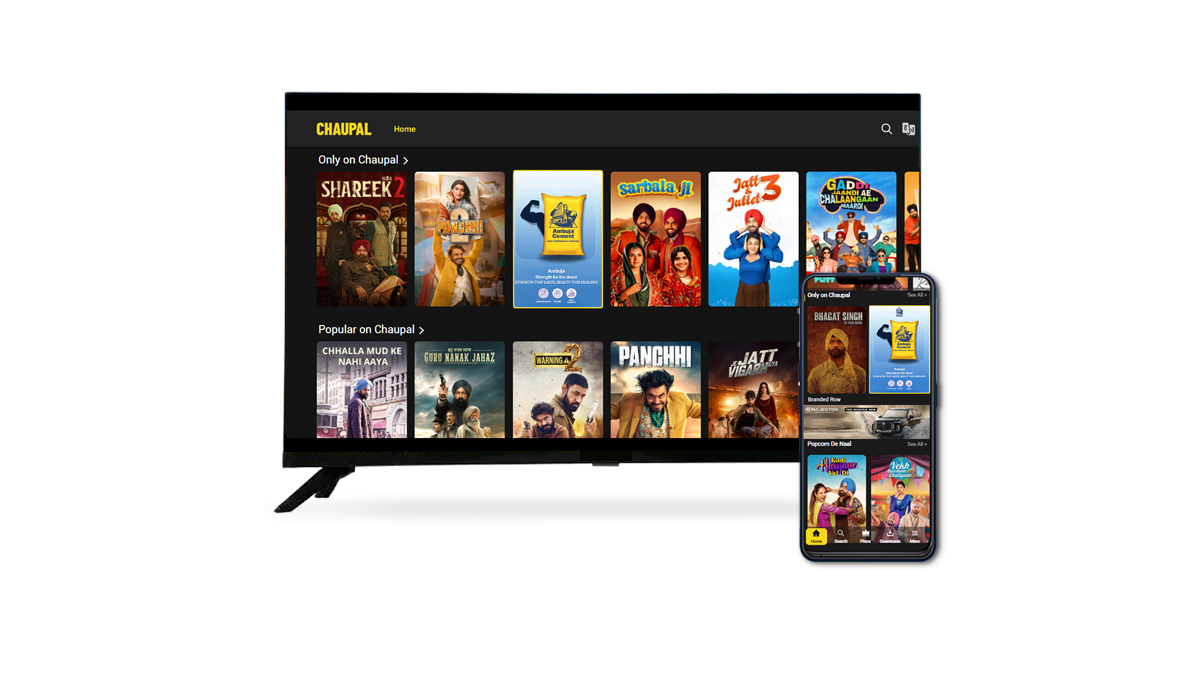
MUMBAI: Frodoh has partnered with regional OTT platform Chaupal to roll out what it calls an industry-first “first-screen” monetisation framework, aimed at helping subscription-led streaming services generate additional revenue without interrupting content viewing.
The new model focuses on connected TV home screens, introducing ad formats that sit within the discovery layer rather than the content itself. In simple terms, viewers may notice subtle brand placements while browsing, but once they hit play, the experience remains ad-free.
The technology is designed to tap into high-attention areas such as session depth, viewing intent and discovery behaviour, turning previously unused interface space into monetisable real estate. For OTT platforms, this opens up a fresh revenue stream without diluting the premium experience that subscribers expect.
Chaupal chief executive officer Sandeep Bansal said the move balances growth with user trust. “By partnering with Frodoh, we are introducing a sophisticated ‘first-screen’ monetisation layer that integrates seamlessly into our UI, ensuring discovery remains native and non-intrusive while keeping content consumption ad-free.”
From Frodoh’s side, the pitch is clear: expand the ad pie without cluttering the screen. Frodoh founder and chief executive officer Russhabh R Thakkar said the framework creates a new category of advertising by unlocking high-visibility home screen inventory that was previously untapped.
Industry watchers see this as part of a broader shift in OTT monetisation strategies, especially as subscription platforms look to diversify revenue without risking churn. With connected TV usage rising steadily, the home screen is quickly becoming the next battleground for attention.
If the model scales, this partnership could signal a subtle but significant shift in how OTT platforms monetise, proving that sometimes, the most valuable ad space is the one you see before the show even begins.