Brands
Bacardi’s survival ingredient: Localisation


MUMBAI: Localisation is the key factor to survive, today. As more and more brands, channels and groups enter different markets in the globalised world, they need to adapt according to the local flavour.
The reason behind it is simple: give people what they can easily relate to.

And keeping this in mind, Bacardi has launched two falvours for the Indian palate – Aam Panna and Nimbu Paani – for its low-alcohol ready-to-drink brand, Breezer.
The company which believes in leading the way in innovation; be it in product formulation, packaging or creation of unique concepts and brand properties, with Breezer Indi Mix, it continues the trend. This also makes it the first example of a global spirits brand introducing local flavours in India. “Indi Mix was created based on our research which showed that Indian consumers love our current flavour range but at the same time are also keenly interested in new variants based on familiar flavours. Aam Panna and Nimbu Paani are well-known and well-loved coolers which tap into consumer experiences and memories, and therefore, we have chosen them as the first two flavours,” says director sales & marketing Manish Seth while elaborating that it will continue to innovate and beguile the customers by launching unique properties and flavours.
India is among the key emerging markets for the company and is going to be an important source of volume growth in the coming years. By 2020, India will have the youngest population in the world with an average age of 29. Low per capita consumption compared to other countries is also expected to help. According to IWSR India is also the third fastest-growing market for international brands.
The two new flavours are currently available across Haryana, Maharashtra, West Bengal, Goa and Karnataka. Rest of the cities can expect to have these summer coolers available very soon with another eight locations launching in the coming month.
Apart from this, to mix with its TG, the company which recently introduced ‘BACARDI Untamable Since 1862’, a massive global identity shift, a tribute to Bacardi’s remarkable history hailing across 152 years, will integrate with its flagship musical property Bacardi NH7 Weekender.
Recently, it also tied up with MTV in conjunction with the launch of MTV Splitsvilla. “We look forward to announcing exciting activations across India as well unique digital innovations this year. We will also be releasing the new series of the cult brand property ‘The Dewarists’ as well as hosting season 3 of Grey Goose Style Du Jour (India’s only style forecasting event),” says Seth adding that digital marketing for Bacardi remains to be the staple feature across all properties.
As per various media reports, Bacardi enjoys 97 per cent monopoly in the low alcohol RTD. Many came and went. Take United Breweries’ Shotz and Cruiser, for instance, launched a decade back got a tepid response from the 2.5 million sized market and hence, had to be withdrawn.
This only proves the old-ad adage, when in Rome, do what the Romans do!





Brands
Estée Lauder to shed 10,000 jobs as new boss bets on digital shift
The cosmetics giant raises its profit outlook but stays silent on a possible merger with Spain’s Puig, as job cuts deepen and a three-year sales slump weighs on the turnaround
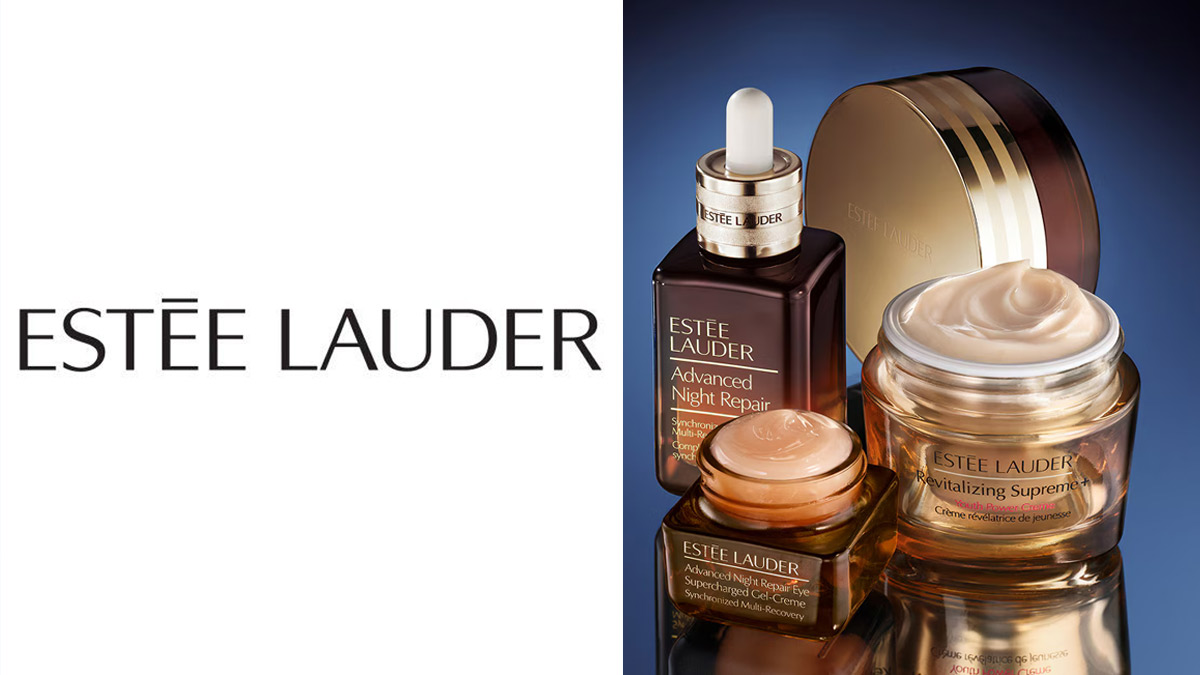
NEW YORK: Stéphane de La Faverie is not done cutting. Estée Lauder announced on Friday that it plans to eliminate as many as 3,000 additional jobs, taking its total redundancy programme to as many as 10,000 roles, up from a previous target of 7,000 announced a year ago. The company, which owns La Mer, The Ordinary, Tom Ford, and Aveda, employs roughly 57,000 people worldwide. The mathematics of what is now being contemplated is stark.
The fresh round of cuts is expected to generate a further $200 million in savings, bringing the total annual savings from the programme to as much as $1.2 billion before taxes. That money, De La Faverie has made clear, will be ploughed back into the turnaround.
A CEO in a hurry
De La Faverie, who took the helm in January 2025, inherited a company that had endured three consecutive years of annual sales declines. His response has been to move fast and cut deep. A significant portion of the latest redundancies reflects his push to reduce headcount at US department stores, long a cornerstone of Estée Lauder’s distribution model but now a channel in structural decline. In their place, he is accelerating the shift toward faster-growing online platforms, including Amazon.com and TikTok Shop, a pivot that is reshaping not just where Estée Lauder sells but how it thinks about its customers.
The numbers are moving in the right direction
Despite the pain, there are signs the medicine is working. Estée Lauder raised its profit outlook for the remainder of the fiscal year, guiding for adjusted earnings per share in the range of $2.35 to $2.45, above analyst estimates and a notable step up from the $2.05 to $2.25 range it had guided for in February. Organic net sales growth is expected to come in at 3 per cent, the company said, at the high end of the range it set out in February.
The share price tells a mixed story. After De La Faverie took charge, the stock surged nearly 60 per cent, buoyed by investor optimism that a longtime company insider could finally arrest the decline. But 2026 has been rougher: the shares have fallen 27 per cent this year, weighed down by disappointing February results and the overhang of unresolved merger talks with Spanish beauty giant Puig Brands SA. The company gave no additional details about those discussions on Friday, leaving the market to guess.
Silence on Puig
The proposed tie-up with Puig remains the most consequential unknown hanging over Estée Lauder. A deal with the Barcelona-based group, which owns brands including Carolina Herrera and Rabanne, would reshape the global luxury beauty landscape. But with nothing new to say and a turnaround still very much in progress, De La Faverie is asking investors to trust the process.
Three years of sales declines, 10,000 job cuts, and a merger that may or may not happen. At Estée Lauder, the overhaul has barely started.