Ad Campaigns
VisionSpring’s Livelihoods in Focus campaign aids agricultural workers and artisans with clear vision

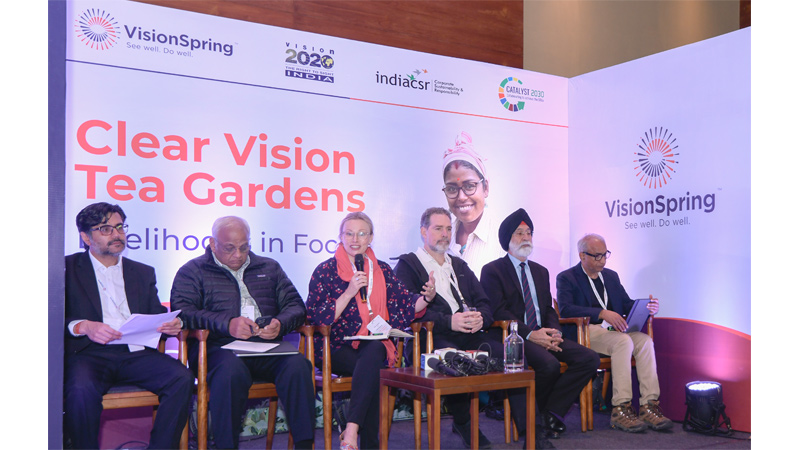
Mumbai: VisionSpring, the non-profit organisation accelerating the use of eyeglasses around the world, has brought together groups from across the tea sector for a landmark event unveiling their Livelihoods in Focus campaign. Livelihoods in Focus is a strategic initiative to unlock more than Rs 300 crore in income-earning potential this year by helping tea garden workers, artisans, and micro-entrepreneurs get the eyeglasses they need.
At the event, VisionSpring announced new partnerships with Indian Tea Association, Luxmi Tea Co Pvt Ltd, Tea Promoters India, Tibetan Settlement Office, Saneki Weavers and All Assam India Small Tea Growers, through this association we seek to achieve 55 per cent vision correction through eye screening and dispensing of eyeglasses, expecting the first-time wearer ratio will be at 80 per cent. Together, the new partnerships will screen the vision of 50,000 people.
This livelihoods in focus event brought together more than 100 senior leaders from the tea industry, government, corporations, NGOs, family foundations, and eye hospitals. Among them were:
1 Rainforest Alliance consulting program coordinator India Harkirat Singh Sidhu
2 Vision 2020 India president and Siliguri Greater Lions Eye Hospital, India CEO Dr Rajesh Saini
3 Gorkhaland Territorial Administration executive director Samden Dupka
VisionSpring announced that it has already screened the vision of more than 280,000 people, including more than 200,000 tea and coffee garden workers, through this initiative. To scale up Livelihoods in Focus, it invites partners from the tea industry, the non-profit sector, corporates, and the government to join the effort. With further support, VisionSpring will screen the vision of more than 1.5 million tea and coffee workers and artisans in Assam, West Bengal, Tamil Nadu, Kerala and Karnataka.
Livelihoods in Focus, supported by the National Programme for Control of Blindness and Visual Impairment (NPCBVI), has the potential to create a substantial economic impact by enhancing the productivity of people working in visually intensive jobs. A 2018 study published in the Lancet, conducted with tea workers in Assam, found that eyeglasses unlocked productivity improvements of 21.7 per cent overall and a staggering 31.6 per cent increase for those over 50. This makes providing reading glasses the most effective health intervention for productivity in low- and middle-income communities.
VisionSpring India board chair Narayanan Kumar said: “Clear vision isn’t merely about sight; it’s the cornerstone of opportunity, productivity, and dignity. For tea garden workers, whose livelihoods hinge on precision and efficiency, clear sight is not just a preference but a necessity. By equipping them with clear vision through eyeglasses, we are not simply correcting eyesight; we are empowering tea garden workers to unlock their full potential. In doing so, they become catalysts for progress, not only enriching their own lives but also fostering the prosperity of their communities and the country as a whole.”
“We are thrilled with the overwhelming response to the project,” Rainforest Alliance consulting program coordinator India Harkirat Singh Sidhu said. “Clear vision not only enhances the overall well-being of hardworking tea garden workers but also holds the potential for transformative change in their lives. The efforts to prioritize and address clear vision, by VisionSpring Foundation, for tea garden workers are not just an investment in their individual health but a step towards fostering a healthier, more vibrant community. I wholeheartedly support and commend initiatives aimed at making clear vision a reality for tea garden workers, recognizing its profound significance in shaping a brighter, more productive and a healthier future for them.”






