Connect with us

iWorld

No plans to impose censorship or regulate social media: Javadekar

Published

on

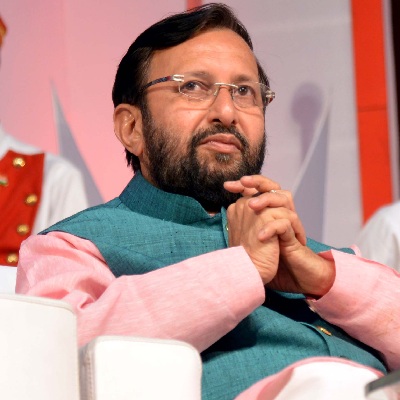
NEW DELHI: Information and Broadcasting Minister Prakash Javadekar has said that there were and are no plans to impose any censorship on social media or to regulate any programmes beamed through social media.

The Minister told the Parliament that the Communication and Information Technology Ministry has given an assurance in this regard.

Social media has become an important tool that is also being used by government departments to reach out to the people. Although he highlighted that section 69A of the Information Technology Act 2000 allows blocking of any videos or information affecting society in the interest of public order.

Advertisement


Earlier in the month of May, Javadekar had urged all central Ministries to disseminate their policy initiatives through the Communication Hub under the existing New Media Wing of his Ministry.


Advertisement

Firmly believing in prolific use of social media, the Minister wrote to his cabinet colleagues for utilising the hub as a one-stop place for social media outreach.

In his letter, he said each Ministry or department may liaise with the New Media Wing which will cater to all its needs such as disseminating information through packaging and placing of content, wider reach through variety of tools and response management.


Advertisement

He said the two-way interaction envisaged in this endeavour would provide a 360 degree communication approach to the government and hence, help in last man connectivity. 

He said the directive was in adherence to the vision of Prime Minister Narendra Modi, who wanted to use the social media platforms extensively for transparency and better governance. 

Advertisement
Click to comment

Leave a Reply

Your email address will not be published. Required fields are marked *

iWorld

Akhil Gupta retires as Bharti Enterprises vice chairman after three decades

The man who outsourced Airtel’s network and built Indus Towers leaves behind a telecom industry transformed

Published

on

NEW DELHI: He was not the most visible face of Bharti. He was, by most accounts, the most consequential one. Akhil Gupta, known within the group simply as AKG, has retired as vice chairman of Bharti Enterprises with effect from March 31st, 2026, closing a chapter that stretched across more than three decades and reshaped Indian telecoms in ways still felt today.

Gupta was there at the beginning, part of the core leadership team that steered Bharti Airtel from a scrappy domestic operator into one of the world’s largest telecom and digital services companies. But it is two decisions in particular that cement his legacy. The first was persuading the industry that a telecom company need not own its own network. His outsourcing partnerships with IBM and Ericsson, considered eccentric at the time, stripped out capital costs and sharpened Airtel’s competitive edge. The model was subsequently copied across the global industry. The second was the creation of Indus Towers, now one of the largest tower companies in the world.

Both initiatives were studied as case material at Harvard Business School, where Gupta himself had studied. A chartered accountant by training and a dealmaker by instinct, he accumulated industry accolades across his career without ever particularly courting the limelight.

Advertisement

Bharti Enterprises, announcing the retirement on LinkedIn, credited Gupta with building the foundation of the group’s success and driving innovation, partnerships and long-term value creation.

The tributes are deserved. Gupta did not just help build Airtel. In many respects, he helped invent the playbook that modern telecoms runs on.

Advertisement
Continue Reading

Advertisement News18
Advertisement All three Media
Advertisement Whtasapp
Advertisement Year Enders

Indian Television Dot Com Pvt Ltd

Signup for news and special offers!

Copyright © 2026 Indian Television Dot Com PVT LTD