MAM
Think beyond the usual discounts, advices Raghu Vishwanath

MUMBAI: The festive season is here and the brands have gotten busy with new and innovative communications to make the most in today’s volatile market.
After a slowdown of the economy for a couple of years now, at least in terms of consumer sentiment, economy seems to be looking up, mainly due to an expected stable government at the centre. Hence, the coming festive season is significantly better than the ones of the last couple of years.
The media agencies have also revised ad spends for the year looking at the trends especially post general elections.

However, even after spending lakhs or sometimes even crores, a brand is not able to create the correct connect with its TG.
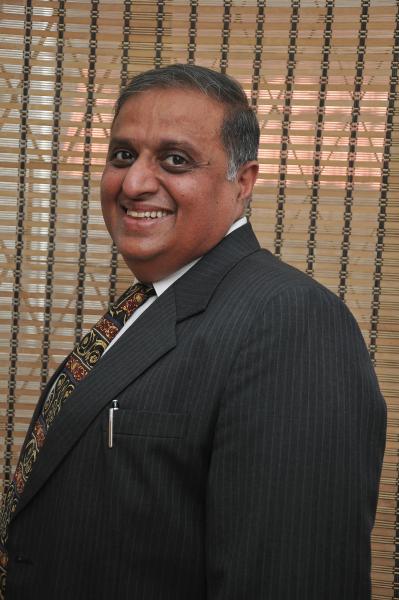
“The marketers should think of more innovative promotions this time round. The usual discounts and freebies are no longer attractive to today’s consumers,” says Vertrebrand managing director Raghu Vishwanath while adding that promotions should aim at creating memorable experiences for the whole family.
The end-to-end brand management consultancy, which focuses on improving the customer connect of any business through a rigorously scientific, structured process, says that a brand is a bundle of functional benefits and added values that the selected core target customers/consumers value enough to buy into repeatedly. Therefore, a brand, which dynamically keeps connected to its target group of customers to deliver both functional and added values, that they value, will stay ahead in the category even in today’s volatile market.
After having created early success stories with leading brands like Apollo Hospital, Vodafone, Dainik Bhaskar, Shriram Properties, Mom & Me and many more, Vertebrand has, over the years, worked with a number of national and international clientele spread across industry sectors.
Today’s consumer is very well networked and informed. The very definition of ‘Brand’ is that it is for a selected consumer, so how can one survive by ignoring them? “We have to move from firm-centric paradigm of value and its creation to engaging with our targeted customers. We have to shift from traditional goods-services mind-set to an experience mind-set. For example, most self service outlets offer similar branded products in tea/toothpaste/soaps etc. but consumer choose one over the other,” highlights Vishwanath.
India is a land of entrepreneurs. We have businesses which feature in the list of Fortune 500, but not Indian brands. The reason behind this is that most Indian businesses think brand is a luxury for large businesses and mostly about pretty pictures. “Whereas VB believes brand is equal to business and business equal to brand,” he adds.
The consultancy has various tools like V-Trak, V-Cap, V-Shape, which help brands across sectors create a strategy which will help them know what will work for them or not.
It mostly works on Brand Quotient (BQ), which helps to measure the effectiveness of the brand. The branded offer is measured against four major aspects of the brand, namely: Brand Strategy – strength of differentiation, Brand Alignment – internal alignment of the organisation to brand essence, Brand Communication – clear position communication and Brand Execution – consistently driving the brand experience in the real world.
The BQ number shows the strength and areas of improvement for the brand.
However, lately, many brands have been caught in controversies as well. The favourite being the fairness creams. Is any publicity good? Answers Vishwanath, “Controversy always will bring attention. If it is unwanted, the brand will get negatively impacted. Laws can be made tighter but the moral code of conduct should be applied by all marketers and brand owners to keep the commercial landscape clean and positively charged.”
“Lately, there is more consciousness building to invest in branding, yet far from ideal,” he concludes.






MAM
VML India lands two finalist spots at Cairns Hatchlings 2026
The Mumbai agency is back in Australia with two teams, a UN brief and 24 hours to impress

MUMBAI: VML India is heading to Australia again. The Mumbai-based creative agency has secured two finalist spots at the Cairns Hatchlings 2026 competition, one in the Audio category and one in Design, making it the only Indian agency to have reached the finals in both editions of the contest since its launch in 2025.
Four people will make the trip. Senior copywriter Shilpi Dey and senior art director Raj Thakkar will compete in Audio. Art directors Shabbir and Shruti Negi will go head-to-head with the world’s best in Design. The finals take place at the Cairns Convention Centre from 13th May, culminating in an awards ceremony on 15th May.
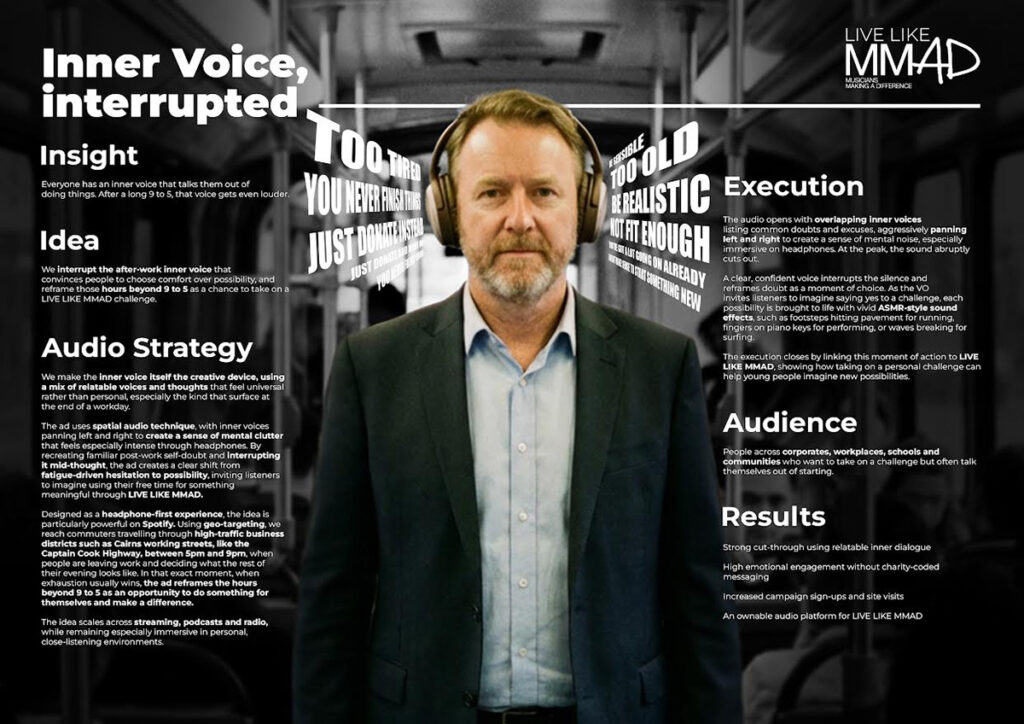
The work that got them there is worth examining. For the Audio category, Dey and Thakkar tackled a brief for LIVE LIKE MMAD with a campaign called Inner Voice, Interrupted. Using spatial audio techniques, the campaign recreates the overwhelming self-doubt that descends after a long workday, physically panning negative thoughts left and right before cutting the noise entirely to reveal a confident inner voice. Strategically targeted at commuters via Spotify during evening rush hours, the campaign reframes the hours after work as an opportunity for personal growth and charitable action.
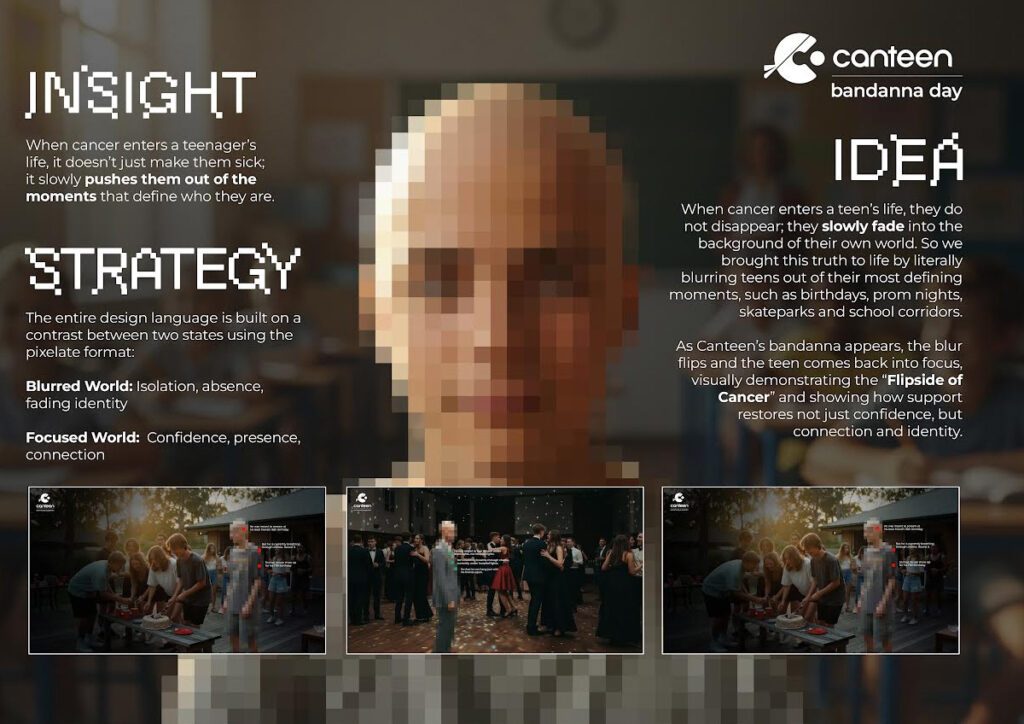
For the Design category, Shabbir and Negi worked on a brief for Canteen’s Bandanna Day, a campaign highlighting how cancer pushes teenagers out of their own defining moments. Using a pixelated design language to create stark contrast between a blurred world of isolation and a focused world of connection, the campaign, titled The Flipside of Cancer, shows teenagers fading into the background of birthdays, skateparks and school proms. As a Canteen bandanna appears, the blur flips and the teenager snaps back into sharp focus.
Kalpesh Patankar, group chief creative officer of VML India, made no attempt to disguise his satisfaction. “We are immensely proud to see our teams consistently excel on the Cairns Hatchlings platform since its inception,” he said. “They have masterfully tackled challenging briefs across diverse categories, demonstrating both layered storytelling and a unique creative approach. This exceptional teamwork is truly inspiring.”
Dey and Thakkar, returning to the finals after last year’s run, were candid about the demands of the audio medium. “It’s one of the most demanding mediums, where we only have a few seconds to capture a listener’s world with sound alone, so absolute clarity is essential,” they said. “The true measure of creative work is its ability to create positive change, and our audio submission was made to help those who need it most while encouraging people to silence the inner voices that hold them back.”
Shabbir and Negi, competing in Design for the first time, described the experience as “a completely different beast.” “We see it as an opportunity to showcase our expertise, raise the bar, and challenge ourselves in new ways, while also learning from creative minds from across the globe,” they said.
In Australia, the four finalists will face a live 24-hour brief from the United Nations before presenting in a live pitch session. Twenty-four hours, one brief, one shot. VML India has been here before. It knows exactly what is at stake.