News Headline
Future of Prasar Bharati lies in Freedish, FM Radio and internet radio, says Jawhar Sircar

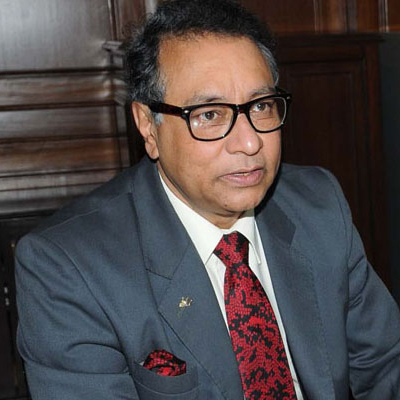
NEW DELHI: Prasar Bharati chief executive officer Jawhar Sircar has said that the pubcaster would have to strengthen its direct-to-home platform Freedish and its FM services if it has to survive.
He announced that Freedish was expected to go up to 112 television channels in the next two to three months but he had made it clear to the government that while most were coming through e-auctions, some popular channels may have to be ‘attracted’ to join Freedish since satellite television was the future. He said he was not opposed to digital terrestrial transmission but advances in technology may make it obsolete.

He said that when Freedish utilises its full strength, it will give the other DTH operators ‘a run for their money,’ while addressing a function organised by the Broadcast Engineering Society (India) on the occasion of Public Service Broadcasting Day.
Similarly, he said he was conscious that FM was on analogue and may have to be phased out at some stage, but was the best alternative at present since medium wave and short wave were on the way out. That was the intent in his plan to simulcast MW programmes on FM channels. According to Sircar, AIR should direct its resources to strengthen FM broadcasts, particularly as even mobile phones and car radios could catch these signals.
He denied that he was opposed to DRM (Digital Radio Mondiale), but said the present DRM will become obsolete by the time people are able to afford it and a futuristic version of DRM may be in vogue.
He also felt that Internet Radio was the best alternative at present to short wave and asked the engineers to work on this.
The day is marked as Public Service Broadcasting Day as it coincides with the only time that the father of the nation, Mahatma Gandhi, ever visited All India Radio. He had come to the station in Delhi to make a broadcast in 1947 aimed at Hindu refugees from Pakistan then staying in a camp near Kurukshetra.
AIR director general F Sheheryar referred to Prime Minister Narendra Modi’s decision to talk to the people through AIR and to the disaster management that AIR had helped in during the floods in Jammu and Kasmmir or the storm in the Bay of Bengal. In Kashmir, he said people depended either on the Army for help or AIR for information on how to get that help.
He said the clear philosophy of the public service broadcaster was to do more than just entertainment as the private FM channels were doing. A pubcaster gave precedence to public welfare over pecuniary gain.
A pubcaster also helped in development of languages and literature and taking forward classical art, music and dance.
He said AIR had now undertaken a major exercise to record for posterity all the dying forms of folklore and folk music before these vanish.
From six stations in 1947, he said AIR had grown to 414 stations at present. However, there was severe dearth of technical staff.
Speaking earlier, Doordarshan engineering-in-chief N A Khan said terrestrial transmission was necessary for narrow casting.
Meanwhile, he said DD had already begun using 19 of the 64 digital transmitters being set up to strengthen digital terrestrial transmission.
Nobel Peace Prize winner Kailash Satyarthi, who was the chief guest, said that he had depended on AIR when he set up ‘Bachpan Bachao Aandolan’ to reach out to parents who had lost their children or to get information about forcibly kept children.
He also lauded radio for its work when the country was struck by disaster like the floods in J and K and the storm in the Bay of Bengal.
He wanted AIR to work towards democratisation of knowledge. The pubcaster could help the people march from despair to hope and the dissemination of collective construction of information.
While AIR had united India, he wanted it to help create a child-friendly India.
Three former engineers of Prasar Bharati –M C Aggarwal, G S Sarma, and A R Krishnamurthy – were given lifetime achievement awards. BES(I) president O K Sharma and AIR E-in-C Animesh Chakravarty also spoke on the occasion.





NEW DELHI: Hamdard Laboratories gathered a cross-section of India’s achievers in New Delhi on Friday, handing out the Hakeem Abdul Hameed Excellence Awards to figures who have left their mark across healthcare, education, sport, public service and the arts.
The ceremony, attended by minister of state for defence Sanjay Seth and senior officials from the ministry of Ayush, celebrated individuals whose work blends professional success with a sense of public purpose. It was as much a roll call of achievement as it was a reminder that influence is not measured only in profits or podiums, but in people reached and lives improved.
Among the headline awardees was Alakh Pandey, founder and chief executive of PhysicsWallah, recognised for turning affordable digital learning into a mass movement. On the sporting front, Arjuna Awardee and kabaddi player Sakshi Puniya was honoured for her contribution to the game and for pushing women’s participation onto bigger stages.
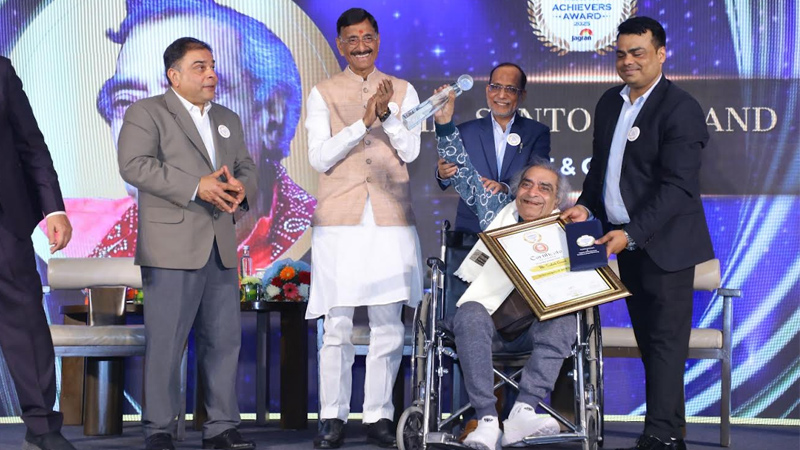
The cultural spotlight fell on veteran lyricist and poet Santosh Anand, whose songs have echoed across generations of Hindi cinema. At 97, Anand accepted the honour with characteristic humility, reflecting on a life shaped by perseverance and hope.
Healthcare honours spanned both modern and traditional systems. Manoj N. Nesari was recognised for strengthening Ayurveda’s place in national and global health frameworks. Padma shri Mohammed Abdul Waheed was honoured for his research-backed work in Unani medicine, while padma shri Mohsin Wali received recognition for his long-standing contribution to patient-centred care.
Education and social development also featured prominently. Padma shri Zahir Ishaq Kazi was honoured for decades of work in education, while former Meghalaya superintendent of Police T. C. Chacko was recognised for public service. Goonj founder Anshu Gupta received an award for his dignity-centred rural development initiatives, and the Hunar Shakti Foundation was honoured for empowering women and young girls through skill development.
The Lifetime Achievement Award went to former IAS officer Shailaja Chandra for her long career in public healthcare and governance, particularly in the traditional systems under Ayush.
Speaking at the event, Hamdard chairman Abdul Majeed said the awards were a tribute to those who combine excellence with empathy. “These awardees reflect Hakeem Sahib’s belief that healthcare, education and public service must ultimately serve humanity,” he said.
Minister Seth struck a forward-looking note, saying India’s young population gives the country a unique opportunity to become a global destination for learning, health and wellness by 2047.
The ceremony also featured the trailer launch of Unani Ki Kahaani, an upcoming documentary starring actor Jim Sarbh, set to premiere on Discovery on 11 February.
Instituted in memory of Unani scholar and educationist Hakeem Abdul Hameed, the awards have grown into a national platform that celebrates those building a more inclusive and resilient India. For one evening at least, the spotlight was not just on success, but on service with substance.







