News Headline
Rathikant Basu: A bureaucrat who pushed boundaries

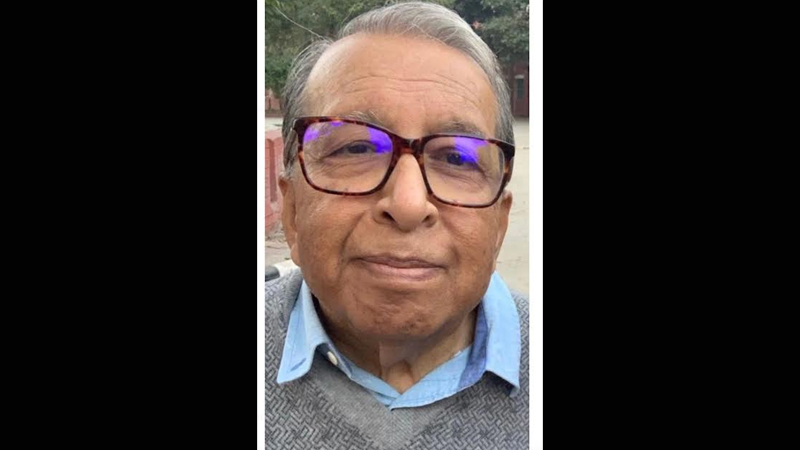
Mumbai: He loved the high life. A career bureaucrat from the Indian Administrative Services, Rathikant Basu, shifted from the civil services to a private sector corporate job as head of Star TV India (yes, the same Disney Star TV India which has today been subsumed in the Big A’s Reliance Industries) in the late nineties.
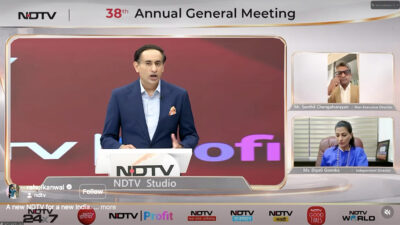
He had impressed Rupert Murdoch (who was then the owner of Star TV India) with the work he had done for Doordarshan when he, along with information and broadcasting secretary Bhaskar Ghose, privatised the news bulletins on the state-owned channel by handing production to the Prannoy Roy-owned NDTV.
Additionally, he had also faced the influx of private general entertainment channels, Zee TV, Sony Entertainment, ATN, Star Plus (a hotch-potch of Chinese language and international programmes) -head on in the early and mid-nineties.
He injected freshness into DD programming by inviting private producers to churn out popular shows on its buzzing with entertainment spinoff called DD Metro. This was at a time when Zee TV had revolutionized TV consumption with its dose of Anchor Ek Minute, Saregama, Antakshari, shows which struck a chord with starved-for-entertainment Indian viewers.
Suddenly, DD which seemed to be losing its hold on the media planner and buyer trade, got it back, thanks to the spurt in ratings.
And that is what had enamored Murdoch about Mr Basu – as he addressed him – and he hired him as the CEO. Former Star TV India CEO Peter Mukerjea had a moniker for him – he simply called him Rodney. Says he in his book Star Struck – Confessions of a TV executive: “..it was a friendlier and more informal way of referring to him than Mr Basu, which sounded very much more like a school headmaster. .He himself was an excellent thinker, super bright and also exceptionally amiable – clearly a highly talented individual.”
Peter then talks about Mr Basu’s sojourn at Star India when the latter thankfully failed in his bid to transform its biz model to a slot-fee-air time model just like DD used to operate. He then talks about other failed forays of Star India into the DTH business with the government getting wind of it and disallowing it without it jumping through regulatory hoops. Basu’s attempt at localizing the foreign and English language shows like Baywatch, The Bold and the Beautiful into Hindi led to Star Plus becoming a laughing stock. His efforts at playing out reruns of shows such as Chandrakanta and Saans also flopped miserably. And led to confusion amongst advertisers who deserted it.
What he was certainly successful at, was in the setting up of the lobbying group the Indian Broadcasting Foundation (IBF), which he did as a knee jerk reaction to the government raising the red flag on the Star India DTH service ISkyB. He also did a great job in launching the first private satellite news channel in India under the brand Star News in partnership with Prannoy Roy’s NDTV, with whom he had a prior and also good working relationship since his days at DD
The confusion about Star Plus’ identity and Basu’s hiring of former government personnel led to a period of some chaos in amongst content producers and advertisers which then forced Murdoch’s hand and led to his being elevated as non-executive chairman with Peter becoming CEO.
What also worked against Mr Basu as CEO of Star TV India was some envy from his peers in government service who saw him as a turncoat, thus retarding the network’s progress in India.
Not one to be put down, Basu, after the completion of his contract at Star India launched channels under the brand Tara (a takeoff on Star India), which he continued to run for more than a decade and a half. Not very profitably. But ran them he did. Until he discovered he was suffering from Alzheimer’s Disease.
Basu, on his part, also knew how to give back. He had kindly consented to be on indiantelevision.com’s The Indian Telly Awards jury for at least a couple of years. Far from being just a serious former bureaucrat, he cracked a few jokes and he chortled. Yes, he did – an antithesis to the strict and sombre exterior he normally presented to the media.
The industry veteran passed away on 17 March 2024, following a harrowing descent while grappling with the mind-robbing ailment. He was just nine days short of completing his eighty-second birthday.
Says Peter in his book: “Rodney was never a bad chap, on the contrary he was rather fun to be with. Alongside his intelligence, I admired so many aspects of his admittedly quirky personality. As a boss, he had always been very civil with me and I, in turn, gave him due regard and respect. There was no doubt in my mind he was a gentleman.”
May the gentleman RIP.