News Headline
NGC sees 19 per cent jump in ad revenue

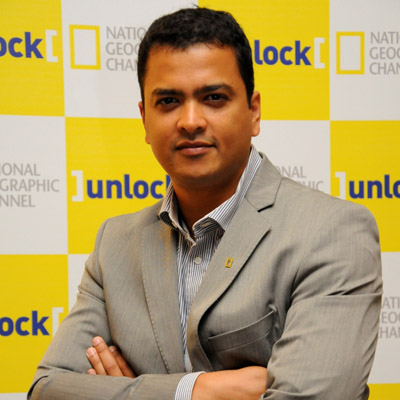
MUMBAI: The number of channels might be increasing, but niche segmentation is on a rise too. In the past few years, one has witnessed that there has been a shift in the TV viewing habits of the Indian audiences with preferences for specific kinds of content giving a boost to niche channels.
One of the channels that is steadily growing in the infotainment genre is National Geographic channel.

“There has been a significant growth in the genre thanks to knowledge-driven shows which is what the audience wants to see,” says NGC and Fox International channel MD Keertan Adyanthaya while adding that during the analogue time, it was the GECs and movie channels that were growing while infotainment channels were edged out.
One of the reasons which have driven the viewership numbers for the channel is localisation. He says, “We pushed for localisation through two ways. One, by customising the language feed beyond English like Hindi, Bengali, Tamil etc. This helped audiences to understand superlative terms that was otherwise difficult to comprehend. Secondly, we started commissioning shows in India like Mission Udan, Mission Army, Mission Everest and various documentaries like the recent one on the Kedernath tragedy.”
The channel, which adds 400 hours of fresh content every year, in India, has been working with production houses like Big Synergy and a number of independent documentary filmmakers. However, 90 per cent of the content is still produced internationally.
But what ails the domestic production houses to produce shows for the niche channels? “Our imagination is lacking to none, but we lack in-depth research and the way we operate. Our planning is sometimes short sighted,” he says.
In line with the preference for special interest programming, the target audience, this from an earlier age group of 18 to 28 years has now become 12 to 40 years of age. “Our earlier shows like Taboo and Banged Up Abroad were for older audiences which is what made viewers either watch them alone or late at night, but not anymore,” says the executive.
The channel’s Entertain Your Brain (EYB) programming has been designed keeping in line with the resurgence of Smart TV as a genre and is packed with engaging content. Its new line of shows like Brain Games, The Number Game, Do or Die and more recently Science of Stupid, combine interactive and relatable content which is not only entertaining but also informing.
In addition to this, it has changed the tonality of its shows to suit the Indian taste. John Abraham has been brought on board as the brand ambassador of the channel. Celebrities like Lisa Haydon for Supercars, Arshad Warsi for Brain Games and Manish Paul for Science of Stupid have also been roped in.
The channel’s core audience lies in 5 million plus households while the other viewership comes in from 1.2 million household cities. Adhyanthaya says that the channel currently commands a market share of 26 to 28 per cent in the genre and has seen a growth of 35 to 36 per cent in the last one year.
Keeping pace with the increase in viewership, the channel has also increased its ad revenue by 18 to 19 per cent. While the channel sees various brand categories advertising on it, AFPs like My Endevour With Ford have also been created. The IP in such shows is either shared by the channel or completely owned by it.
As for the lowlight, distribution of the network’s six channels has become a major challenge Adhyanthaya points out that digitisation getting postponed has surely crept a few hurdles on their ways. “Broadcasters have been champions for the cause right from the start by asking audiences to install Set Top boxes. But now why push the deadline?” he questions.
On the ongoing Star-MSO RIO case he says, “Our pricing is not high. The RIO price for NGC is Rs 3 per month and FOX Life is Rs 2 .90 a month. It is a lie clearly that we are highly priced as the bouquet offered by Star is less than Rs 30 and is a fair offering, he says while comparing the price to a movie ticket of RS 300.
“Our ratings have not suffered as we have pretty strong audience driven programmes. But we have seen short term downswings, which we can work upon. Soon, operators will realise that it is not easy to drop the channels as the audiences can’t wait for long without smartainment progamming offered by us” he concludes.