Content Hub
“The biggest idea can come from somebody you are not looking at”: Ajit Thakur

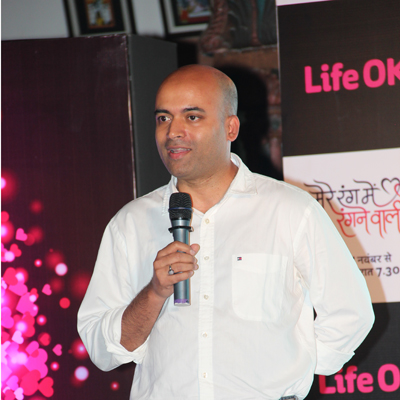
MUMBAI: It is the only channel, which has never shied away from experimenting; from mythology to drama, from thriller to comedy, it has done it all. The soon-to-be three-year-old channel from the Star Network’s stable, Life OK, has always been riding high on success.
For ‘The Content Hub’, indiantelevision.com spoke to the channel’s EVP and GM Ajit Thakur to understand his views on how Indian content has shifted its paradigm and challenges that he faces while spotting new talents.
According to Thakur, more than the concepts the channel is always looking out for fresher talent. “We are looking at people from Bollywood and advertising to come to us with different concepts. Also, we want to explore more genres. Currently, with Pukaar we are not only exploring action genre but also have got on board film director Vipul A Shah. In the future, we would love to do a lot more of comedy, thrillers, spy stories and a mythology.”
He believes that with both television and Bollywood growing at a tremendous speed, the demand for the same writers has increased over the years, making the task different. “We can all either wait for those people to come on board or can develop our own talent. Therefore, we have hired a lot of new writers.”
For shows like Mahadev and Savdhaan India, the channel has in-house writers. According to him talent spotting and retaining that talent is a big challenge as well. “One might be available today but he/she will get busy after six months. Plus, one cannot depend on established talent. So, we have to develop our own talent,” says Thakur.
He goes on to say that though Indian content has the ability to travel abroad; it will take some time because currently, the industry is not investing enough on production to scale it up. “Production quality will take another five to seven years to enter international market. But the interesting concepts will take lesser amount of time,” he says while adding that our shows are currently travelling to the Middle East and South Asia because of Indian diaspora, but for a show to have the scale for it to be sub-titled and aired in America, it will take time.
Is Indian content shifting its paradigm? According to Thakur, it is but slower than one would like it to. “Our viewers are evolving fast but at the end of it our cultural context is important too. As a country we are very different, so it’s not that our viewers are not evolving but they are evolving within the paradigm of Indian society where families are important and cultural values are important.”
He adds, “I think we have to take pride in the kind of stories we tell, but we need to produce them at the scale, which the international markets can look up to.”
Thakur has two best practices when it comes to sparking off changes in the thought and creation process of content. One, it is very important to have the right insights on which one wants to work on. “One should know who your target is whether you are a TV channel, filmmaker or a digital platform. I think very often we are making a mistake of not looking at who we want to target at, carefully. Who is your core TG? Is it urban India or rural India? Is it men or women? Is it young families or joint families? It is an important factor which many a times we overlook.”
Second, once you are clear about the TG then instead of trying to do many things, one must focus on one thing they are good at. “If you are developing one genre, develop a number of dramas, be the best at it rather than trying to do everything. And once you know that this is the target group and this is the kind of audience you want to target, then go ahead and find multiple story tellers. Never think that the current best lot is the one that will take it to the next level. Probably the biggest idea will come from somebody you are not looking at,” concludes Thakur.