Hollywood
Film director Marcel Ophüls and Naum Kleiman to receive Berlinale Camera

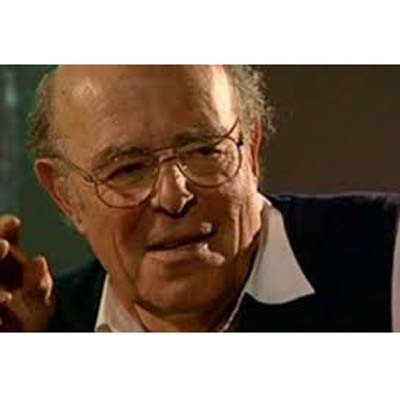
NEW DELHI: Renowned director Marcel Ophüls and film historian and former director of the Moscow Film Museum Naum Kleiman will be awarded the Berlinale Camera at the 65th edition of the Berlin International Film Festival starting 3 February.
Since 1986 the Berlin International Film Festival has presented the Berlinale Camera to film personalities or institutions to which it feels particularly indebted and wishes to express its thanks. The Berlin International Film Festival will conclude on 15 February.
Ophüls is one of the world’s most important contemporary filmmakers and chroniclers, and a proponent of critical remembrance. By the 1960s he had already made a name for himself as documentary filmmaker. He had started his career as television journalist and assistant director for John Huston, Julien Duvivier and his father, the famous theatre and film director, Max Ophüls.
In his documentary works, he has often focussed on topics related to National Socialism and sought to trace the roots of totalitarianism.
In 1989 Marcel Ophüls presented Hotel Terminus – Leben und Zeit des Klaus Barbie (Hotel Terminus: The Life And Time of Klaus Barbie), the story of Lyon’s local Gestapo chief Klaus Barbie, in the Forum programme. Among many other awards, the film won the Peace Film Prize and the Academy Award for Best Documentary. In 1991, Ophüls was again invited to participate in the Forum withNovember Days (Novembertage – Stimmen und Wege). Shot one year after the fall of the Berlin Wall, he explores the reactions and opinions of, for instance, ordinary citizens whom he discovered in footage from 9 November 1989. The last film he presented in the Forum was in 1995: Veillées d’armes (The Trouble We’ve Seen), in which he criticizes the coverage of war in the media.
In The Memory of Justice (1976) Marcel Ophüls interviews some of the accused at the Nuremberg Trials, veterans of the Vietnam War and survivors of the Algerian War of Independence. In doing so, he explores their awareness of guilt and responsibility. To celebrate the Berlinale Camera for Naum Kleiman, the festival will screen this nearly five-hour monumental work, which has been restored for its premiere at the Berlinale by Martin Scorsese’s Film Foundation with the support of Transit Film.
“Marcel Ophüls’ oeuvre has contributed significantly to the investigation of anti-Semitism. The Memory of Justice is also a reminder that we must never stop examining the question of collective and individual responsibility,” states Festival Director Dieter Kosslick.
The presentation of the Berlinale Camera to Marcel Ophüls will take place at the Haus der Berliner Festspiele at 3.00 pm on 11 February. Following the screening of The Memory of Justice (1976), there will be a discussion moderated by Sandra Schulberg. In 1948 her father, Stuart Schulberg, made Nuremberg, the first documentary about the Nuremburg Trials. Sandra Schulberg was responsible for its restoration in 2011. In addition to Marcel Ophüls, Scorsese producer Margaret Bodde and Hamilton Fish, President of The Film Foundation will participate in the discussion.
The presentation of the Berlinale Camera to Naum Kleiman will take place at the Delphi Filmpalast in 12 February. To celebrate the occasion, Tatiana Brandrup’s documentary Cinema: A Public Affair (2015) about Kleiman and events leading up to his dismissal will be screened afterwards.
Film historian, author, lecturer and curator Naum Kleiman – born in 1937 in Kishinev (now Moldova) – is one of the most important advocates of film culture in contemporary Russia. He was co-founder of the legendary Eisenstein Archives, and their director from 1967 to 1985. In 1989 he founded the Moscow Cinema Museum, the Musei Kino, whose director he became in 1992. In these years of upheaval, it was a place of great significance for Moscow and an entire generation of young Russian filmmakers. In 2005 the Cinema Museum lost its premises due to a property scandal and since then has only existed as an archive. From 2005 up into 2014, Naum Kleiman and his team fought for a new building. With unflagging commitment, they kept the “Cinema Museum in exile” alive by organising almost daily screenings in movie theatres and museums all over Moscow. In July 2014, the Russian culture minister replaced Kleiman with a new director. In protest at how the new director was managing the museum, the entire staff resigned in October 2014.
As a scholar Kleiman has published extensively on the work of Sergei Eisenstein, film theory and the history of Soviet and Russian cinema. He has received numerous awards, including a FIPRESCI Prize (1987) for the retrospectives he organised during the Moscow International Film Festival, the French L’Ordre des Arts et des Lettres (1992), a “Felix” from the European Film Academy (EFA, 1993), as well as a Goethe Medal (1995). Kleiman has been on juries at many film festivals worldwide, including the International Jury of the Berlinale Competition. For years he was also an advisor and active supporter of the Berlinale’s Forum section.
The Berlinale Camera has been awarded since 1986. Until 2003 it was donated by Berlin-based jeweller David Goldberg. From 2004 through 2013 Georg Hornemann Objects, a Dusseldorf-based atelier, sponsored the trophy, which goldsmith Hornemann then redesigned for the Berlinale in 2008: Modelled on a real camera, the Berlinale Camera has 128 finely crafted individual components. Many of these silver and titanium parts, such as the swivel head and tripod, are movable.






