MAM
LuxHub focus: Luxury super brands still dominate for luxury consumers


MUMBAI: A global survey from LuxHub, Havas Media Group’s newly launched luxury consulting boutique, takes in the views of the notoriously hard-to-reach affluent luxury goods customers, all within the top 10 per cent of the household income bracket in each of the USA, UK, China, Russia, France, Italy, Germany, Spain and Saudi Arabia/UAE markets.
The survey looked at luxury trends for personal spend across retail, travel, home furnishings, auto, jewellery and art and analysed 40 of the top global brands.

Luxury ‘super brands’ still have the edge
Global luxury power brands are preferred to niche brands by 64 per cent of respondents. Geographical differences show that in China 83 per cent prefer super brands (the most widely recognised brands being Louis Vuitton and Chanel), and in the US 73 per cent prefer them (top brands being Mercedes and Chanel) vs. only 43 per cent in Spain.
Quality matters more to people in the UK vs. other markets
The swings in both brand ranking and preference by country can be explained by differing cultural definitions of luxury. UK luxury shoppers, with an average spend of ?28,243, defined luxury in terms of quality (78 per cent vs. a global average of 63 per cent) and personal reward (44 per cent vs. a global average of 26 per cent). When it comes to luxury products conferring social status, this was important for only 20 per cent in the UK vs. an average of 37 per cent across the markets.
Germany, Italy and Spain were the only three countries out of the nine to define luxury as exclusivity over quality. Overall luxury perceptions are driven by quality, exclusivity and the desire to express taste and style.
Average personal spend on personal luxury across the nine markets is ?21,126.
The affluent luxury consumer spent an average of ?21,126 on luxury in the past year. The highest spend was seen in Russia at ?36,078, UK at ?28,243 and France third, spending on average ?27,402 per year.
Among men and women combined, the most popular category for luxury shoppers is clothing and accessories purchased by 89 per cent last year, with an average spend of ?1,625. This is followed by travel, purchased by 87 per cent with an average spend of ?3,791. While only 30 per cent purchased an automobile, average spend among those who did buy one was ?27,630.
Amount spent on the categories studied shows significant differences according to the country. For example, the average spend on cars is ?27,629 whereas in France it is just over ?10,000 higher at ?38,492. The average spend on travel is as high as ?6,356 in the UK and as low as ?2,121 in China.
Luxury spend to rise by seven per cent
Overall growth rate forecast for the industry of seven per cent (33 per cent expecting to spend 28 per cent more, eight per cent expect to spend 36 per cent less and 59 per cent expect to spend the same amount as they did last year). This growth of luxury is in line with the growth projection of GDP for China in 2015 (seven per cent) and non-oil GDP growth in Saudi Arabia (five – six per cent) but considerably higher than the low single digit GDP projections in Europe and the UK.
When looking at these results however, some very positive indicators can be found. For example, amongst the 33 per cent who expect to spend more on luxury, 44 per cent say this is largely due to seeing more items that they want – demonstrating that the supply side of luxury is a key driver for the sector’s share of wallet. The leading driver is an expectation of increased disposable income (49 per cent).
Shopping in physical stores is still the favoured method for shopping for luxury goods for 49 per cent of respondents, while 24 per cent shop mainly online. Statistics show that the move by a quarter of the respondents to shop online is not being matched by competency from the brands. Over half of respondents (57 per cent) felt that luxury brands should engage with social media, mainly because they feel that this is how brands in general are communicating nowadays.
Millennials are more comfortable engaging with and buying luxury goods in the digital sphere. Among Millennial consumers aged 20-34, 72 per cent felt luxury brands should engage with social media, versus 51 per cent of those 35 to 54 years of age. About 29 per cent of Millennials prefer to shop for luxury online versus 19 per cent of the 35 to 54 year age group, and only 44 per cent of millennials prefer to shop for luxury in physical stores, versus 50 per cent of those aged 35 to 54.
Discounting trend highest in US, Germany
Over half of those surveyed revealed that they purchase luxury goods at a discount rate, including sales and outlets. The UK luxury shopper shows the highest percentage of full price purchase with 55 per cent purchasing at full price, equal with niche brand loving Spain. This compares to the US luxury shoppers who purchase an average of 67 per cent of their luxury goods at a discount.
LuxHub Global executive director Tammy Smulders, who oversaw this research, said, “This discounting culture shown in the survey is one that interests many of our clients. The fact is, there are simply more luxury products available in the market today. As a reaction to the recent economic challenges, we saw many luxury brands introducing accessible diffusion lines with different styles and price points, creating something for everyone. In addition, the trend of introducing new lines came as a reaction to the globalisation of luxury and the need for more accessible entry price points for the emerging luxury consumer.”
“The discounting culture came into common practice, and now the global trend for discounting is here to stay. Despite this, our survey also points to an optimistic future for luxury with a projected increase in spend of 7 percent. It is our view that this discounting culture, coupled with more sophisticated targeting, data management through CRM and storytelling is actually stimulating shopping and there are a wealth of opportunities out there for agile, smart luxury brand marketers,” Smulders added.
LuxHub global CEO Isabelle Harvie-Watt said, “This global survey highlights differences between cultures, which show how important is to personalise the shopping experience for people in their own countries. What is now critical is the ability to implement culturally relevant strategies that also work in the actual locations where customers engage with the brand. For example, today more than half of the luxury purchases from the Chinese consumers are made outside of China, mostly in Europe and USA. This means luxury brands need to create culturally tailored content, services and experiences that can be implemented anywhere in the world.”




MAM
Navi releases new ‘Hurrypur’ film focused on speed and simplicity
Auto breakdown turns F1-style pit stop in campaign film set to Baalti’s track
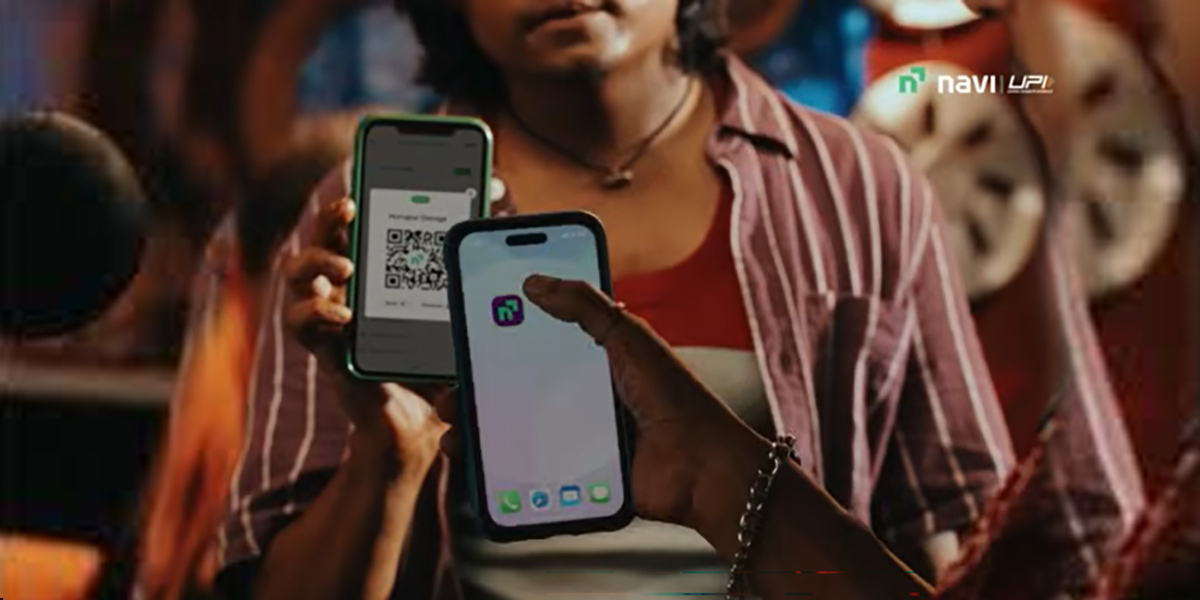
MUMBAI: When life’s in the fast lane, Navi wants even your breakdowns to be over in a blink. Navi has rolled out a new film under its ongoing ‘Hurrypur’ campaign, doubling down on its core pitch speed and simplicity in everyday transactions.
The film opens on a familiar hiccup, an autorickshaw breaking down mid-ride. But what follows is anything but ordinary. The repair unfolds like a Formula 1 pit stop swift, precise, almost cinematic. Within seconds, the tyre is replaced, the vehicle is back on the road, and even the fare negotiation wraps up in record time.
Set to US-based musical act Baalti’s track “123”, the film uses rhythm and pacing to mirror its central idea, in a world that moves fast, everything around it must keep up.
The narrative builds on Hurrypur, a fictional world where time is treated as currency and delay is almost obsolete. Through exaggerated yet relatable scenarios, the campaign reflects a broader behavioural shift consumers increasingly expect instant responses, whether from people, platforms or payments.
Navi Limited MD and CEO Rajiv Naresh said the Hurrypur universe is designed to highlight the company’s focus on delivering seamless, time-efficient experiences. Meanwhile, creative agency Sideways and director Ayappa KM leaned into humour and visual energy to push the story beyond a typical product-led narrative.
Instead of listing features, the campaign sticks to storytelling turning a routine inconvenience into a high-speed spectacle.
Because in Navi’s world, even a pit stop refuses to slow things down.