I&B Ministry
President Pranab Mukherjee outlines Govt’s policy initiatives in electronic media & IT

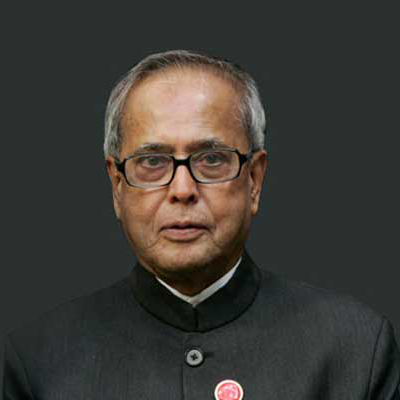
NEW DELHI: President Pranab Mukherjee has said that the government is committed to deeper penetration of electronic media in remote and distant areas. In his address to the joint sitting of Parliament at the start of the Budget Session, he said auctions will be conducted for 135 vacant channels in 69 existing cities of FM Phase-II as part of first batch of FM Phase-Ill.
In an hour-long speech that outlined the policies of the government, he said that this would also facilitate migration of FM Phase-II to FM Phase-Ill.

Mukherjee said that this will take private FM radio to cities having population of more than 100,000 and border towns of Jammu and Kashmir, North-eastern region and island territories in a phased manner.
He said the government had envisioned an ambitious umbrella programme, Digital India, to prepare the country for technology based transformation and citizen centric transparent governance with service orientation. Aadhar based attendance system and Jeevan Praman, Aadhar based Digital Life Certificate Portal, had shown that innovative use of technology can make enormous difference.
Measures were being taken to accomplish digital inclusion in rural areas, small towns, north-east and other remote areas, opening up immense job opportunities in these areas. Promoting manufacturing of electronic goods has been an area of thrust, he added.
According to him, the government was committed to using space technology and its applications in governance, social and economic development and resource management. A satellite was to be launched shortly for the use of SAARC countries to foster greater partnership and development of South Asian Region.
In this context, he referred to Mangalyaan, which had been placed in the Mars Orbit on 24 September, 2014, making India the first country to do so in the first attempt. The country also successfully launched the first experimental flight of GSLV Mark-Ill on 19 December, 2014, which will enable launch of heavier satellites in the near future.
The Government had taken major initiatives for improving ‘Ease of Doing Business’ through simplification and rationalization of existing rules and procedures, Mukherjee said. Leveraging IT and use of modern technologies is a key strategy. Single window in a Hub-Spoke model is being made a reality.
He said Maximum Governance, Minimum Government was the guiding principle and with an aim to take governance to the doorstep of the poorest of the poor in remotest areas, focus is on simplification of official procedures and reducing the decision-making levels in government by leveraging technology. The system of Group of Ministers has been dispensed with, and emphasis is on swift decision-making. While introducing stricter and sterner measures to deal with corruption; effort is being made to ensure that sufficient safeguards are in place to protect bona fide decisions taken in public interest and to inspire confidence in the civil service.
The government was firmly committed to engage people in the process of governance and policy-making. A new initiative My Gov Online Platform has been launched. This platform has ensured public participation in decision-making and ideation of various national flagship programmes like Swachh Bharat Mission, Namami Gange, Pradhan Mantri Jan Dhan Yojana and NITI Aayog.
The Government had formulated the National Sports Talent Search Scheme for encouraging sporting talent amongst children in the age group of 8 to 12 through National Sports Development Fund and Target Olympic Podium.

I&B Ministry
Prasar Bharati sets EPG standards for DD Free Dish platform
New specs define 7-day guide, LCN mapping, and device compatibility.
MUMBAI: Your TV guide just got a backstage pass structured, scheduled, and far more in sync. Prasar Bharati has released detailed technical specifications for Electronic Programme Guide (EPG) services on DD Free Dish, laying down a standardised framework for how channels and programme information are organised and delivered. At the core of the update is a defined EPG data structure, covering genre-based categorisation, scheduling formats, and Logical Channel Numbering (LCN). The aim is simple: make navigation less guesswork and more guided experience across the platform’s over 40 million households.
The specifications also introduce a seven-day programme guide window for each channel, alongside clear rules for channel grouping and LCN mapping effectively deciding not just what you watch, but how easily you find it.
On the technical front, the document outlines requirements for Program Specific Information (PSI) and Service Information (SI), including descriptor usage across tables such as PAT, BAT and NIT. It further details service lists and network linkage parameters, giving OEMs and developers a clearer blueprint for integration.
Importantly, the framework is designed to work seamlessly with television sets equipped with in-built satellite tuners, enabling users to access DD Free Dish directly without additional hardware, an incremental but meaningful step towards simplifying access.
The platform will continue to operate on GSAT-15 transponders, using MPEG-4 compression and DVB-S2 transmission standards, ensuring continuity even as the interface evolves.
While largely technical, the move signals a broader push towards standardisation and user-friendly discovery in India’s free-to-air ecosystem because sometimes, the real upgrade isn’t what’s on screen, but how easily you get there.