Connect with us

I&B Ministry

Directive given to ensure display of amended Preamble of Constitution

Published

on

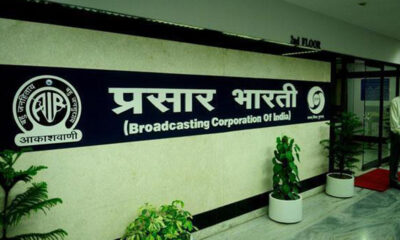
NEW DELHI: Following the controversy that arose when a government advertisement relating to Republic Day reproduced the original Preamble to the Constitution, the Government has given directions that only the amended version of the same should be reflected if an ad displays the Preamble.


Information and Broadcasting Minister Arun Jaitley told Parliament today that directions in this regard have been issued to the Directorate for Advertising and Visual Publicity for strict compliance.

Advertisement


The controversy had arisen as the amended Preamble has the words ‘Secular’ and ‘Socialist,’ which did not appear in the advertisement.


Advertisement

DAVP annually issues print advertisements to all empanelled publications on the occasion of Republic Day to commemorate the date and the moment when India became a Republic by adopting the Constitution. This year also a similar practise was followed and six different designs were given to all the empanelled publications.


In one of the advertisement designs issued, the photograph of the original calligraphic representation of the Preamble to the Constitution has been used in the background as a water-mark for enhancing the aesthetic and artistic value. The calligraphic representation has been sourced from the website of the Parliament Museum, New Delhi. The Calligraphic representation and decorated preamble as available in the Parliament Museum is the only such decorated copy till date. The intention of using it as a watermark was to enhance the aesthetic value of the design.

Advertisement


The photo of the original Preamble was a way of honouring founding fathers of the Constitution and there was nomala fide intention to the publication of the un-amended version.


Advertisement

The same original calligraphic representation and decorated Preamble of the Constitution was used in an advertisement commemorating Dr B. R. Ambedkar on the occasion of his birth anniversary on 14 April 2012, he said.

Click to comment

Leave a Reply

Your email address will not be published. Required fields are marked *

I&B Ministry

CBFC speeds up film certification; average approval time cut to 22 days

Over 71,900 films cleared in five years as digital system shortens approval timelines

Published

on

MUMBAI: The Central Board of Film Certification (CBFC) has significantly reduced the time taken to certify films, with the average approval timeline now down to 22 working days for feature films and just three days for short films.

Operating under the Ministry of Information and Broadcasting, the statutory body certifies films for public exhibition in line with the Cinematograph Act, 1952 and the Cinematograph (Certification) Rules, 2024. The rules prescribe a maximum certification period of 48 working days, though the adoption of the Online Certification System has sharply accelerated the process.

Over the past five years, from 2020-21 to 2024-25, the board certified a total of 71,963 films across formats. Of these, the majority fell under the U category with 41,817 titles, followed by UA with 28,268 films and A with 1,878 films. No films were certified under the S category during the period.

Advertisement

Film approvals have also steadily risen in recent years. The CBFC cleared 8,299 films in 2020-21, a figure that peaked at 18,070 in 2022-23 before settling at 15,444 films in 2024-25. During the same period, 11,064 films were certified with cuts or modifications.

Despite the high volume of certifications, outright refusals remain rare. Only three films were denied certification over the last five years, with one refusal recorded in 2022-23 and two in 2024-25.

The board may recommend cuts or modifications if a film violates statutory parameters relating to the sovereignty and integrity of India, security of the state, friendly relations with foreign states, public order, decency or morality, defamation, contempt of court or incitement to an offence.

Advertisement

Filmmakers can challenge CBFC decisions in court. Data shows that such disputes remain limited but have seen some fluctuation. Between 2021 and 2025, a total of 21 certification decisions were challenged before High Courts, with the number rising to 10 cases in 2025.

Responding to a question in the Rajya Sabha, minister of state for information and broadcasting L. Murugan shared the data. The question was raised by Mallikarjun Kharge.

With faster timelines and a largely digital workflow, the certification process appears to be moving at a far brisker pace, signalling a shift towards quicker clearances for India’s growing film output.

Advertisement
Continue Reading

Advertisement News18
Advertisement All three Media
Advertisement Whtasapp
Advertisement Year Enders

Copyright © 2026 Indian Television Dot Com PVT LTD

This will close in 10 seconds