Budget
FICCI pushes for 10-year tax holiday for AVGC industry

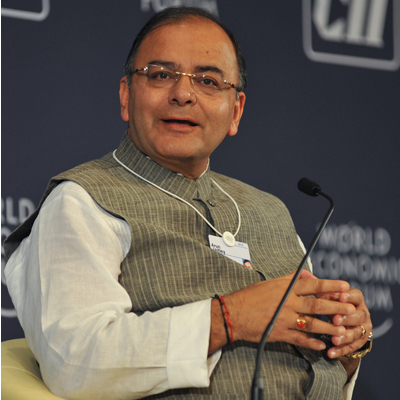
NEW DELHI: With the nation waiting for the maiden Narendra Modi government’s Budget 2015, every sector is speaking its heart out with regards to their expectation from the Union Budget.
The entertainment wing of the Federation of Indian Chambers of Commerce and Industry (FICCI) in its wish-list submitted to the Finance Minister Arun Jaitley- who also holds the Information and Broadcasting portfolio, addressed the issues faced by not just broadcast, cable and radio sectors, but also pointed out the changes needed in the cinema and animation sectors.
Cinema
Referring to the film sector, FICCI wants Digital Cinema Services to be included under the Negative List for Service Tax exemption, as this will help the industry, which is struggling against piracy. Digital Cinema service distributors were exempted from Service Tax vide notification of March but with the introduction of the Negative List in Service Tax, this circular got rescinded.
It wants the Government to exempt performing artists from levy of Service Tax, which will help the industry that already suffers from very high rate of indirect taxes in India. Levy of service tax on artists increases the cost of the film producers and distributors, which ultimately gets passed on to the consumer.
On-screen advertising in cinemas and multiplexes may be exempted from levy of service tax as the on-screen advertising within cinemas caters to advertisers with small businesses, with limited resources. The on-screen advertising forms an important source of revenue for the exhibitors, which are already reeling under the pressure of multiple taxes. Until recently, on-screen advertising within cinemas and multiplexes was subject to service tax till 30 June 2012. Since 1 October 2014, the negative list of services has been amended whereby on-screen advertising within cinemas shall be liable to service tax.
There should be a clarificatory instruction on the on applicability of service tax on revenue sharing arrangements for exhibition of films. At present, service tax is levied on revenue of such sharing arrangements for exhibition of films between producers, distributors, sub-distributors, and exhibitors. But the exhibitions of films are carried out on a principal to principal basis and neither party renders any service to another.
Furthermore, Rule 4(a) of the Service Rules 2012 should be amended suitably to include post-production services, as this will provide parity with goods imported for re-export and will promote growth of such services. At present, services performed on the goods temporarily imported for re-export are not liable to Service Tax due to specific provision in POPS Rule. But in case of post-production services such as dubbing, editing, title printing etc. the above rule is not applicable and Service Tax is payable.
FICCI wants reversal of the increased withholding tax to eliminate the differentiation for the transactions with entities in nations having treaties and other entities. This withholding tax rate has a significant impact on payments to be made for acquisition of content. There is a direct impact on companies distributing foreign films in India and Indian films distributed outside India with non-residents with no treaty jurisdictions such as Croatia, Fiji, and Monaco etc. While the withholding rate for transactions with major treaty nations such as UK and US is in the range of 10 per cent to 15 per cent, the rate of 25 per cent is punitive for the same transactions which do not originate from treaty nations. (It pointed out that the Tax on royalty and fees for technical services earned by non-resident taxpayers has been increased from 10 per cent to 25 per cent in the cases where India does not have a Double Tax Avoidance Agreement (‘Treaty’) with the country of service provider.
FICCI also wants a suitable reduction in the existing period of 90 days before end of the financial year (under Rule 9A and 9B of IT Rules) as this will grant relief to assesses whose feature films have incurred losses and have been released for exhibition in the last quarter of the financial year. It said that in certain cases where not all rights of exhibition of a feature film are sold and it is released for exhibition on a commercial basis within 90 days before end of the financial year, the feature film performs poorly and it is exhibited only for a short duration.
Consequently, the film producer may not recover costs. In such cases in view of the prevailing IT Rules, the film producers are unable to claim a deduction of entire production cost and the loss is to be carried forward to the next financial year. Accordingly, such film producers are unable to claim losses in the year the feature film is released for exhibition despite no further scope of income. A similar situation exists in the case of expenditure of distribution rights in view of Rule 9B of IT Rules.
Animation and Special Effects
Referring to animation, special effects (VFX), gaming and comics (AVGC), FICCI wanted a 10-year Tax Holiday for the AVGC industry and lifting of service tax on studios developing original content. It wanted restoration of STPI advantage scheme for AVGC or ITES for another 10 to 20 years and cover/encourage exports as well as IP creation.
It wants animation as one of the priority sectors and said the Minimum Alternate Tax (MAT) applicability for units undertaking Animation work in SEZ should be withdrawn to encourage export of animated contents.
Encouragement should be given to entities through reduced tax rates/incentives for exploitation of self-developed content in overseas markets. Exemptions should be granted to overseas payments to foreign artists stationed overseas from withholding taxes. A 50 per cent reimbursable MDA (Market Development Assistance) should be given for travel and registration fees to international market events and withholding tax on revenues accruing from sales of mobile games in non-India markets as well as removal of withholding tax on the development contracts given to mobile game developers outside India should be removed. Also, there should be removal of withholding tax paid by expats working in India for Indian mobile game development companies. This was because of long gestation period, potential to generate IPs, and potential to generate future stream of incomes.
The Government should consider setting up of co-production fund for a minimum of five years with Rs 110 crore each year with the Children’s Film Society, India, for AVGC. This will help the industry immensely and in the next five years India can boast of over 100 successfully implemented co-productions and shows, which will be extremely strong original intellectual property out of India, one of the strongest libraries establishing and restoring forms of art, culture and creative styles and designs which will be known throughout the globe. India would emerge a true leader in the digital content economy and it will ensure jobs for over 400,000 to 500,000 creative, techno creative and artistic youth of the country in the next five to seven years.
The industry body says the excise duty on local manufacture should be brought down from 12.5 per cent to zero per cent (similar to film and music industry). This will enable CVD to be brought to zero. In addition, the Import duty on consoles (Gaming hardware) should be brought down to zero per cent. This will increase the installed base of gaming consoles to enable the local developer ecosystem to flourish.