News Headline
Broadcasters need to come together to resolve copyrights issues by private parties

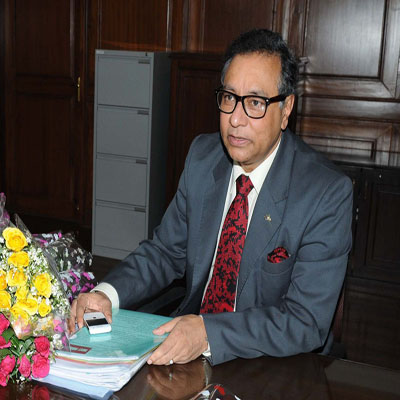
NEW DELHI: Describing the ‘absymal ignorance’ about copyright issues as a ‘paralysis of analysis’, Prasar Bharati CEO Jawhar Sircar today asked broadcasters to interact with each other to overcome hurdles instead of living in fear of copyright rights.
He said that Internet rights holders never had these problems because they interacted with each other. There was need for broadcasters to ‘come out’ and talk, since fears about copyright rights were unfounded.
Sircar also stressed on clarity of purpose and not mere convoluted jargon with regard to copyright, while addressing the 21st Asia-Pacific Broadcasting Union Copyright Committee Meeting and Forum here.
He said there was need for interlocutors such as the ABU to resolve these issues, and India was ready to support the initiative.
Prasar Bharati chairman A Surya Prakash emphasized the challenges related to copyright, piracy and intellectual property rights. He referred to the treasure that digitization was helping to revive and retain but the issue of copyright often cropped up here.
All India Radio director general F Sheheryar said copyright issues were growing by ‘leaps and bounds’ and therefore it was necessary to know the copyright laws.
ABU secretary general Javed Mottaghi said it was vital for broadcasters in the region to talk to each other and sort out issues.
He said ABU fully supported the World Intellectual Property Rights Organisation Treaty and this would be stressed in the next session on WIPO at Geneva.
ABU was planning to increase its support to the Copyright Committee but the Committee must come out with a long-term plan, which ABU will support financially in the next financial year beginning in July.
ABU has 180 active members and many of them have common points. He referred in this connection to a meeting of broadcasters from the Pacific Ocean lslands held in Samoa.
The meeting of ABU in Tashkent will also take up copyright issues, he added. The ABU General Assembly will be in Istanbul in October. The Union will also enhance its online presence and enable webinars amongst members.
There would be an important ABU Radio meet this year and there was need to support the community radio stations.
He said the Union wanted to enroll more members as the African Union of Broadcasters had done.
One way of resolving copyright issues was to form a national pool in every country to have a common voice. ABU had already drafted a model for this and could be accessed by members.
Referring to issues raised with regard to problems created by sports rights holders, he wanted a regulatory framework to be built.
A list could be drawn up of the sports events that people are interested in and for which there is need to obtain broadcast rights by public service broadcasters from the private rights holders. The ABU Sports Department could help in this regard.
He was responding to points made by Doordarshan deputy director general Rafiq Masoodi and All India Radio additional director general Rajiv Kumar Shukla, who both felt private players often created hurdles, even as they referred to the Manadatory Sharing of Sports Signals with Prasar Bharati Act, which had made things easier.
Shukla also lamented that radio was often not given the kind of imporetance that television received.
MTV Sri Lanka group director Suranga Jayalath said there was need for a joint approach on the issue. He felt that traditional forms of advertising including radio and television remained dominant despite multi-platforms emerging in broadcasting.
CCTV China deputy director of the Copyright Management Department Yan Bo said that a meeting on sports copyright issues was slated to be held in Beijing this year. The ABU Copyrights Committee was very active in this regard.
The committee members of the Forum are of the opinion that to ensure protection of copyrights, constant and timely discussion with government is necessary.
The Copyright Committee meets annually to discuss, share, analyze and to inform members on copyright, intellectual property rights, broadcasting rights, piracy, and various other related issues and case studies from the Asia-Pacific region and beyond. Experts from this field gather every year to advise the members on the changing trends in the broadcasting industry, as to how we can protect our rights. Stakeholders involved in this forum are lawyers, copyright practitioners and specialists. The committee urges the members to attend this forum to deliberate on the copyright and protection related issues, to further gain support for the broadcasters treaty intended to protect them from piracy.
The core discussion points across the three day Forum will be WIPO Standing Committee on Copyright & Related Rights session; Broadcast Laws and Protection Report; Future Projects and Suggestions; Legal Challenges and Directions for Broadcasters in the Digital Era; and the Cloudy Business of Copying (Panel Discussion).
The meeting is being attended by more than fifty representatives from overseas apart from those from Prasar Bharati, Doordarshan and AIR.