Hindi
LA India Film Council proposes setting up Film Commissions in India

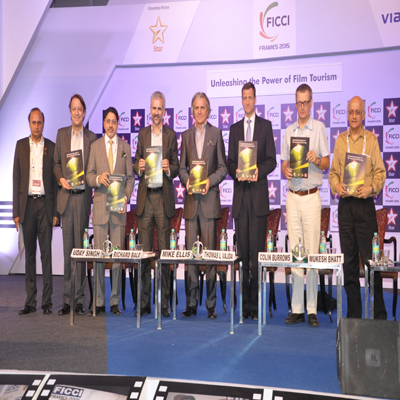
MUMBAI: The LA India Film Council has proposed to set-up of Film Commissions in India and also its operational framework at a national and state level. In its latest report titled – Unleashing the power of film tourism: the first step – LA India Film Council has highlighted India’s potential to become a preferred film shooting destination.
The role of a Film Commission is to serve as a local government liaison, to provide and coordinate public and private services for film shoots, attract foreign productions to India, create a sustainable ecosystem that benefits both international productions and the local economy through effective film incentive programs and promote film tourism.
The report also assessed the current single window clearance mechanism for film shooting, recommended solutions to build a strong production tax regime in the country and highlighted global best practices to promote film tourism in the country.
India has natural advantages in terms of scenic locations, incredible cultural diversity, trained film crews and low production costs to attract film productions. The current Single Window Clearance Mechanism to support productions is a welcome step by the film industry, however multiple challenges faced during the clearance process at the regulatory and administrative level – including procedural hurdles during the application stage – undermine the potential of film production and its allied industries to grow.
In 2014, the media and entertainment industry was recognized as one of the top 25 sectors in the ‘Make in India’ initiative. Transforming India into a global film-shooting destination will require establishing an effective single window clearance system to simplify and expedite flow of information between various government bodies and the industry in an efficient and resourceful manner.
MPA, Asia Pacific president and managing director Mike Ellis said, “India’s film and television industry is one of the largest and fastest growing sectors in the country, and there has been a renewed surge of investment into the country by global companies. Simplification of clearance procedures for film shooting, support to productions through a robust tax incentive regime, and adopting global best practices, will help to attract big budget productions and in turn boost inbound tourism.”
Film & Television Producers’ Guild of India (FTPGI) president Mukesh Bhatt added, “A Film Commission should be an independent full time body and involve participation from film industry stakeholders who have the experience and understand the film making process. Moreover, it would really help if the members of the Film Commission were compensated either project-wise or on payroll. This would ensure active participation by members.”
U.S. Consul General Thomas L. Vajda opined, “There is great potential for expanded collaboration between our film and entertainment industries. Whether it is Indian studios shooting in the United States, US studios filming here in India, developing strategies for intellectual property protection, or sharing knowledge on production methods and technologies, both countries can benefit from efforts to bring our film and entertainment industries closer together. We look forward to working with partners here in India to provide knowhow, experience, and whatever other value we can to take this relationship forward.”
Consul General Canada, Mumbai Richard Bale asserted, “With Canada and India having signed a bilateral Audio-Visual Co-Production Agreement in 2014, India has a wonderful opportunity to attract Canadian producers and directors to shoot in India. Improving the ease of doing business in the film sector through the establishment of Films Commissions and a transparent framework of incentives would be very effective next steps for India to build on the new interest in India among Canadian filmmakers.”
FICCI president Jyostna Suri opined, “Our country has a vast wealth of spectacular terrain and it is important that we explore and exhaust avenues of locale shooting for entertainment with state governments as our partners. This can only happen in the true spirit of a public-private model. Through effective film tourism and enhancing our locales, we will lay strong foundations for India as the most dynamic destination for international stakeholders, generating local revenues and jobs and providing on-the-job skills for the workforce.”
Setup in 2010 by a joint declaration between the City of Los Angeles and the Indian film industry, the Council continues to provide new platforms to foster knowledge exchange and partnerships between stakeholders in the US and the Indian media and entertainment industries.