Connect with us

MAM

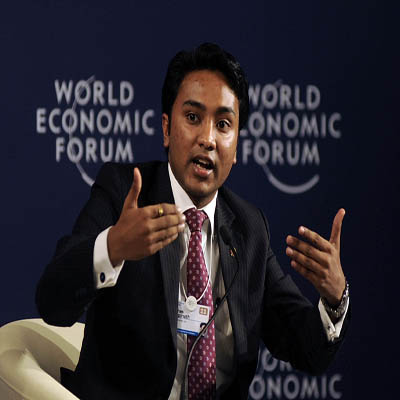
India’s youngest CEO Suhas Gopinath’s journey of highs & lows

Published

on

MUMBAI: If a 14 year old boy frequently visits an Internet café in India, he is often presumed to be viewing prohibited sites. However, Suhas Gopinath a small boy from Bangalore, made such use of internet café that no mother will stop her child from visiting one anymore! Gopinath taught himself to make websites with the help of books used on the internet to start Global INC.


How He Started:

Advertisement


In the beginning of 2000, usage of internet was very expensive in India and something that Gopinath could not afford out of his pocket money. So he decided to crack a barter deal with the internet cafe owner. “I went to the shop owner and asked offered him my free service. I told him that while he went out for lunch, I would take care of the shop and in return I would use his internet for free. That’s how I started,” Gopinath tells Indiantelevision.com. 


Advertisement

It from that internet cafe that he started his journey.


Parental Pressure:

Advertisement


Indian parents always want their child to finish schooling, then engineering and ultimately land a great job. Gopinath’s family was no different. His parents also wanted him to be an engineer and entrepreneurship was a sin according to them. “Whenever I spoke about entrepreneurship, my mother reacted as if I committed a crime. The life cycle was pre-drawn and entrepreneurship has no room in it. I lied to my mom that I joined NCC classes after school so that I could give myself more time at the internet café. However, after my board exams, my mother was called for a parent teacher meeting where the teacher told her about my poor performance. Defending me, my mom replied saying that it wasn’t my fault but theirs as the NCC classes exhausted me. The stunned teacher was obviously stunned and that’s how my mom came to know about the truth. On our way back, my mother wept and told me that it was okay if I didn’t want to study because my elder brother was in IIM and would take care of me once he settled down. That was the only moment I felt sad as I never wanted to be taken care by anyone,” said Gopinath, who was by then the CEO of his IT Company Global INC.


Advertisement

First Marketing Step:


In the United States, he did his first marketing stint. Out of the yellow pages, Gopinath listed all the automobile companies without a website and mailed them from a fake id called ‘Micheal.’ 

Advertisement


“Please send me your company details and website link, we want to sign a long time deal with your company,” he wrote in the email.


Advertisement

As the companies didn’t have a website, they responded with a PDF. Gopinath replied from the faux id, “If you don’t have a website, you don’t meet the necessary requirement to be our client.”


After a few days, Gopinath mailed them again from his official id offering to build a website for $500 and in case they needed it built in a day’s time, the charge would be $750.

Advertisement


“There were more people opting for the faster option. But I was scared of the entire mischief and thought the FBI would be at my door any moment. So after a while, I confessed and 80 per cent of the people forgave me, while 20 per cent threatened legal action. However, eventually they all realised that a website is an important tool,” says Gopinath.


Advertisement

The last encounter with Indian education system:


Just because his mother wanted, he decided to complete his college. However, due to lack of attendance, his hall ticket was withheld. In the same year, he was invited to represent the World Bank’s ICT Leadership Roundtable, and he thought if he shows the certificate, the HOD would be proud of him and allow him to sit for the examination. The HOD replied, “It doesn’t matter if you work for State Bank or World Bank, I want 75 per cent attendance.”

Advertisement


That reply shattered him. He says, “Education should be a manifestation and not a bookish one always. While it is very important to have an education, we need to change the system and introduce more practicality in it. A kid may not be equally talented in each and every subject.”


Advertisement

Recognition and rewards:


Gopinath taught himself to make websites with the help of books and made his one – www.coolhindustan.com, at the age of 14. With this, he incorporated his company Global INC the same year in 2000. He became CEO of his multinational company at the age of 17. According to the India Book of Records, Gopinath holds the record as “The Youngest CEO.”

Advertisement


  • In 2005, Gopinath was the youngest among the 175 recipients of Karnataka”s Rajyotsava Award.


  • On 2 December, 2007, The European Parliament and International Association for Human Values conferred “Young Achiever Award” on Gopinath at the European Parliament, Brussels.


  • In November 2008, he was invited to represent the World Bank’s ICT Leadership Roundtable for adopting ICT in Africa to increase employability and fostering ICT skills in students from these countries. 


  • He was announced as “Young Global Leader” for 2008–2009 by the World Economic Forum, Davos. In that position he would be involved in development programs across the world.  


  • He holds a diploma on global leadership and public policy from the John F. Kennedy School of Government and Harvard University.


  • Most importantly the mother who wanted his brother to look after him is proud of Gopinath and says, “I can’t take care of a maid in my house and he takes care of so many employees in his office,  though I was scared of entrepreneurship in the beginning as no one has ever gone for it from our family I am proud of Suhas and what he is doing” despite his huge wealth and global recognition Suhas Gopinath lives a normal life with his family in Bangalore. 


The excerpts have been taken from his key note in Goafest 2015.

Advertisement
Click to comment

Leave a Reply

Your email address will not be published. Required fields are marked *

MAM

Lessons from global media markets on building enduring content franchises

Rose Audio Visuals COO and CFO Mitesh Patel.

Published

on

MUMBAI: The global media landscape has undergone a fundamental shift. Success today is no longer defined by a single hit show. It is defined by the ability to build intellectual property (IP) that travels, evolves, and compounds over time.

At Rose Audio Visuals, this shift is central to how we think about content pitching and creation. We are no longer in the business of just making shows. We are in the business of building IP ecosystems.

From Hits to Franchises

Advertisement

Globally, the most successful content is designed to extend beyond its first outing. It travels across: Seasons, Platforms (TV → OTT → Digital), Formats (series → spin-offs) Shows like Stranger Things and Money Heist are not just successful series they are multi-layered franchises with global recall, fan engagement, and long-term monetisation. The key learning is simple: If content cannot scale beyond one season or one platform, it remains a project not a franchise.

Local Stories, Global Impact

One of the most powerful global trends is the rise of culturally rooted storytelling. Platforms today reward local authenticity combined with universal emotion. Stories that are deeply regional are no longer limited by geography they are amplified by it. Consider the global impact of Squid Game or India’s own Sacred Games. The takeaway is clear: The more authentic the story, the greater its potential to travel if the emotion resonates universally.

Advertisement

Monetisation Begins After the First Window

A critical global learning is that the true value of content is not realised at launch, it is realised over time.

Strong franchises unlock multiple revenue streams: Licensing, International remakes, Brand integrations, Digital extensions , Events and immersive experiences

Advertisement

Global players like The Walt Disney Company have mastered this approach, turning content into long-term ecosystems that extend far beyond the screen.

The first window is just the beginning. The real value lies in what follows.

At Rose Audio Visuals, we increasingly evaluate projects not just on commissioning value, but on their long-term franchise potential.

Advertisement

The Rise of Creator-Led Franchises

An important global shift is the emergence of creator-led IP ecosystems.

Creators today are not just content producers they are building full-scale franchises across platforms, formats, and businesses.

Advertisement

A powerful example is MrBeast. What started as YouTube videos has evolved into: Multiple content formats, Global audience scale , Brand extensions and businesses, High-impact experiential content This is a fundamentally different model digital-first, audience-owned, and infinitely scalable.

This model is still in its early stages in Indian but it represents a massive opportunity.

The next wave of Indian content franchises may not come from traditional studios alone but from creators who think like media companies.

Advertisement

Balancing Data with Creative Instinct

Streaming platforms today are deeply data-driven. Data helps Identify emerging genres, Predict audience behaviour , Inform commissioning decisions However, global experience shows that data alone does not create hits. Data informs scale, but storytelling creates impact.

Talent is the Foundation of Franchises
Enduring franchises are rarely accidental they are built through long-term creative partnerships. Globally, there is a clear focus on nurturing Actors, Writter, Show runner and director. Franchises are not built on scripts alone they are built on creators. This is an area where we continue to invest deeply building long-term relationships with talent rather than project-based collaborations.

Advertisement

Multi-Platform Thinking from Day One
Content consumption today is inherently multi-platform. A successful show must be designed not just for its primary platform, but for: Short-form extensions, Social media amplification, Digital-first engagement. Every show today needs a second life beyond its original format.

India: A Market at an Inflection Point

India today stands at a unique moment in its content journey.

Advertisement

We are seeing significant opportunity in Regional markets (Telugu, Tamil, Marathi and others) Emerging formats such as micro-dramas, Scalable, franchise-driven fiction IP

India does not lack stories. What we have historically lacked is structured franchise thinking something that is now beginning to evolve.

The Way Forward

Advertisement

The biggest lesson from global markets is this: The future belongs to companies that do not chase hits, but systematically build franchises. Because while hits may deliver immediate success, franchises create long-term value, recall, and compounding growth.

At Rose Audio Visuals, this belief shapes how we develop, greenlight, and scale content across platforms.

For content companies today, the question is no longer “Will this show work?” It is: “Can this become a franchise?”

Advertisement

A Personal Note

Having worked across content, business, and strategy, one thing has become increasingly clear to me, the most valuable companies in our industry will not be those that create the most content, but those that create content that endures.

Building a franchise requires patience, conviction, and a long-term lens something that the industry is only now beginning to fully embrace.As we continue this journey at Rose Audio Visuals, our focus remains simple: to move from volume-driven creation to value-driven storytelling. Because in the end, stories may start conversations but franchises build legacies.

Advertisement
Continue Reading

Advertisement News18
Advertisement
Advertisement
Advertisement
Advertisement Whtasapp
Advertisement Year Enders

Indian Television Dot Com Pvt Ltd

Signup for news and special offers!

Copyright © 2026 Indian Television Dot Com PVT LTD