Connect with us

I&B Ministry

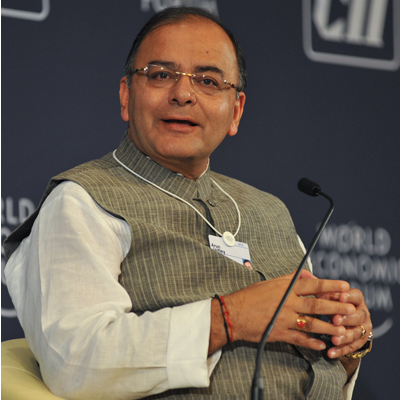
Jaitley stresses need to integrate communication across social media platforms

Published

on

NEW DELHI: Information and Broadcasting Minister Arun Jaitley today said the “Talkathon” serves as independent interview, which runs live on social media and taken up by all private channels as well.

 
He added that it offered an opportunity to integrate communication across platforms as well as a direct interface with the audiences.

 
Addressing a meeting of Consultative Committee of MPs attached to his Ministry to discuss the issue of “Harnessing role of Social Media,” he said the digital mode had become an effective medium to communicate to the wide audience while at the same time it offered opportunities to innovate.

Advertisement

 
Referring to the Doordarshan (DD) app launched on 7 May, 2015, the Minister mentioned that this initiative provided an opportunity to address the needs of the audience, which followed the dissemination of information on the digital mode.

 
Jaitley also said efforts would be made to popularize the digital mode of the 100 volumes of Mahatma Gandhi compiled by the Publications Division on the social media platforms of the Ministry. 

At the meeting, which was also attended by Minister of State Rajyavardhan Rathore, a presentation was made by Secretary (I&B) Bimal Julka giving an overview of the steps and initiatives undertaken so far by the Ministry in harnessing the potential of the social media for disseminating the information relating to the important initiatives of the Government. 

Advertisement

Members gave suggestions to enhance the reach of the Government coverage through All India Radio (AIR) and DD, especially in areas that required dissemination. It was emphasized that efforts needed to be taken to promote the reach of social media to those segments, which at times suffered due to lack of technological access. It was also suggested that measures need to be taken to facilitate information flow to the young target audience and institutions in rural areas. Members also suggested that content needed to be tailored consistently to address the information needs of the people. 

Members who attended the meeting Dr. Jayakumar Jayavardhan, Dr. Sanjay Jaiswal, Tapas Paul, V. Sathyabama, Anil Madhav Dave, Jaya Bachchan, Dr. K. Keshava Rao, Madhusudan Mistry, Neeraj Shekhar and Vivek Gupta.

Advertisement
Click to comment

Leave a Reply

Your email address will not be published. Required fields are marked *

I&B Ministry

Prasar Bharati sets EPG standards for DD Free Dish platform

New specs define 7-day guide, LCN mapping, and device compatibility.

Published

on

MUMBAI: Your TV guide just got a backstage pass structured, scheduled, and far more in sync. Prasar Bharati has released detailed technical specifications for Electronic Programme Guide (EPG) services on DD Free Dish, laying down a standardised framework for how channels and programme information are organised and delivered. At the core of the update is a defined EPG data structure, covering genre-based categorisation, scheduling formats, and Logical Channel Numbering (LCN). The aim is simple: make navigation less guesswork and more guided experience across the platform’s over 40 million households.

The specifications also introduce a seven-day programme guide window for each channel, alongside clear rules for channel grouping and LCN mapping effectively deciding not just what you watch, but how easily you find it.

On the technical front, the document outlines requirements for Program Specific Information (PSI) and Service Information (SI), including descriptor usage across tables such as PAT, BAT and NIT. It further details service lists and network linkage parameters, giving OEMs and developers a clearer blueprint for integration.

Advertisement

Importantly, the framework is designed to work seamlessly with television sets equipped with in-built satellite tuners, enabling users to access DD Free Dish directly without additional hardware, an incremental but meaningful step towards simplifying access.

The platform will continue to operate on GSAT-15 transponders, using MPEG-4 compression and DVB-S2 transmission standards, ensuring continuity even as the interface evolves.

While largely technical, the move signals a broader push towards standardisation and user-friendly discovery in India’s free-to-air ecosystem because sometimes, the real upgrade isn’t what’s on screen, but how easily you get there.

Advertisement
Continue Reading

Advertisement News18
Advertisement
Advertisement
Advertisement
Advertisement Whtasapp
Advertisement Year Enders

Indian Television Dot Com Pvt Ltd

Signup for news and special offers!

Copyright © 2026 Indian Television Dot Com PVT LTD